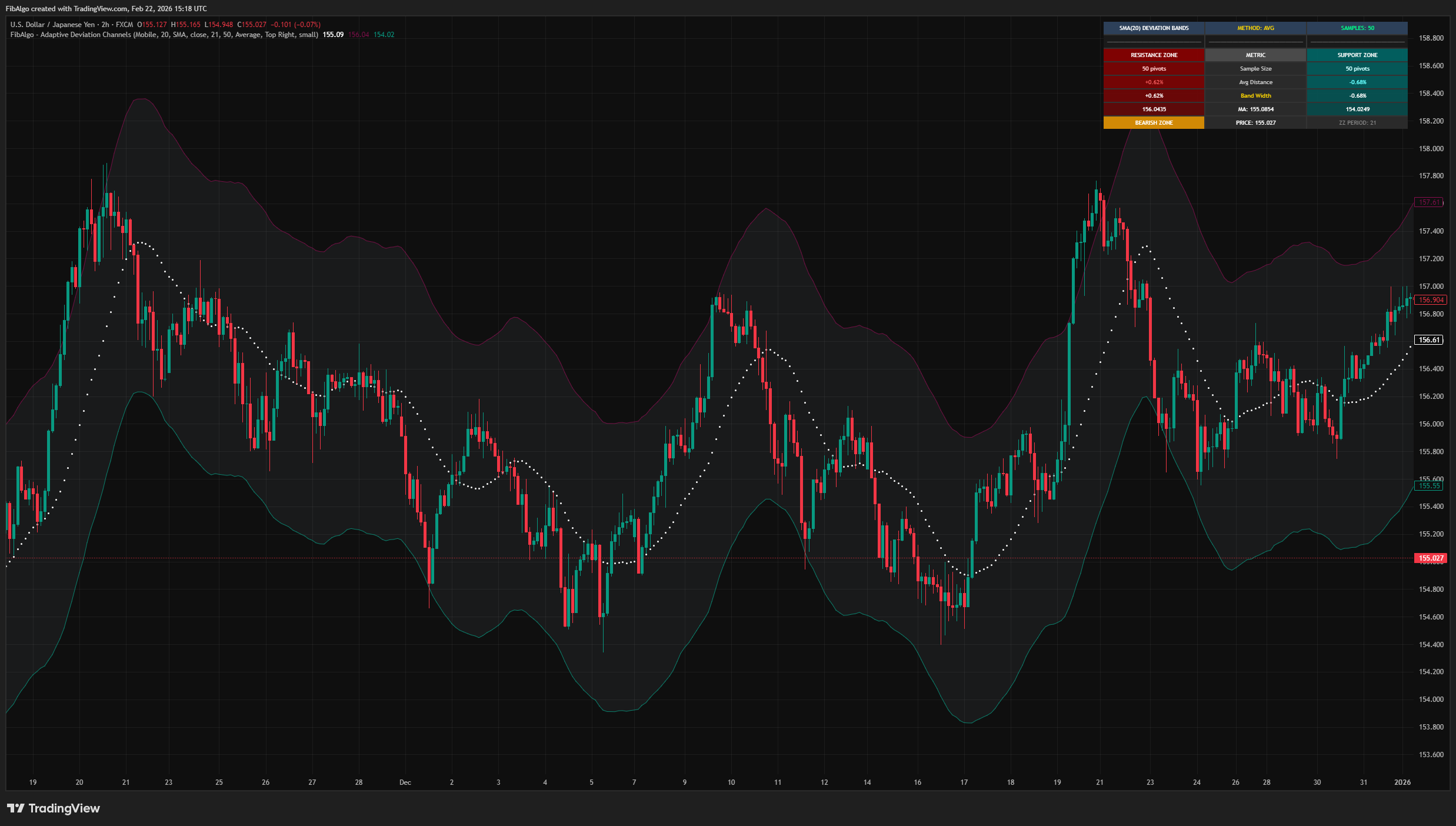
Adaptive Deviation Channels
TradingView indicator that creates dynamic support and resistance zones by analyzing historical pivot point deviations from a central moving average.
See DetailsFree ICT & Wyckoff indicators
Explore our complete collection of TradingView indicators. From Fibonacci-based tools to ICT concepts and Wyckoff methods — find the perfect indicator for your trading strategy.
Release notes29 indicators updated on Sep 25, 2026
FibAlgo's own tools use adaptive Fibonacci, pivot and volatility logic instead of fixed settings. Perfect Entry Zone and Perfect Retracement Zone find the retracement zones price has reacted to most often. Smart Trading and the R:R Trading System classify breakouts and frame entries, take-profit zones and risk-to-reward. Oscillator Matrix sets overbought and oversold zones from real pivot distributions, and Screener (PEZ) watches up to 10 symbols at once. These tools are exclusive to the Ultimate and Lifetime plans. Adaptive Deviation Channels is free for everyone: it draws support and resistance zones from pivot deviations around a moving average.
TradingView indicator that creates dynamic support and resistance zones by analyzing historical pivot point deviations from a central moving average.
See Details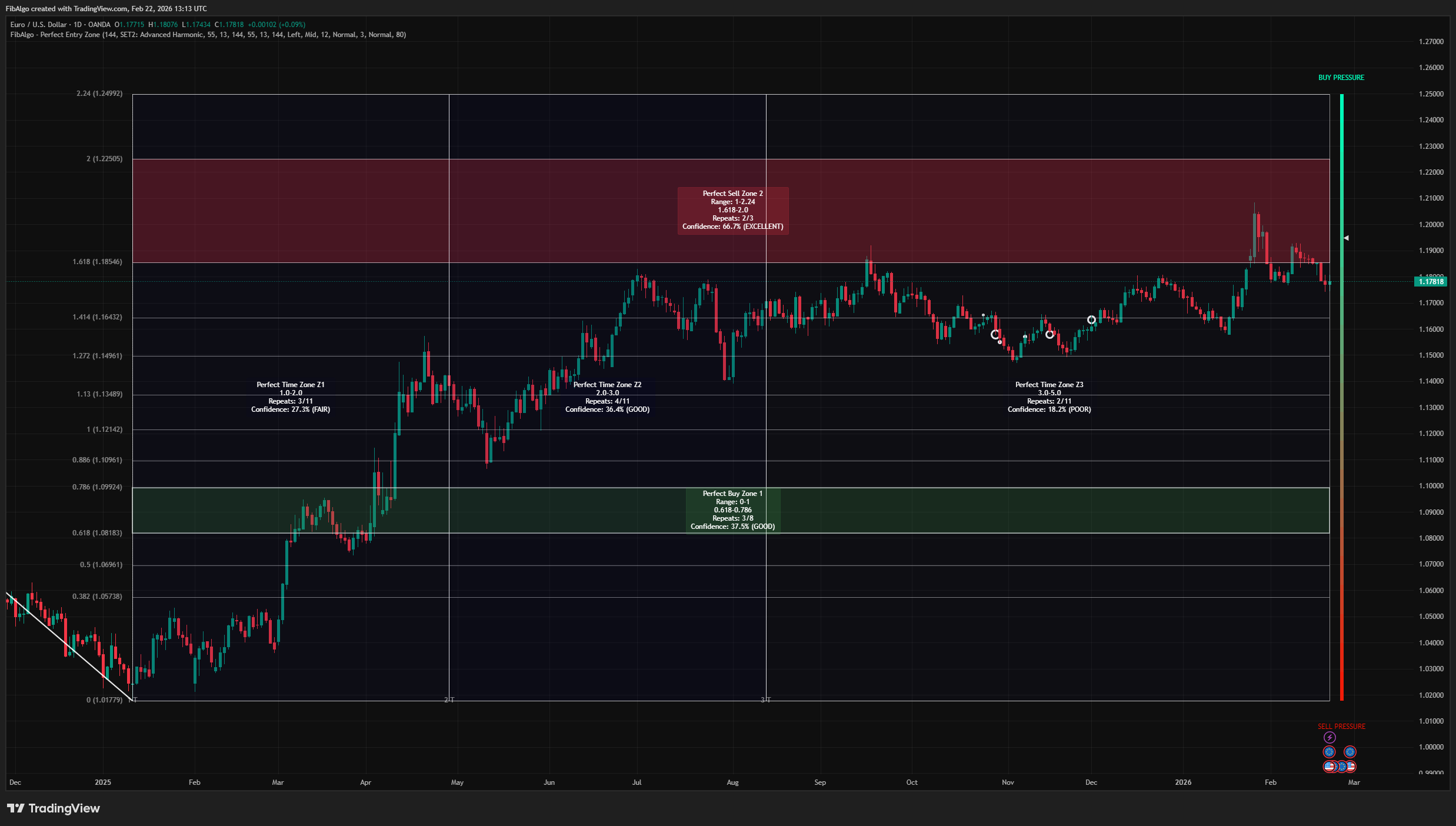
Adaptive Fibonacci-based support and resistance indicator for TradingView that identifies recurring retracement zones and projects Fibonacci time zones.
See Details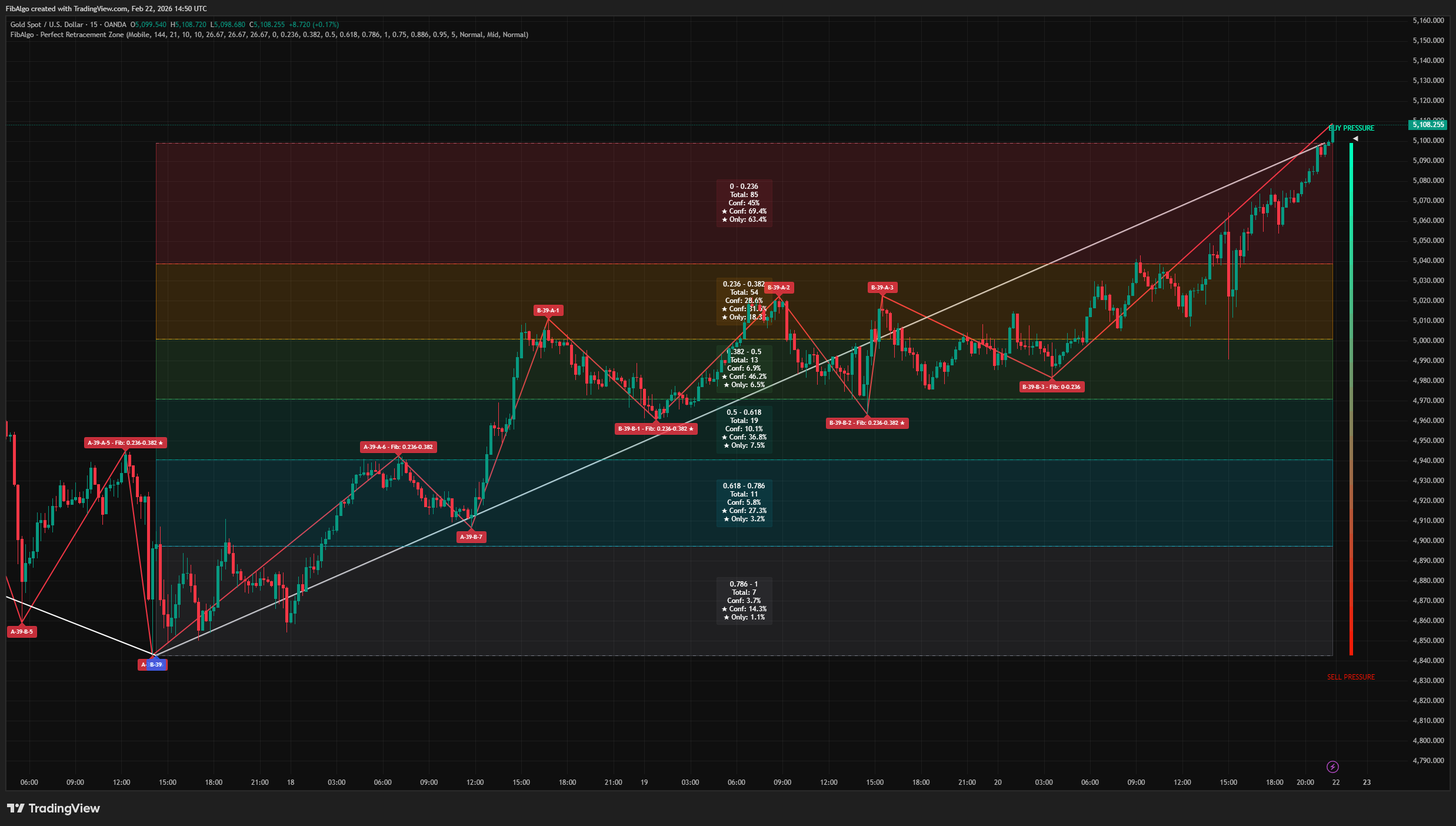
Dynamic Fibonacci retracement indicator for TradingView that identifies statistically significant support and resistance zones using pivot frequency analysis.
See Details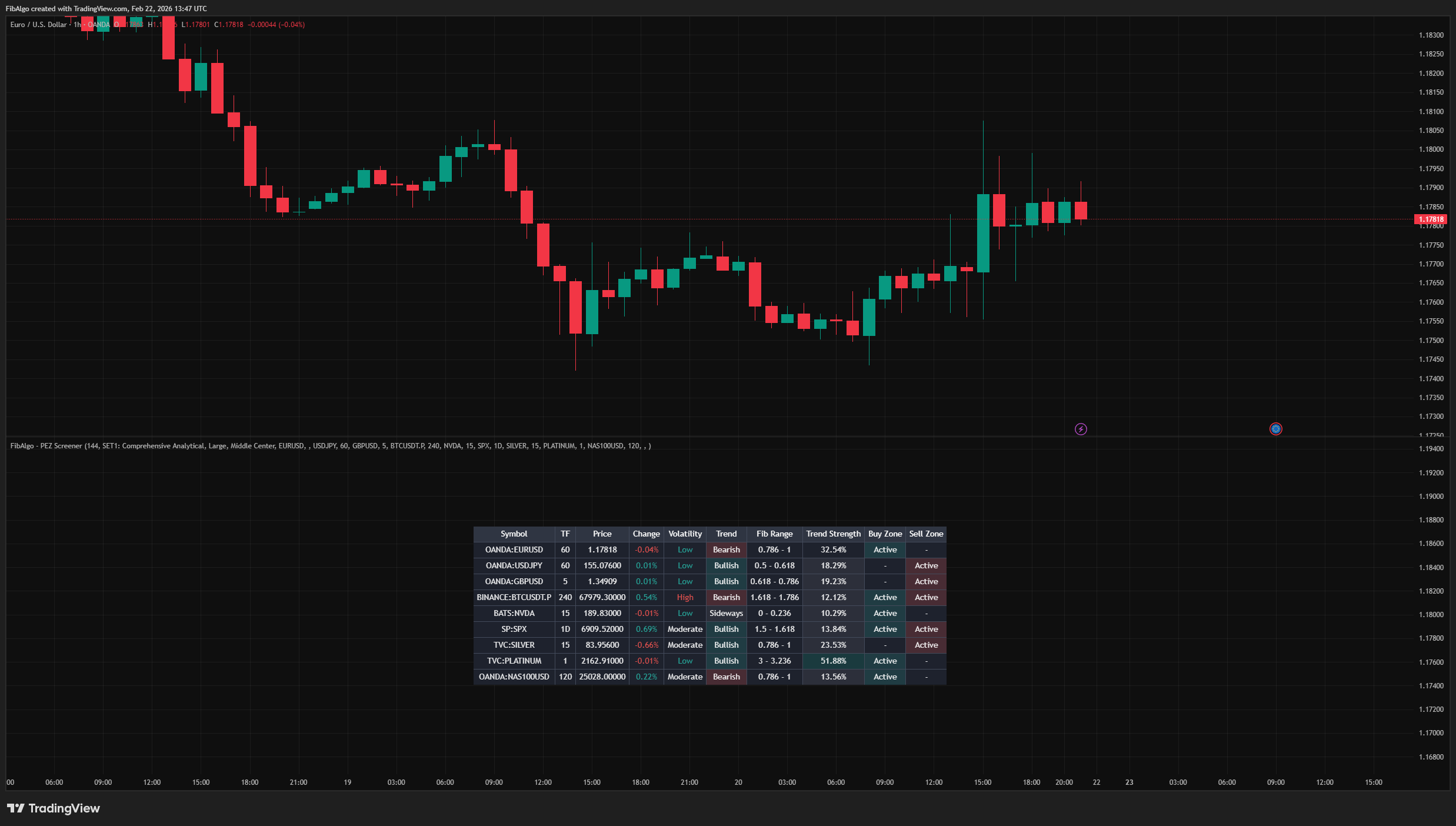
Multi-symbol TradingView screener that monitors up to 10 symbols simultaneously with Fibonacci range positions, trend direction, and zone status.
See Details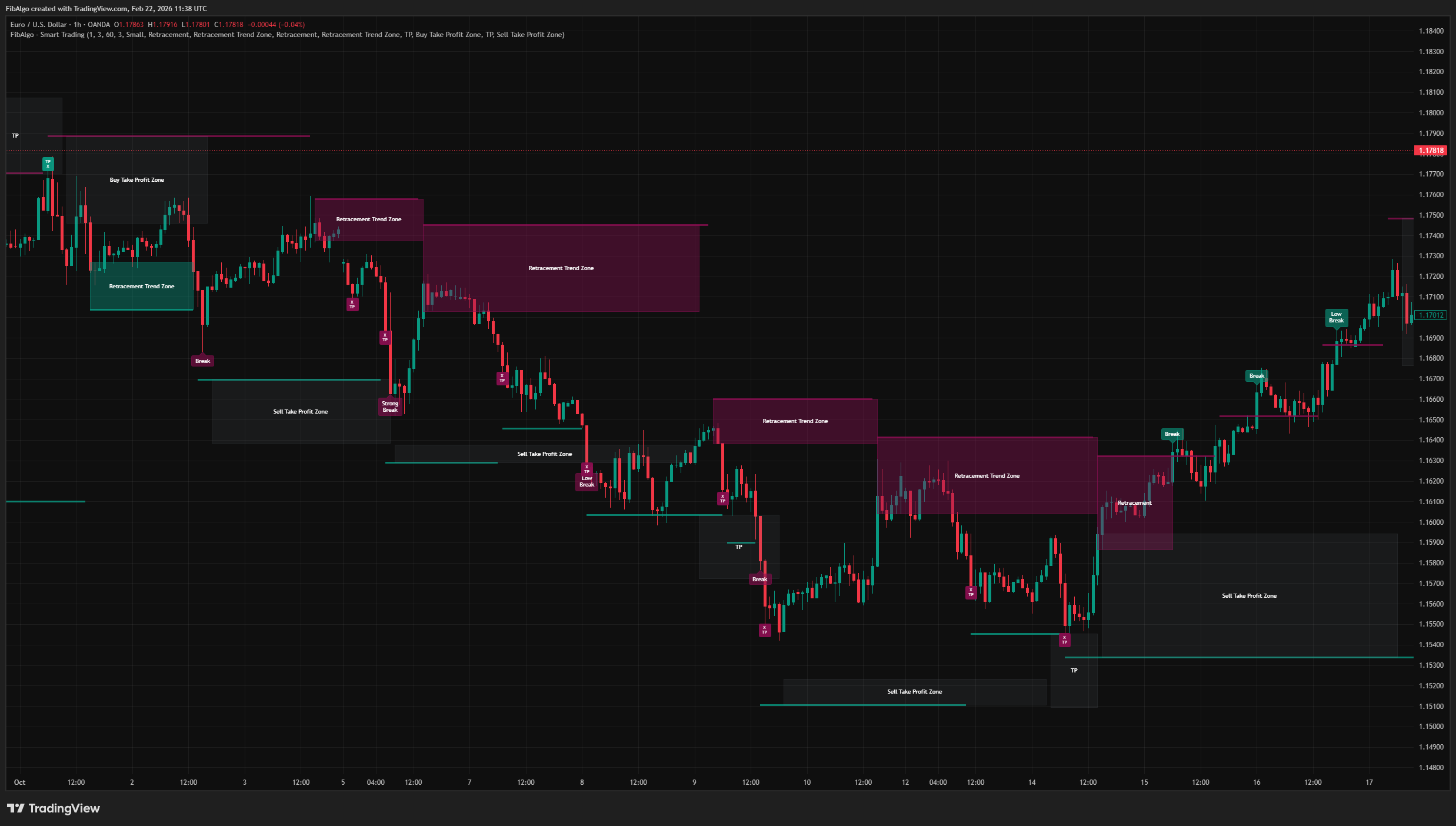
Volatility-adaptive trend analysis indicator for TradingView that identifies dynamic support and resistance levels with breakout classification and take-profit zones.
See Details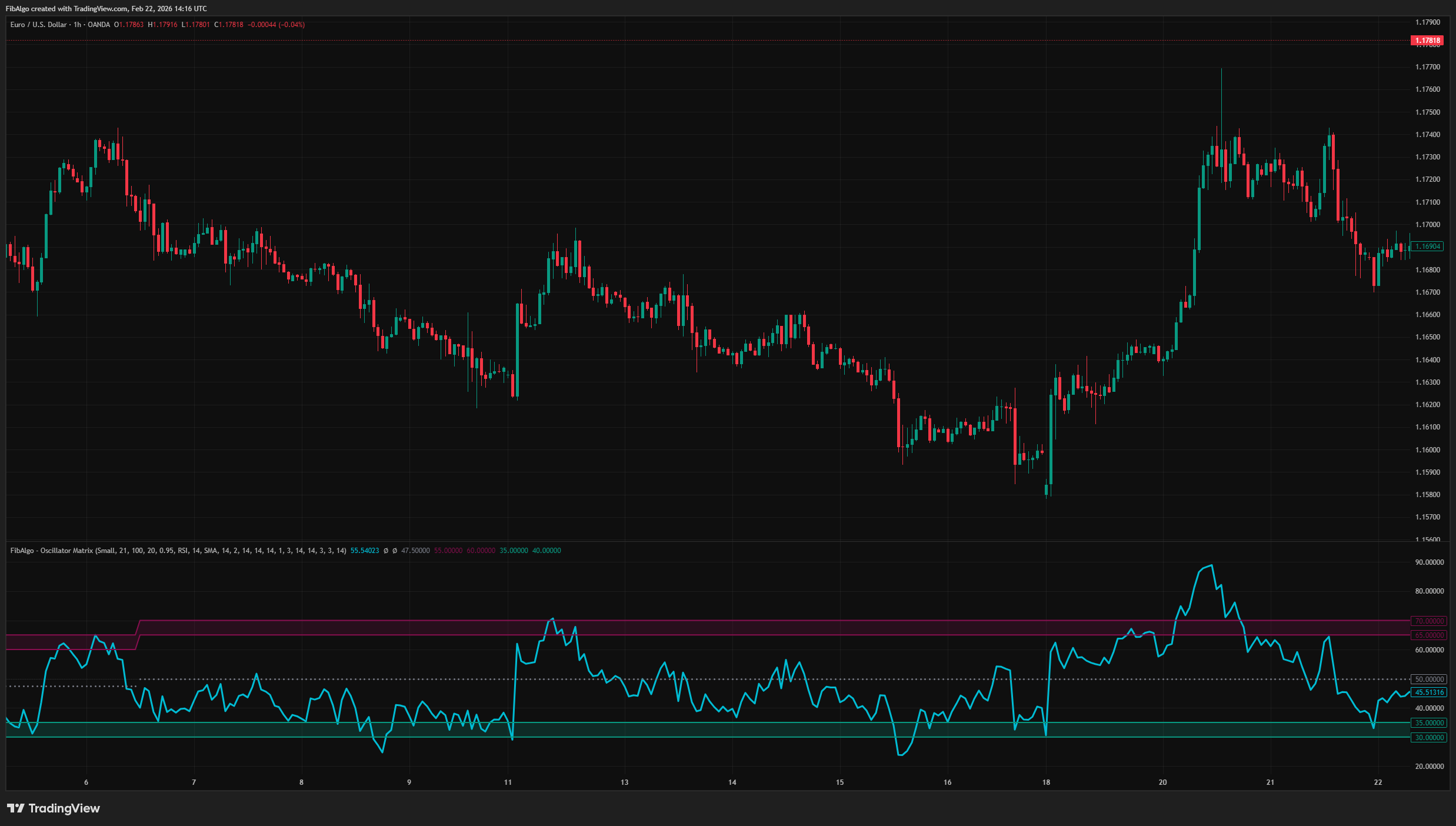
Statistical oscillator indicator for TradingView that identifies dynamic overbought and oversold zones based on actual pivot frequency distributions.
See Details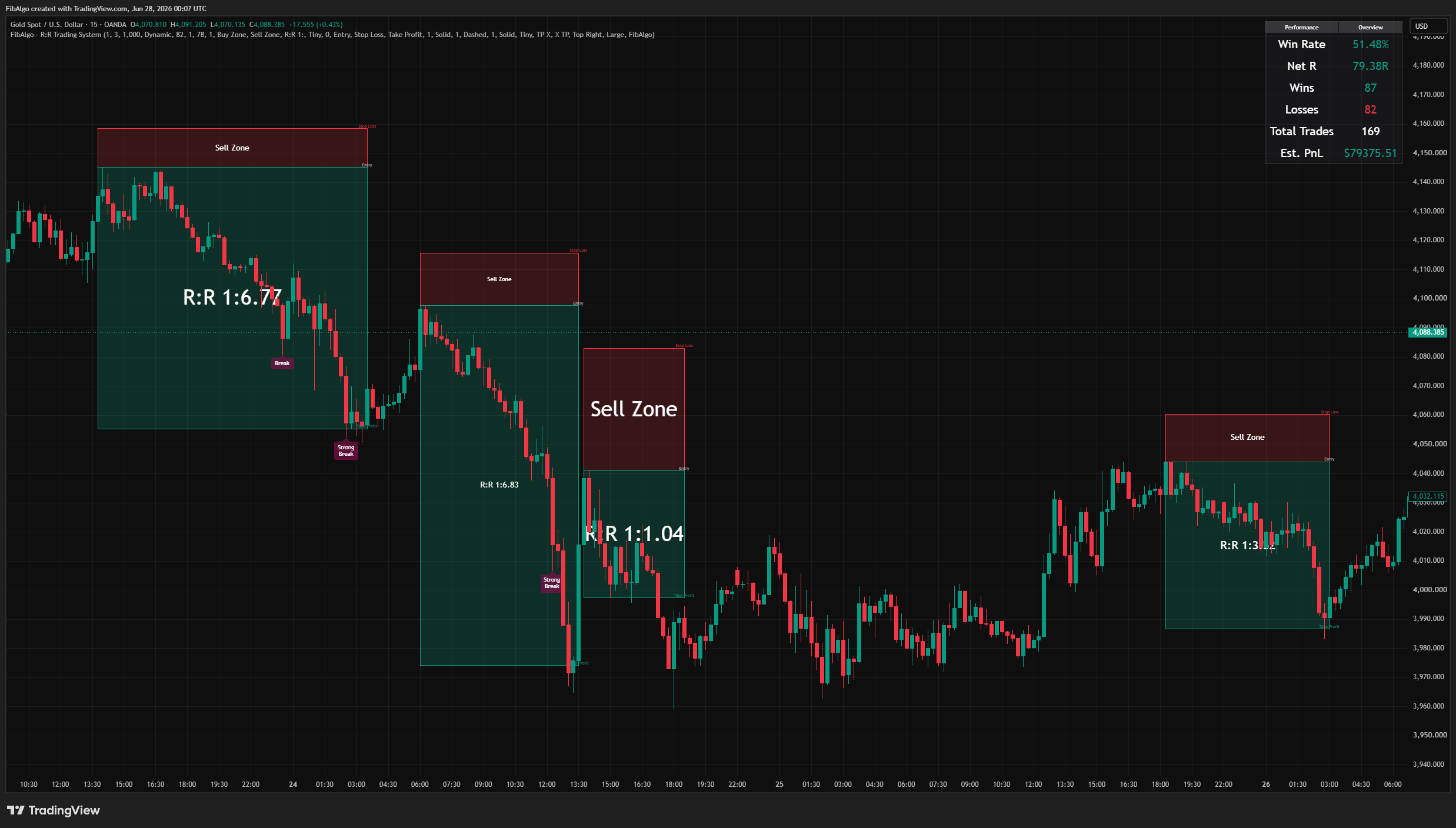
Volatility-adaptive support and resistance indicator for TradingView that classifies breakout strength, draws retracement entry zones, and auto-frames a complete risk-to-reward setup with live performance tracking.
See DetailsThe ICT Concepts series turns Inner Circle Trader ideas into TradingView indicators that mark the chart for you. Market Structure labels BOS, CHoCH and MSS. The order block, fair value gap, volume imbalance and opening gap tools draw each zone, with CE midlines where the concept uses them. Liquidity tools map buy-side and sell-side liquidity, equal highs and lows, and sweeps. Time-based tools cover the killzones, Silver Bullet windows, macro times, the Midnight Open and the Power of 3 cycle, while model tools detect Market Maker and Unicorn setups. Every indicator in this series is free.
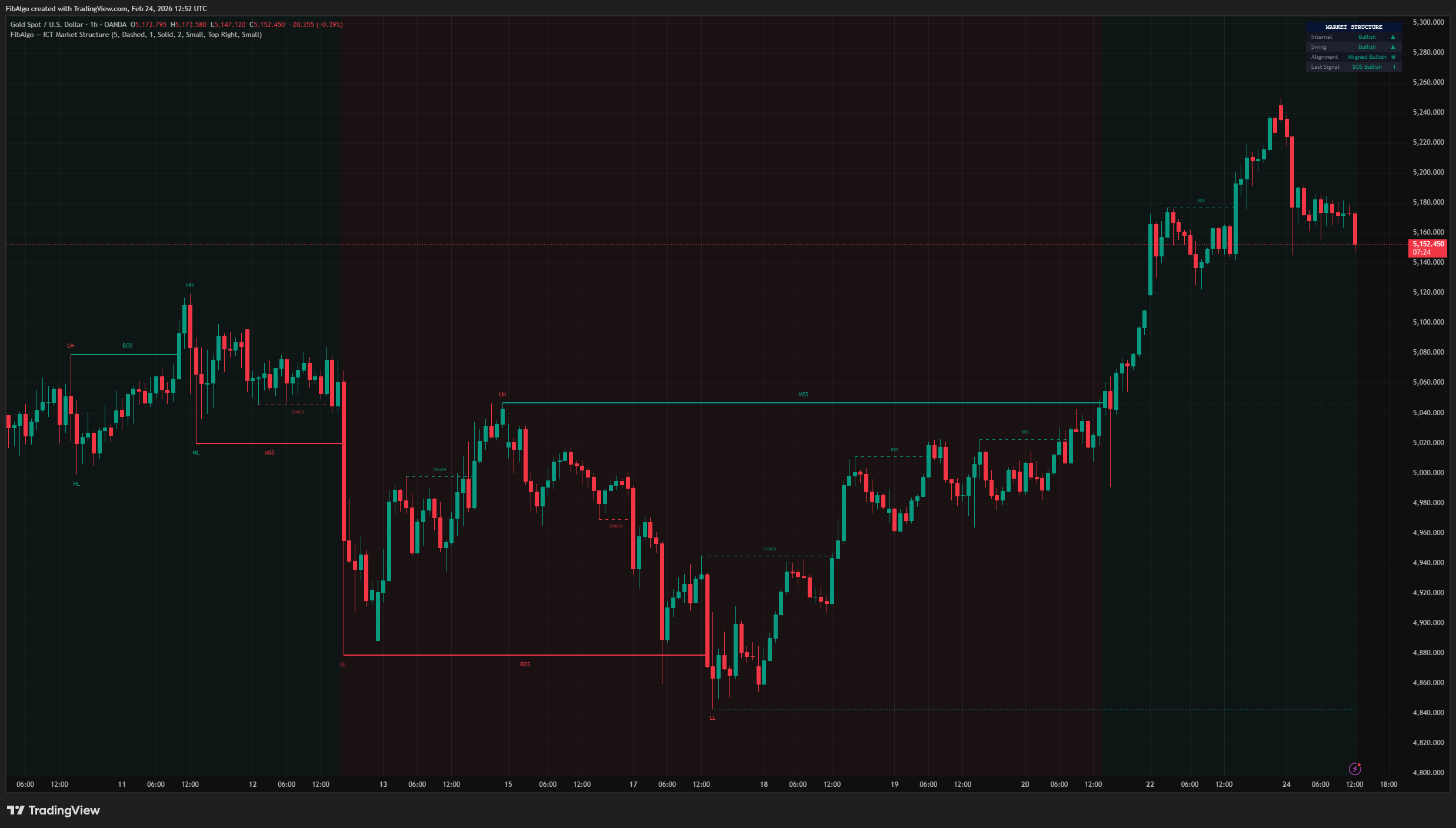
TradingView indicator for ICT Market Structure — identifies Break of Structure (BOS), Change of Character (CHoCH), and Market Structure Shift (MSS).
See Details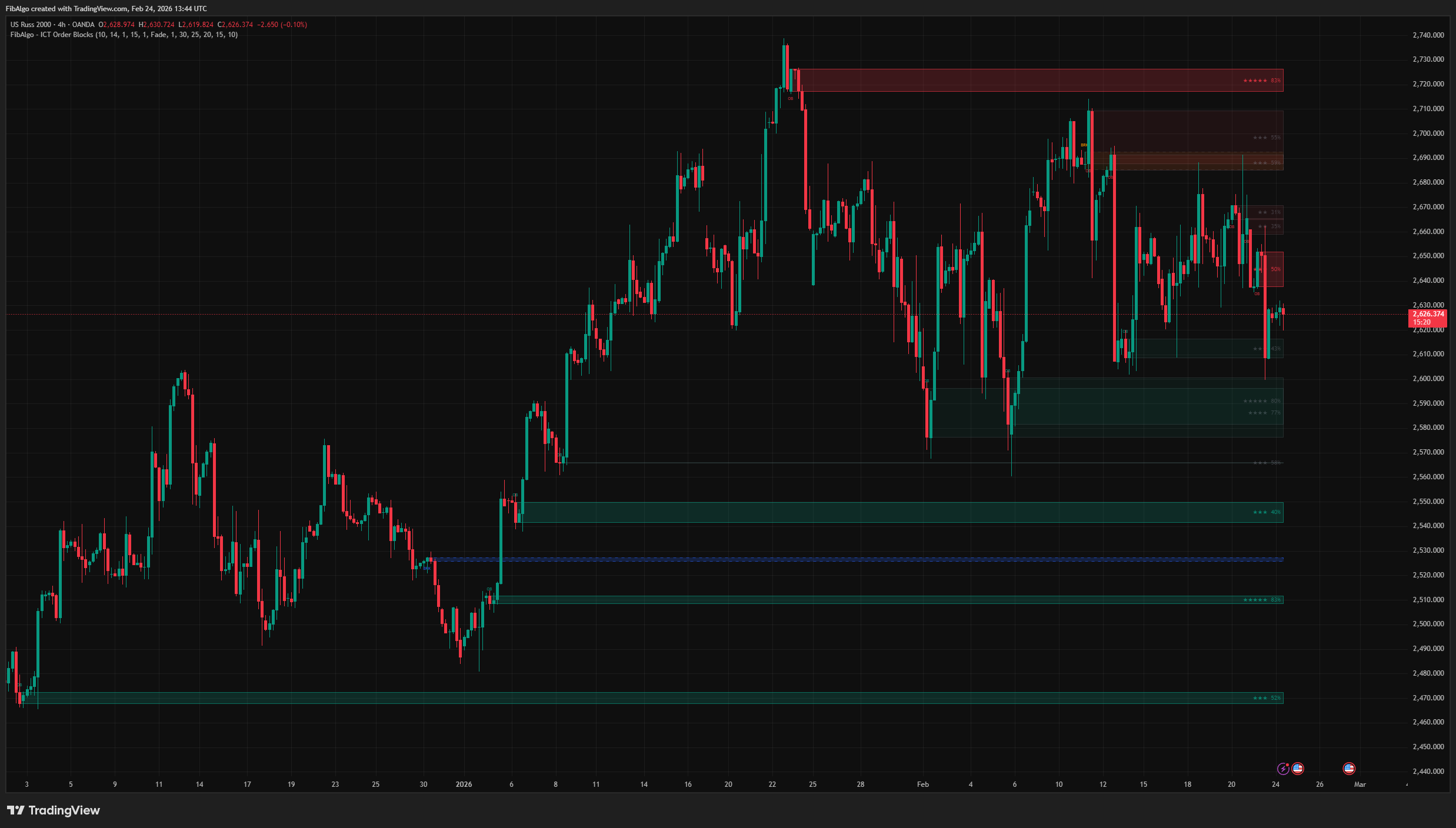
TradingView indicator that detects ICT Order Blocks, converts invalidated zones into Breaker Blocks, and provides institutional Strength Rating analysis.
See Details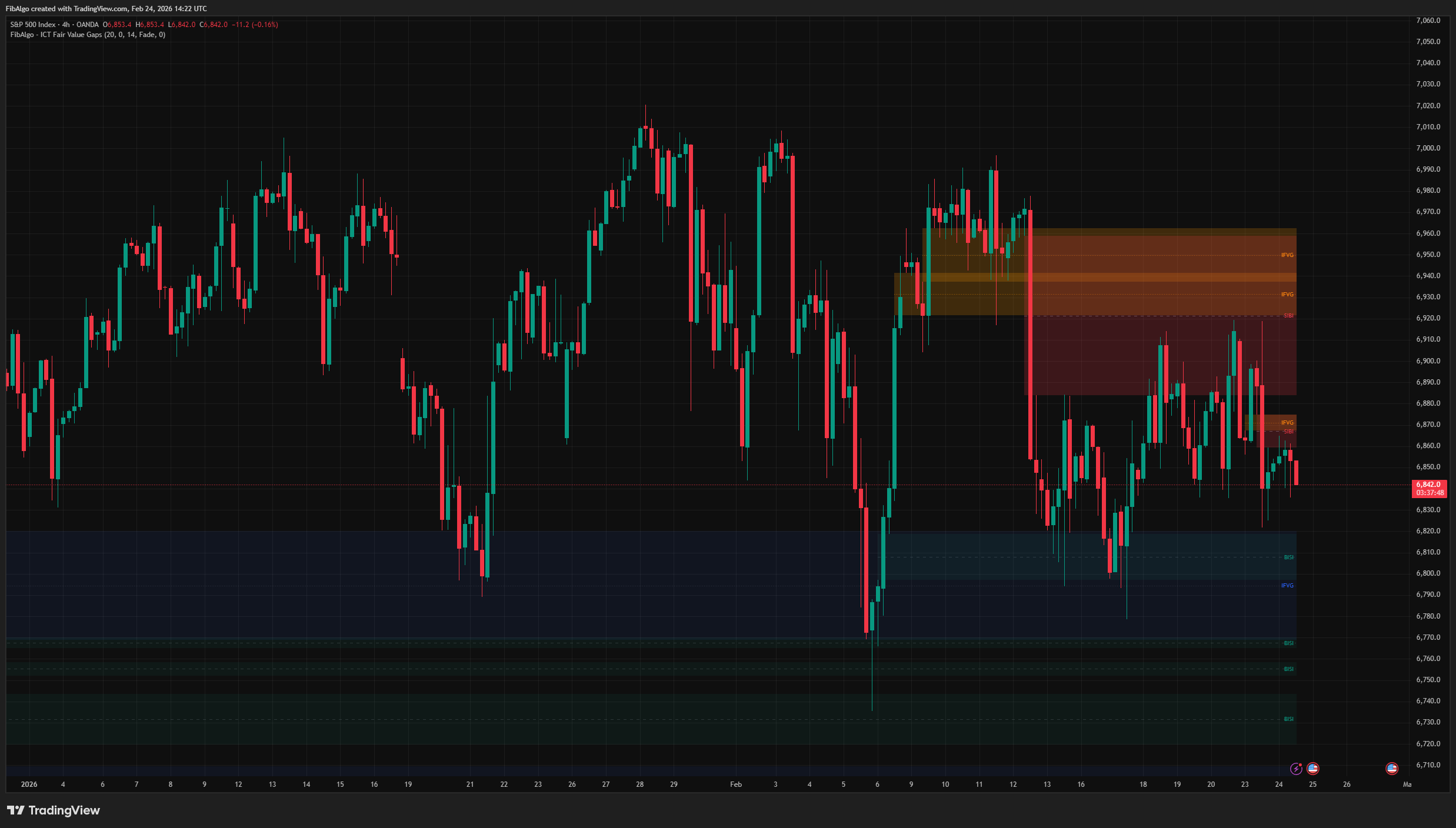
TradingView indicator that detects ICT Fair Value Gaps (BISI/SIBI), draws CE midlines, identifies Inversion FVGs, and maps Balanced Price Range zones.
See Details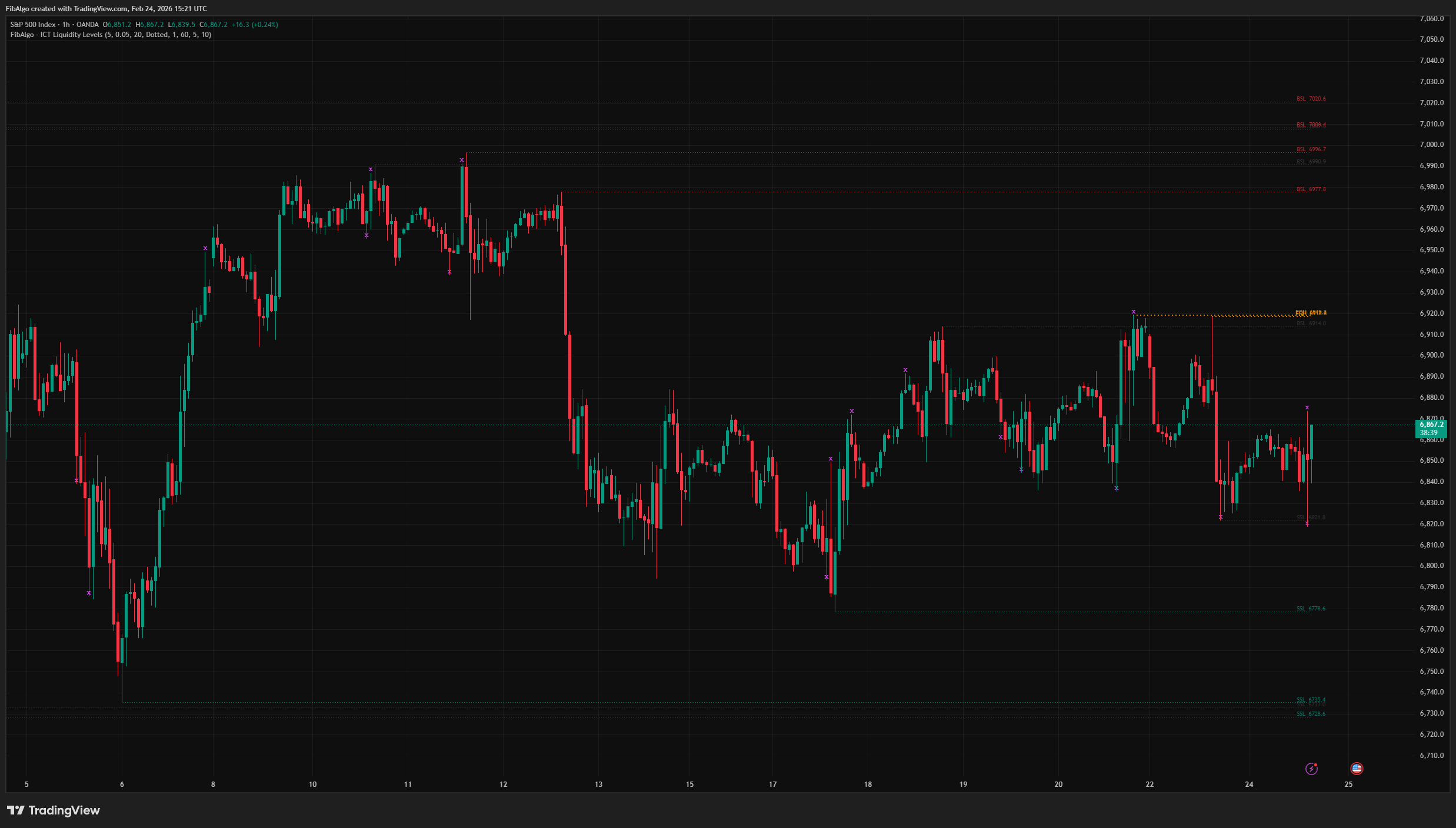
TradingView indicator that maps ICT Liquidity Levels — Buy Side (BSL), Sell Side (SSL), Equal Highs/Lows, and Liquidity Sweeps with HTF support.
See Details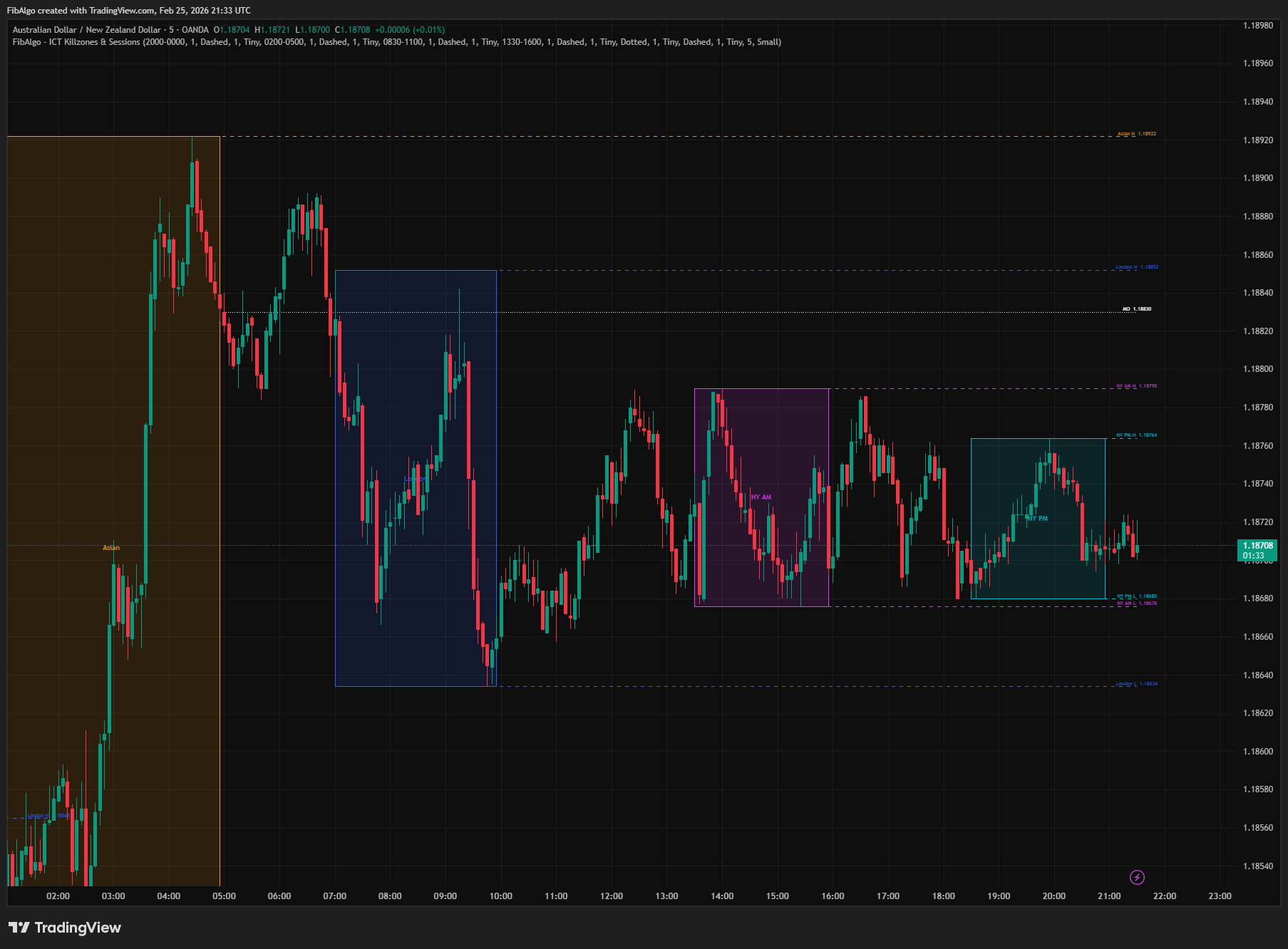
TradingView indicator that highlights ICT Killzones — Asian, London, NY AM, and NY PM session boxes with high/low extensions and key opening levels.
See Details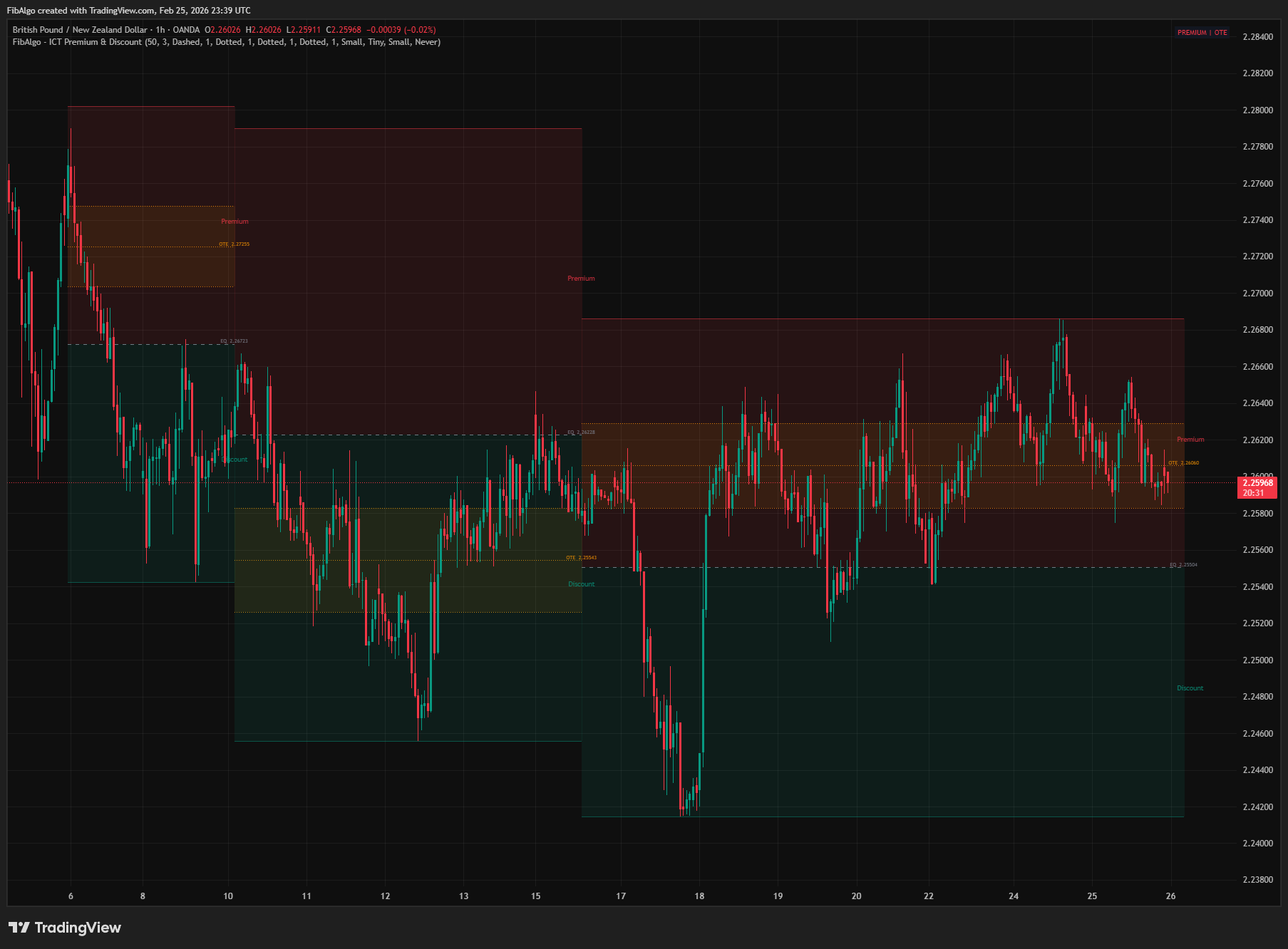
TradingView indicator that detects ICT Premium and Discount zones in real-time using zigzag analysis with Equilibrium and OTE retracement highlights.
See Details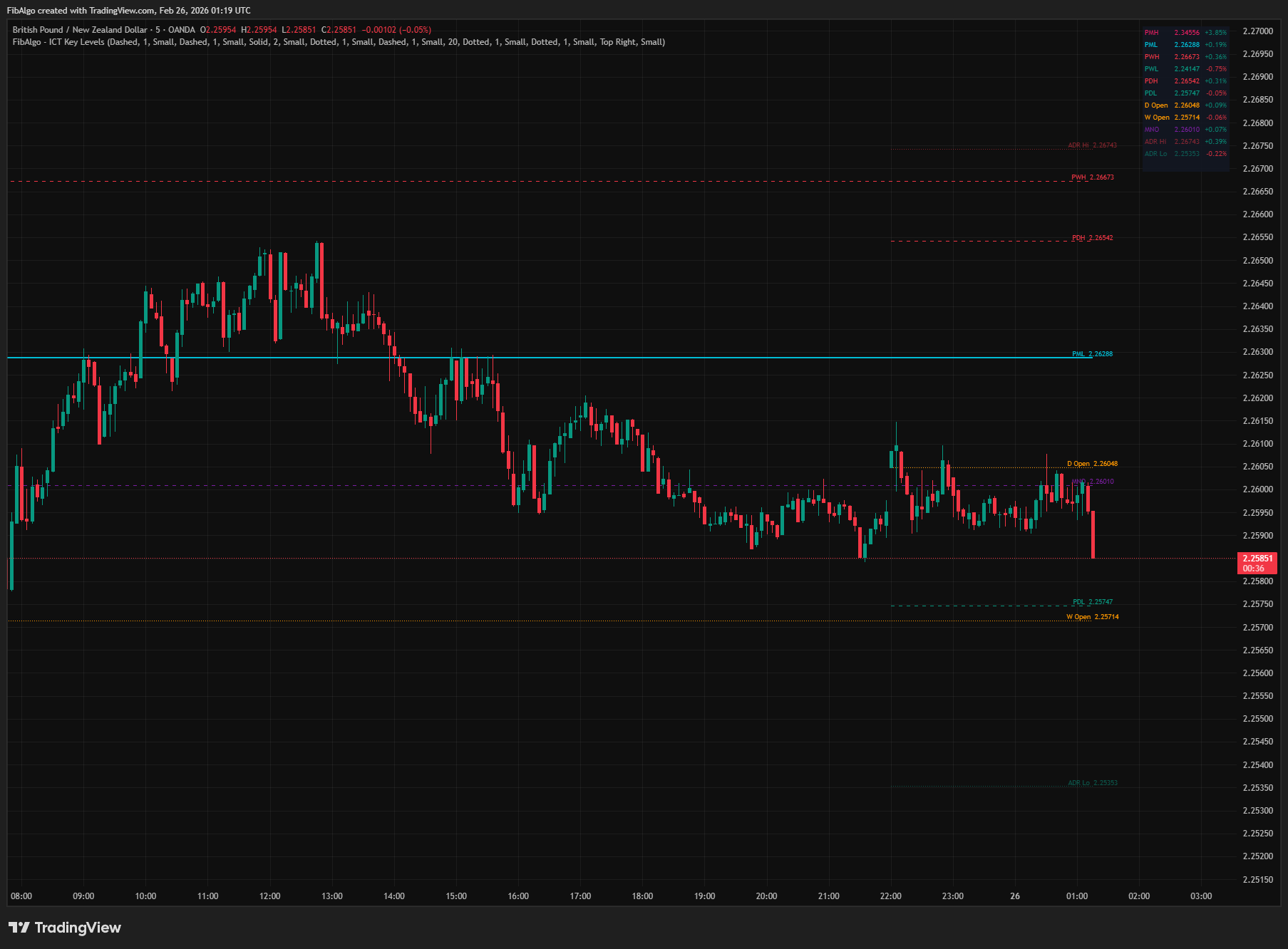
TradingView indicator that draws ICT institutional reference levels — Previous Day/Week/Month High/Low, Daily Opens, Midnight Open, and ADR lines.
See Details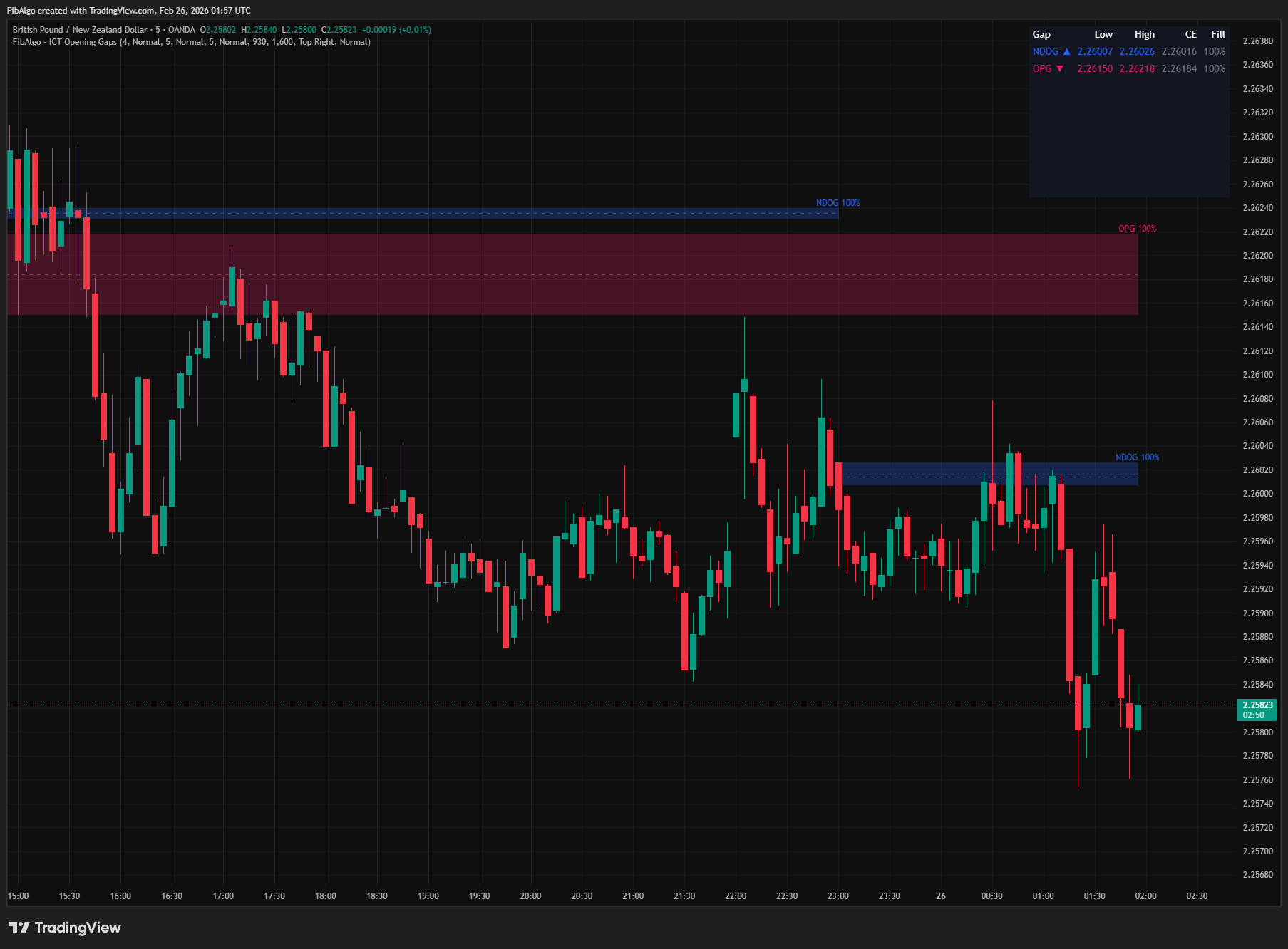
TradingView indicator that detects ICT Opening Gaps — NWOG, NDOG, and OPG — displayed as colored zones with CE midlines and gap fill tracking.
See Details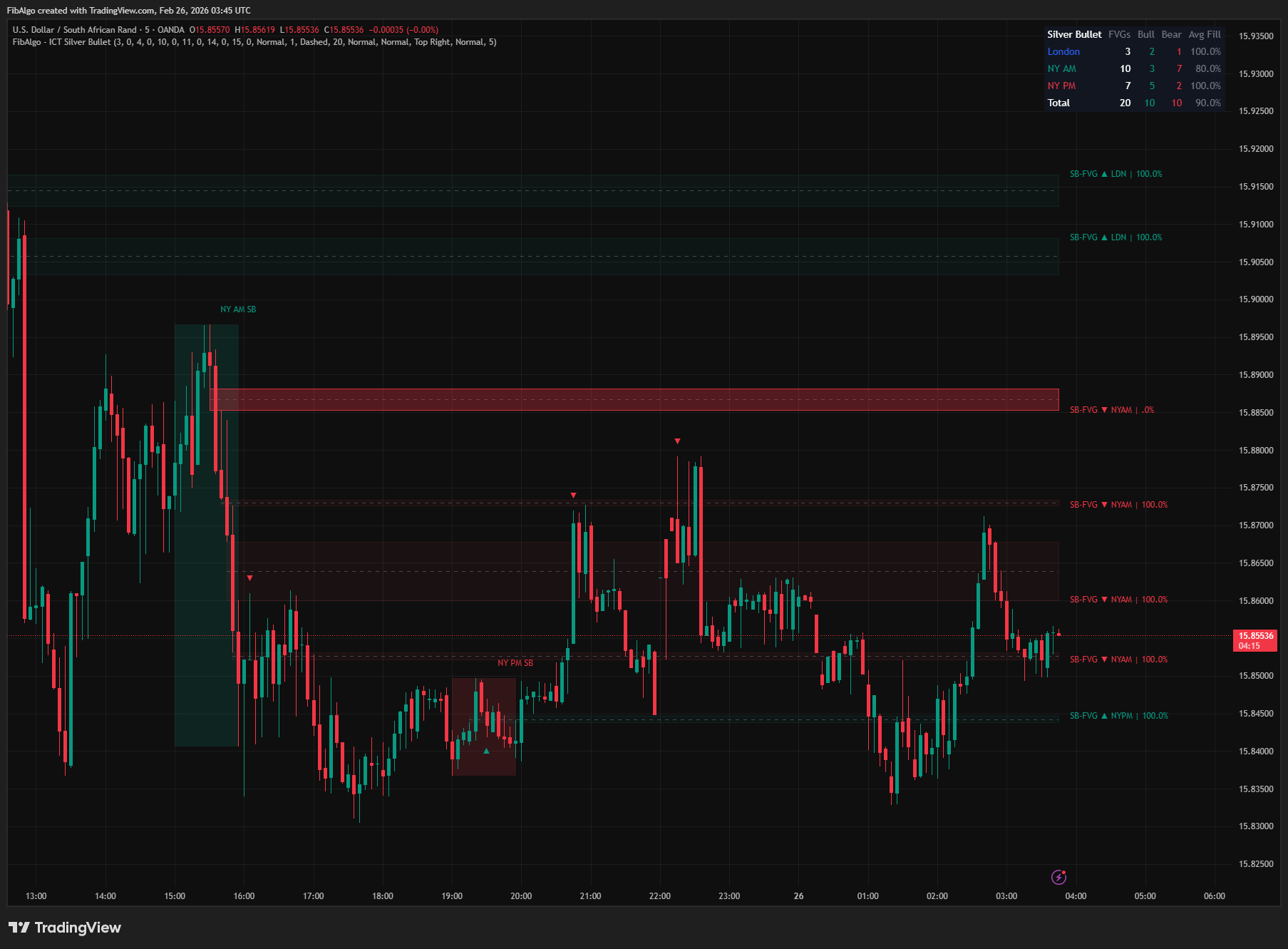
TradingView indicator that identifies ICT Silver Bullet windows — London, NY AM, and NY PM — and detects Fair Value Gaps with CE entry signals.
See Details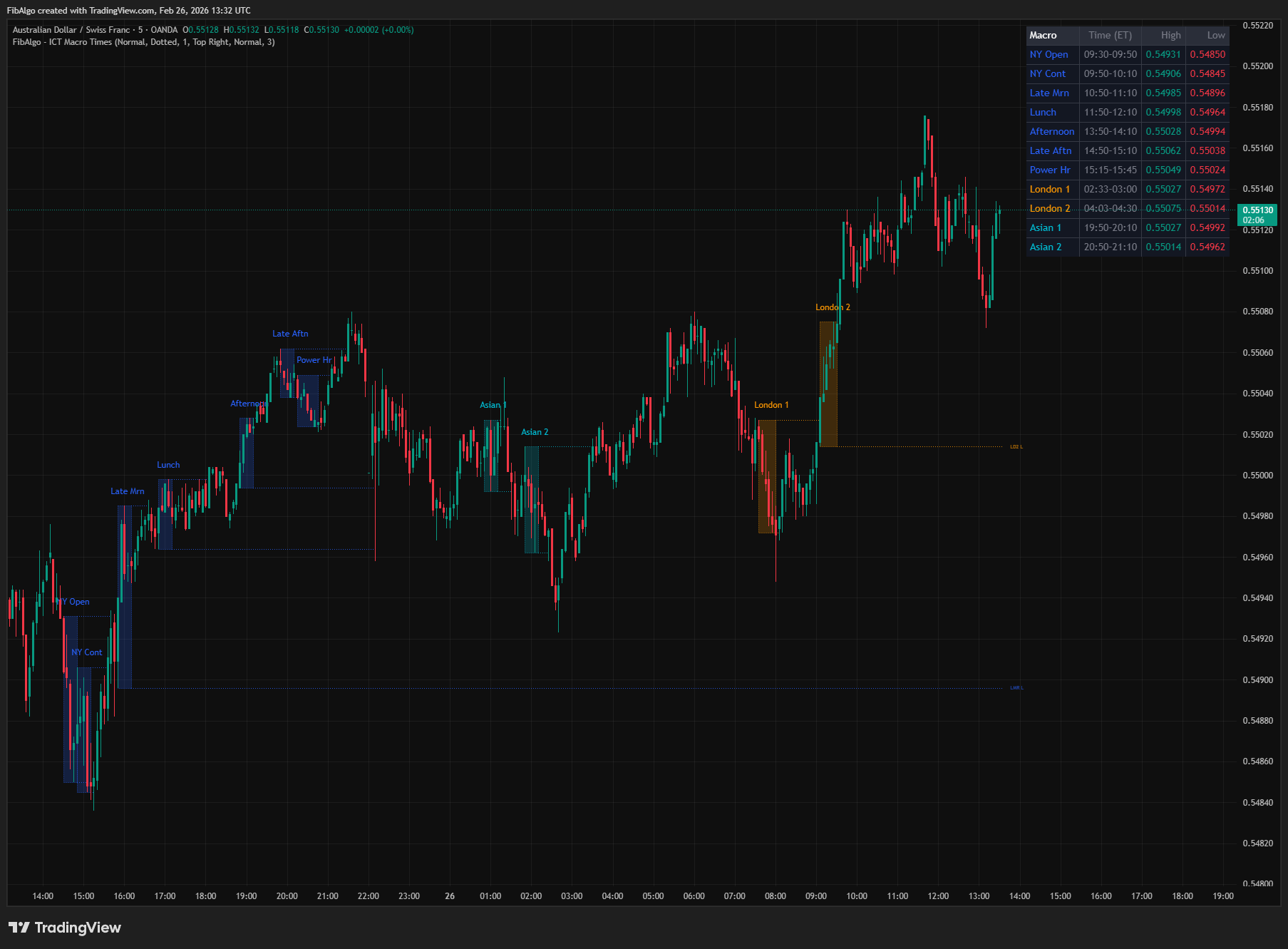
TradingView indicator that highlights the 8 standard ICT Macro Time windows plus 5 additional windows — specific intraday periods where algorithmic price delivery concentrates.
See Details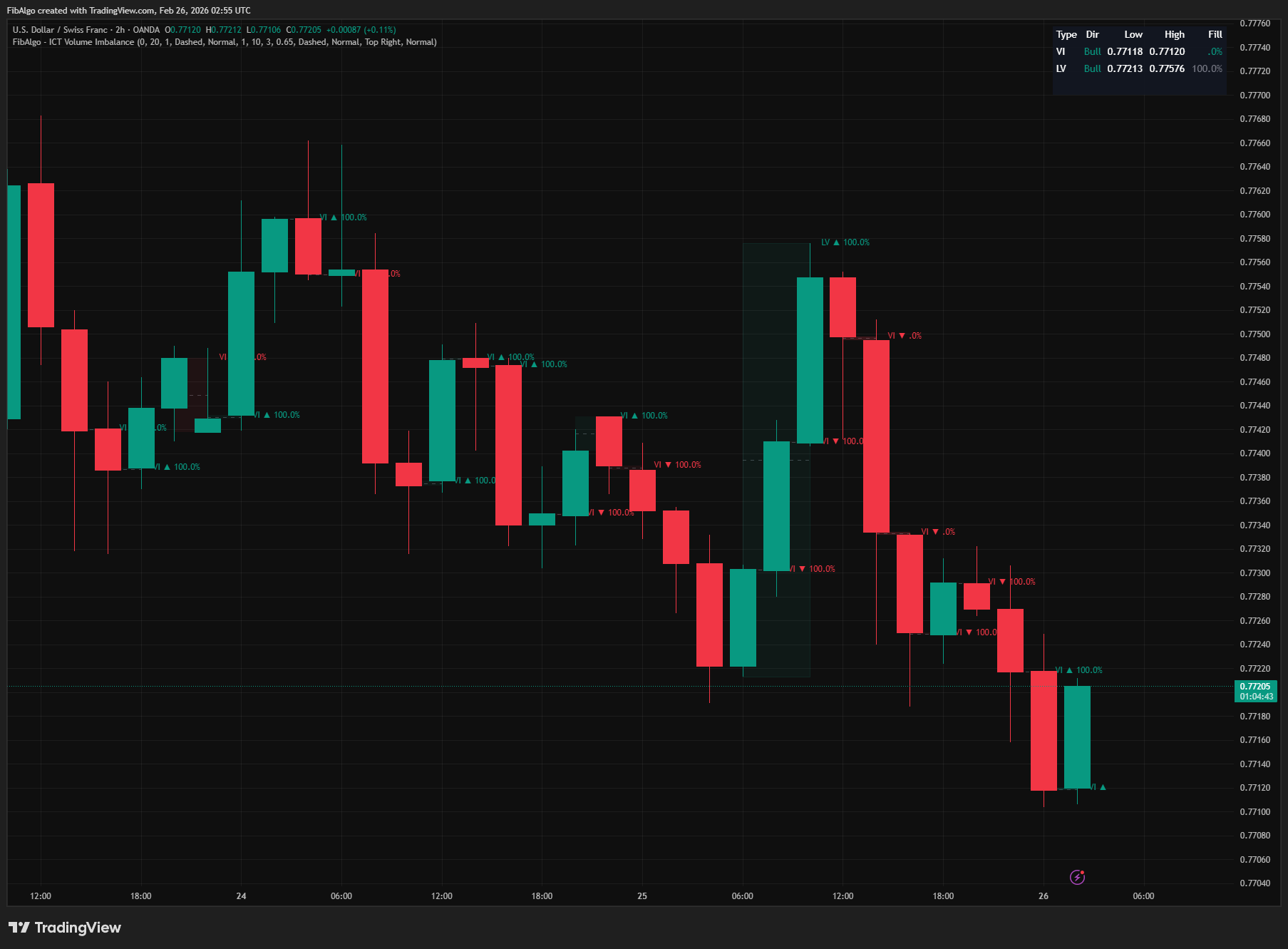
TradingView indicator that detects ICT Volume Imbalance and Liquidity Void inefficiencies with CE midlines and real-time fill tracking.
See Details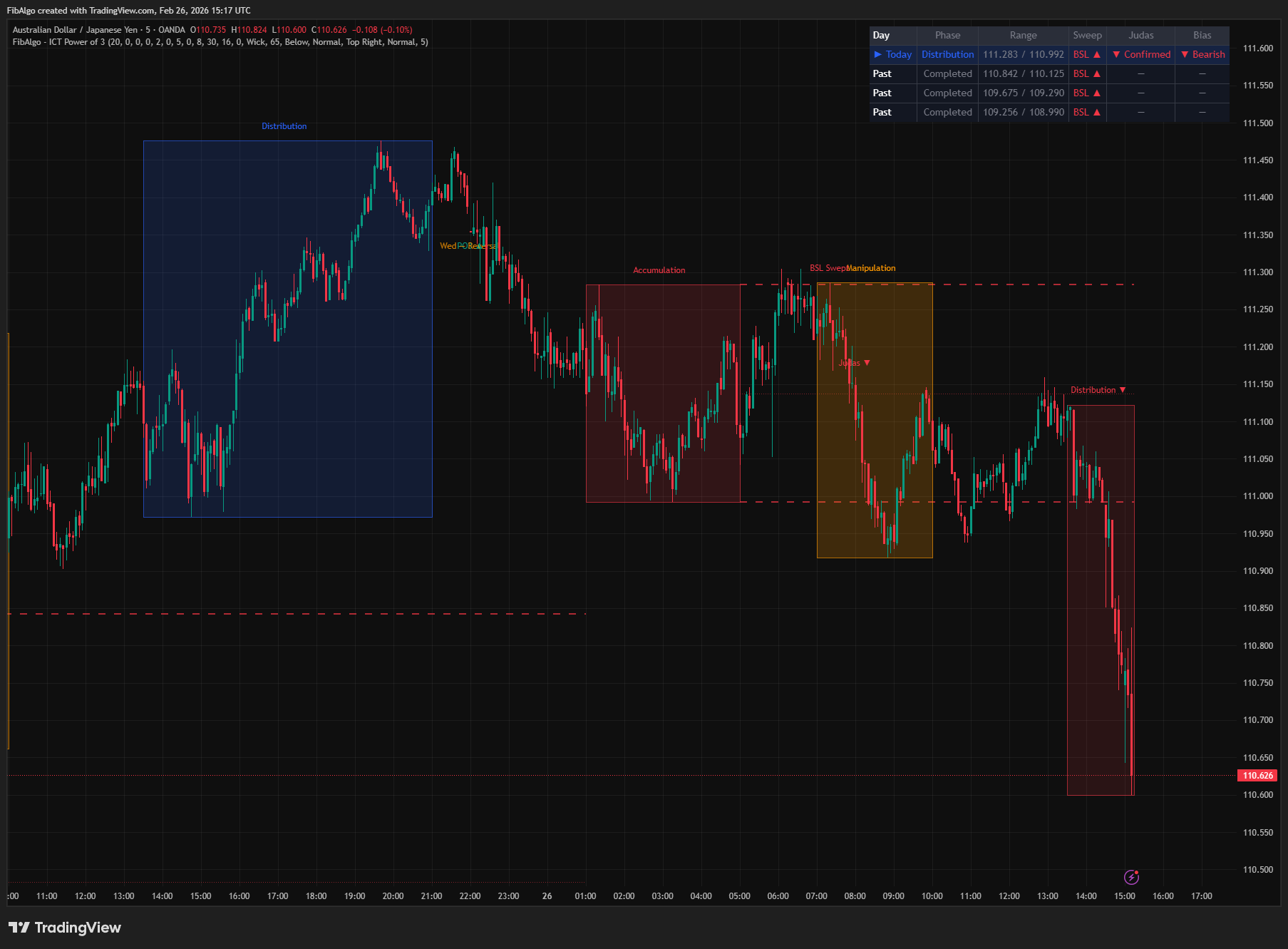
TradingView indicator that visualizes the ICT Power of 3 daily cycle — Accumulation, Manipulation, and Distribution across Asia, London, and New York.
See Details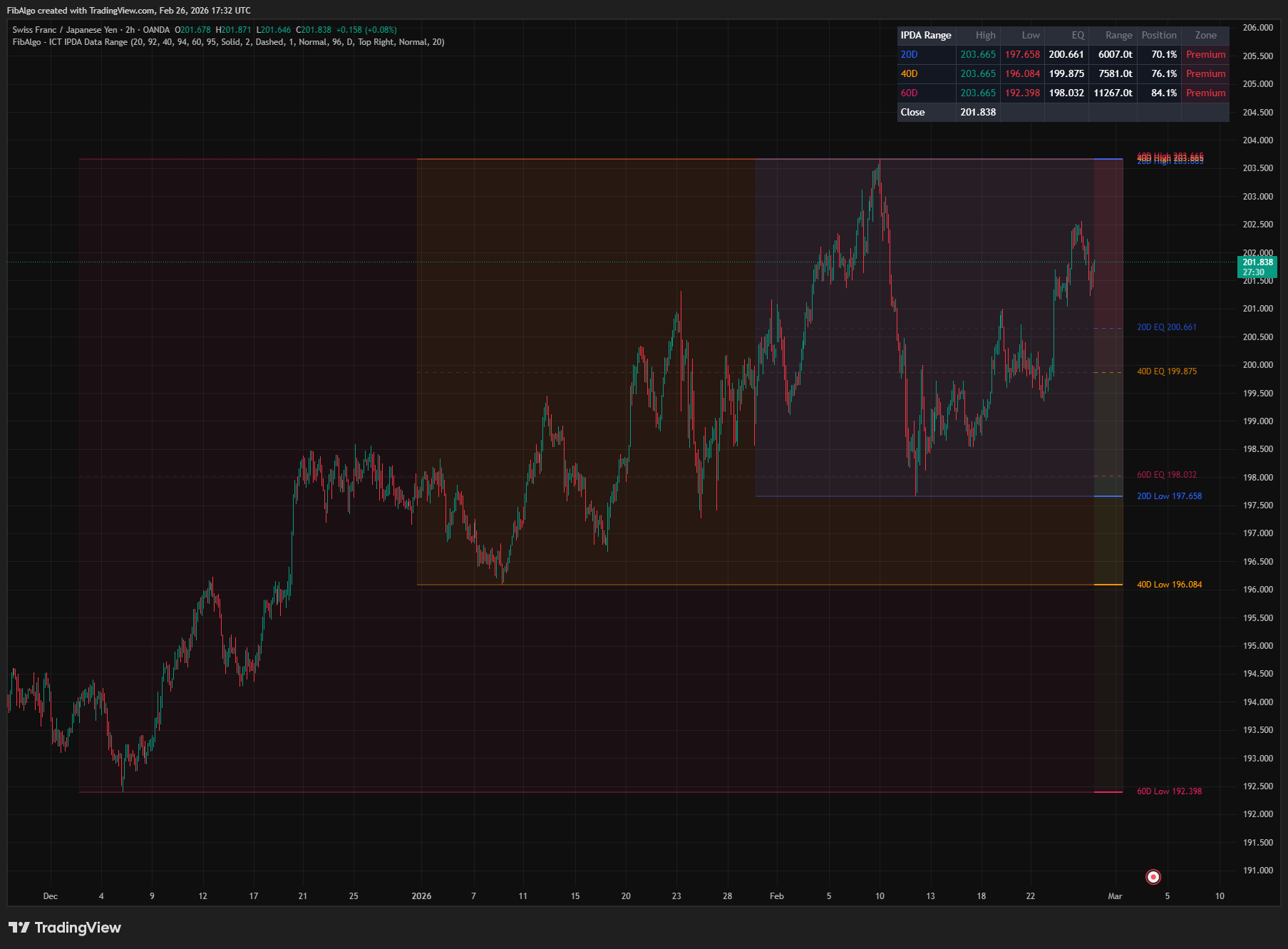
TradingView indicator that plots ICT IPDA Data Ranges — 20, 40, and 60 trading day lookback periods with equilibrium and Premium/Discount zones.
See Details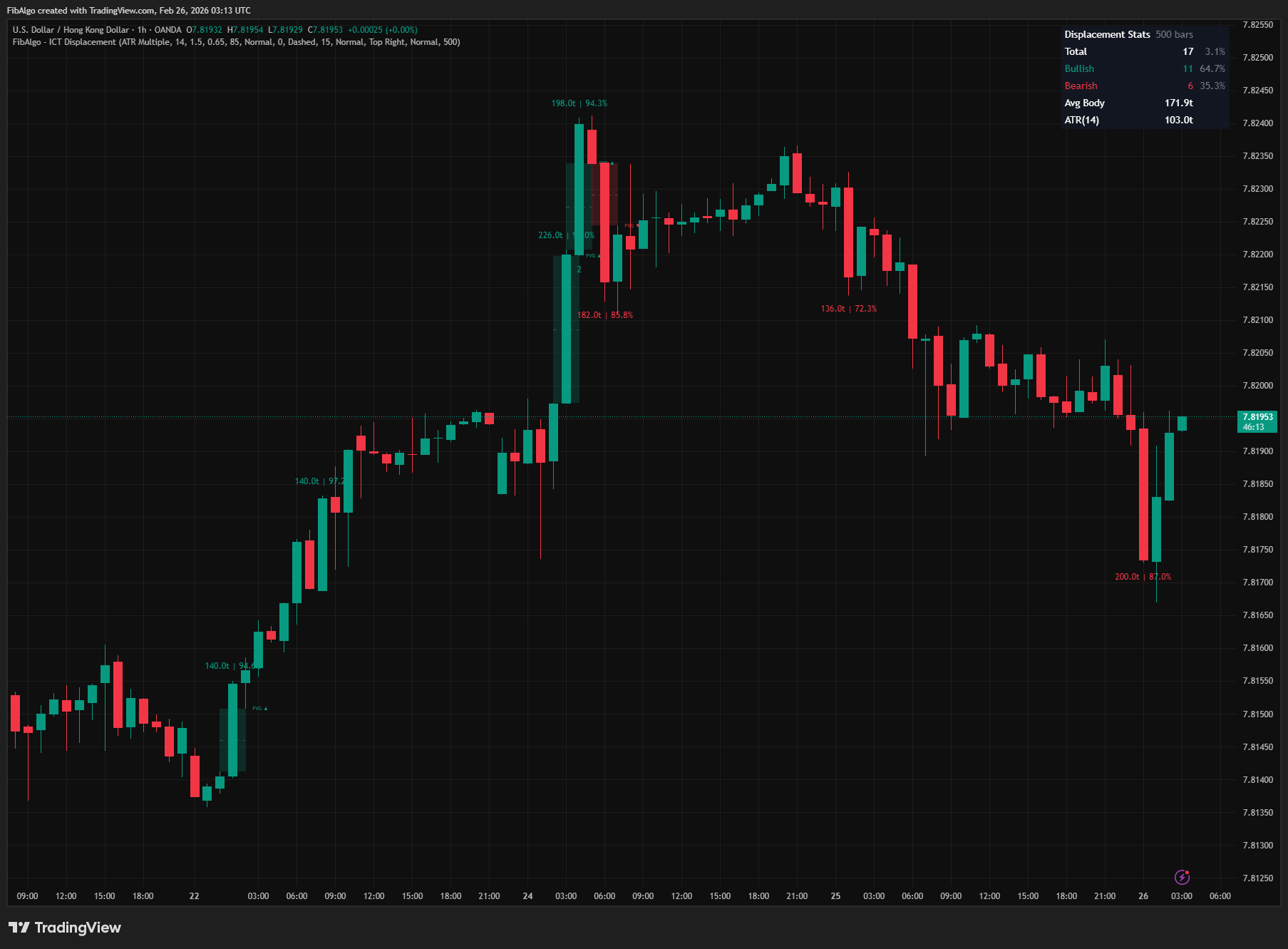
TradingView indicator that detects ICT Displacement candles — aggressive institutional order flow using ATR Multiple and Body/Range Ratio analysis.
See Details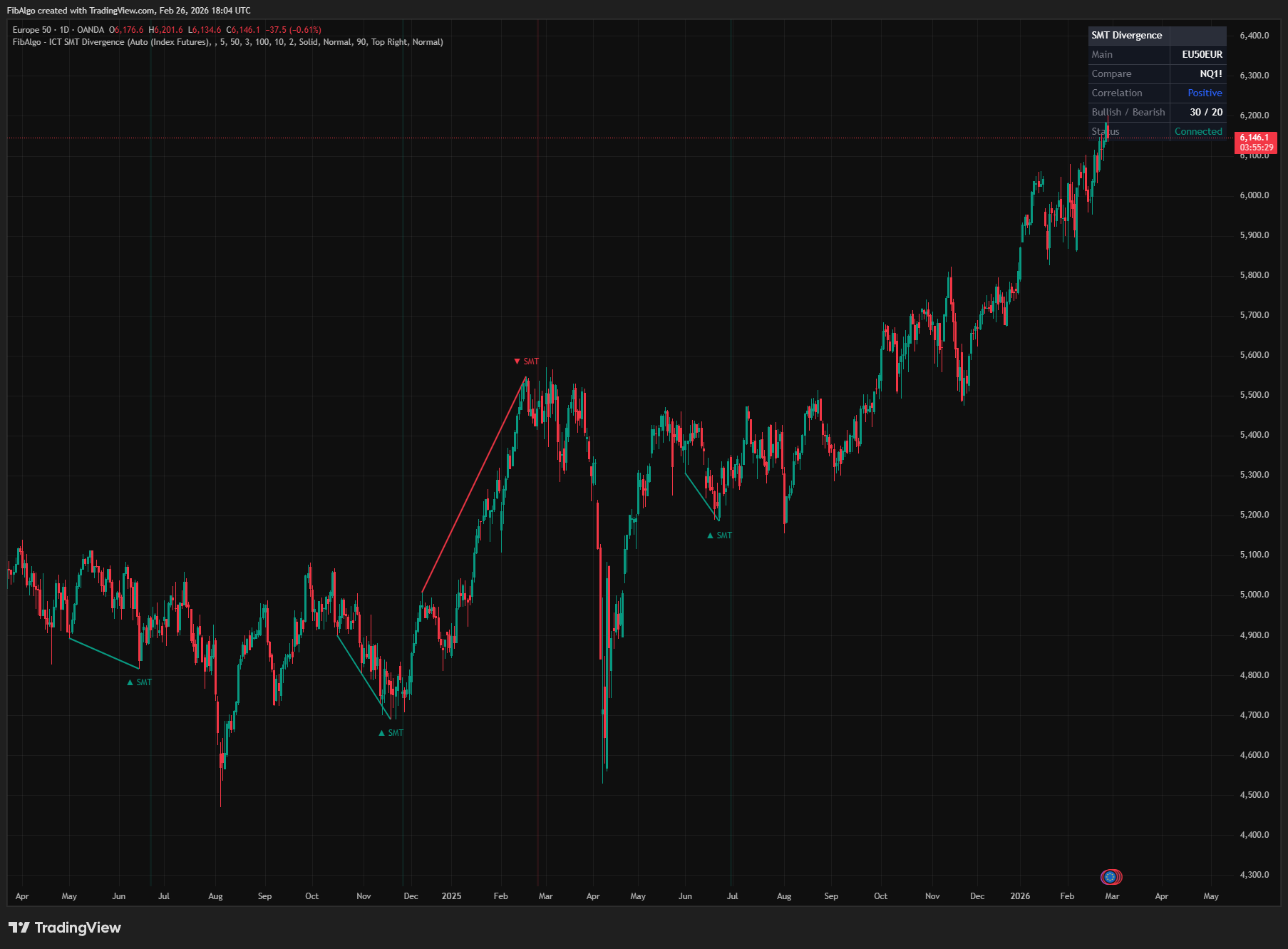
TradingView indicator that detects ICT SMT Divergence — cross-symbol analysis comparing swing extremes to identify institutional manipulation.
See Details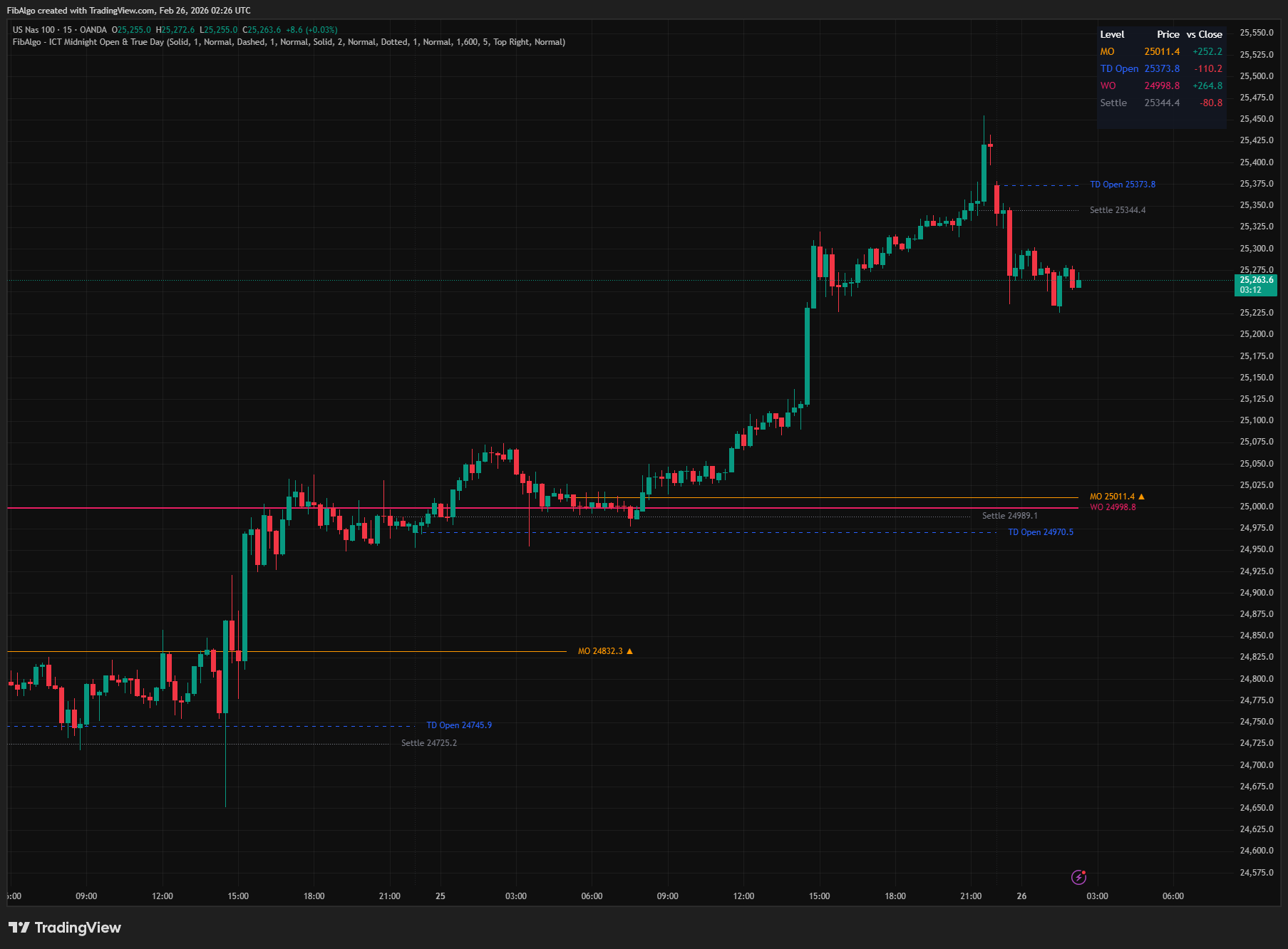
TradingView indicator that plots ICT Midnight Open, True Day Open, Weekly Open, and Settlement Price with directional bias analysis.
See Details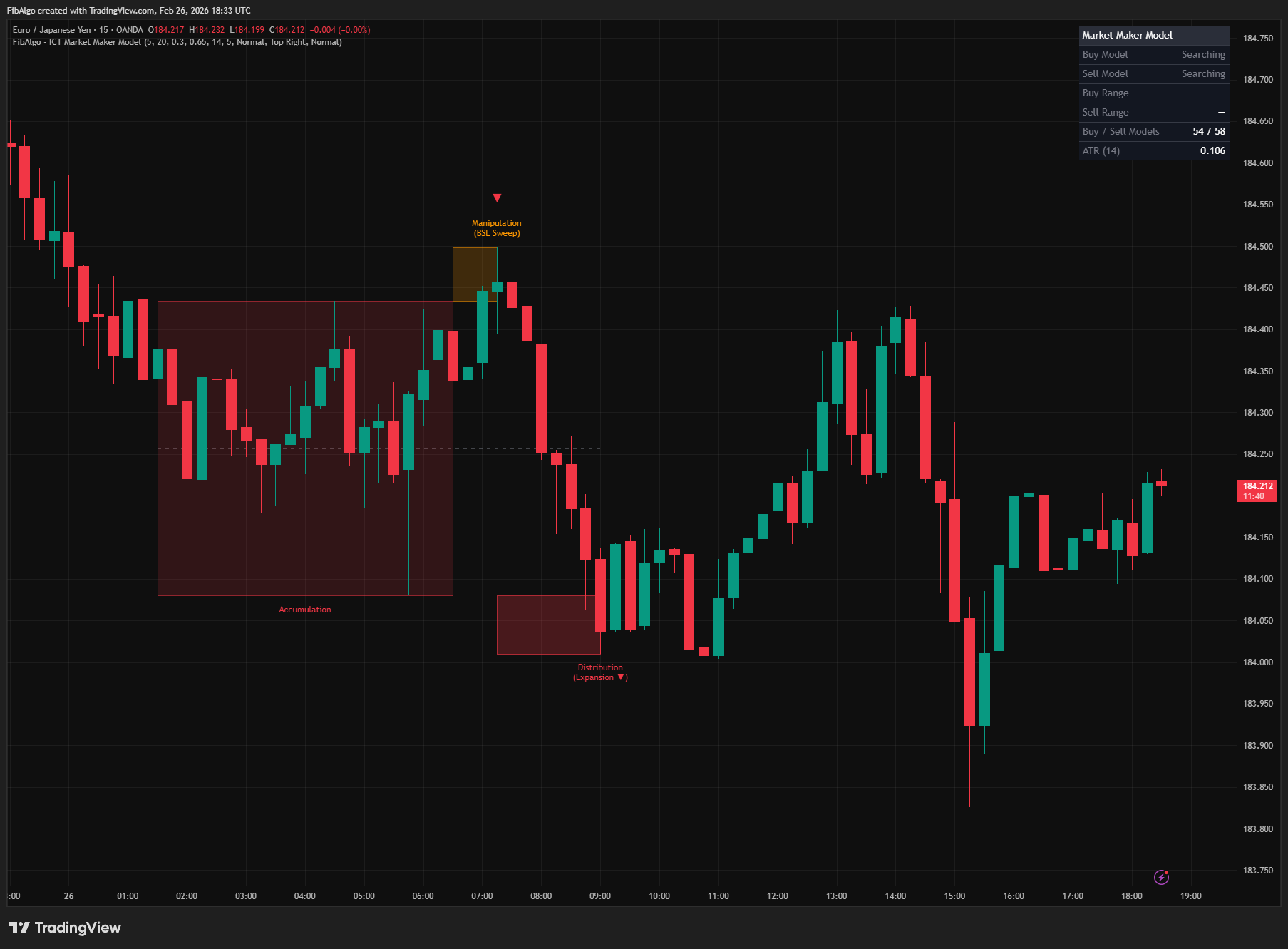
TradingView indicator that detects ICT Market Maker Model — the Accumulation, Manipulation, and Distribution institutional price cycle.
See Details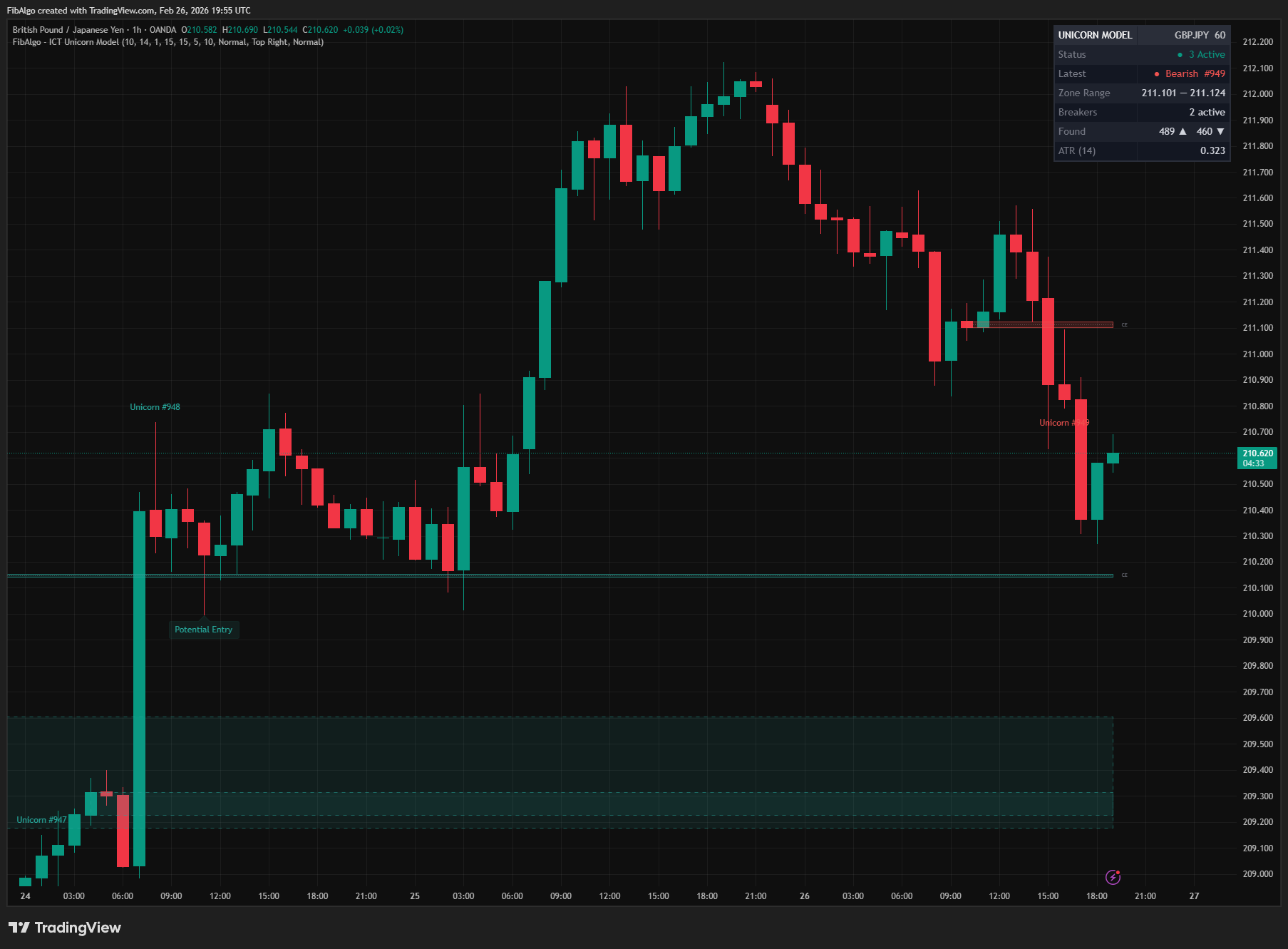
TradingView indicator that detects the ICT Unicorn Model — the setup where a Breaker Block and Fair Value Gap overlap.
See Details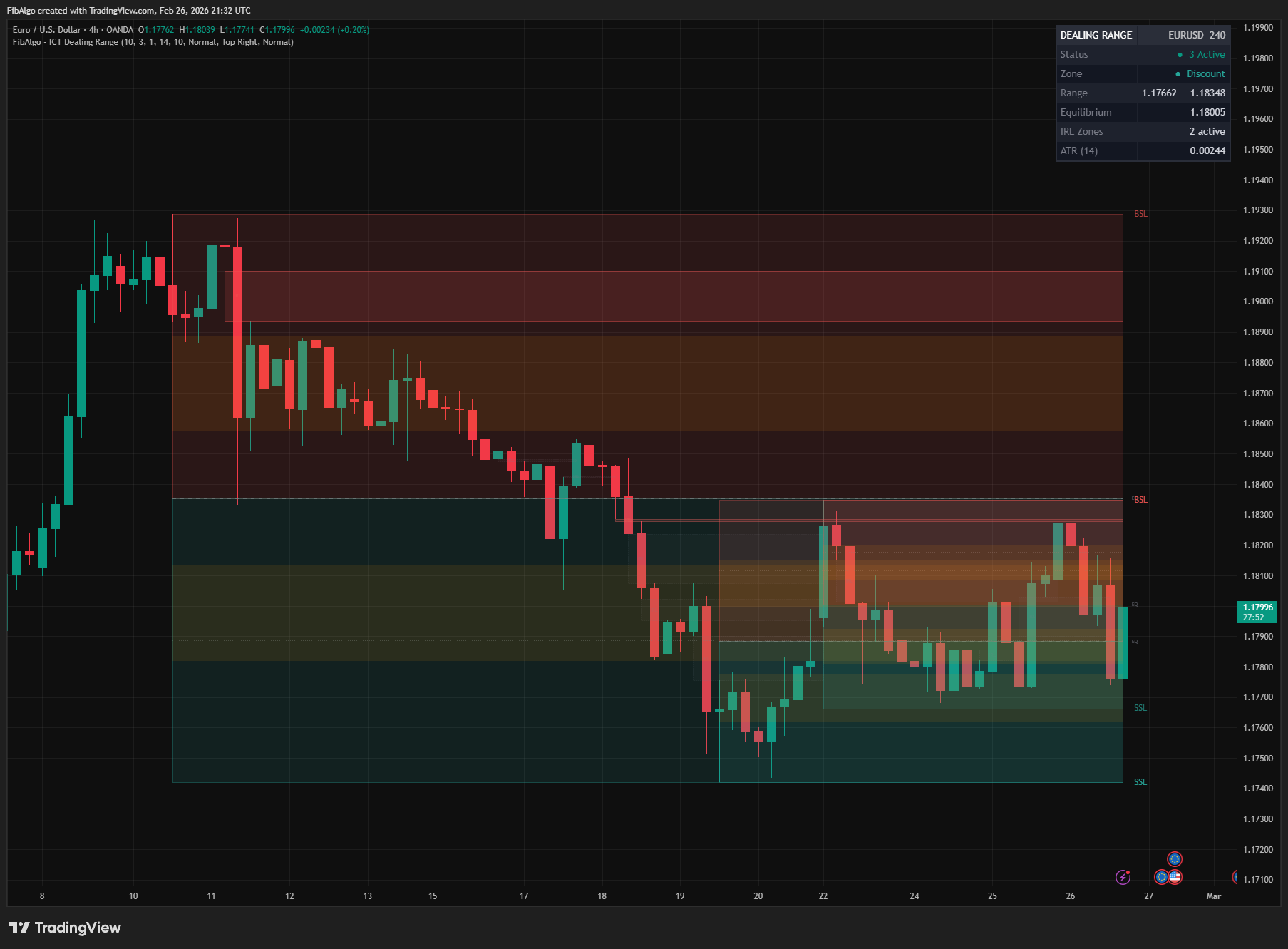
TradingView indicator that identifies ICT Dealing Ranges with Premium, Discount, and Equilibrium zones, plus internal and external range liquidity mapping.
See Details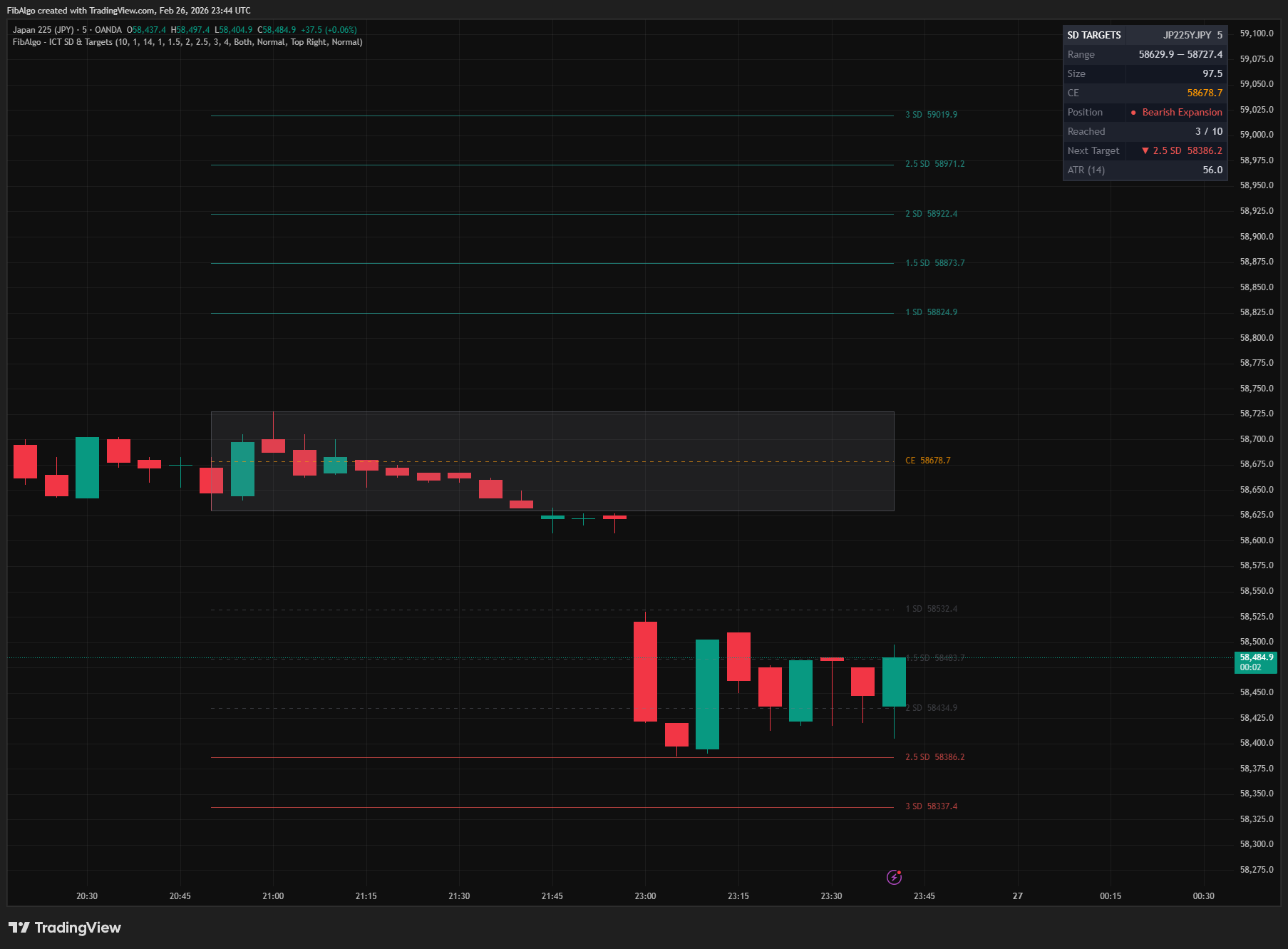
TradingView indicator that projects ICT Standard Deviation extension levels from swing ranges for identifying potential price targets.
See DetailsThe Wyckoff Methods series reads the market the way Richard Wyckoff did: through supply and demand, as seen in price and volume. It detects accumulation and distribution schematics with phases A to E, springs and upthrusts, selling and buying climaxes, and signs of strength and weakness with their LPS and LPSY confirmations. Other tools follow the four-phase price cycle, re-accumulation and re-distribution within trends, eight Volume Spread Analysis bar types and comparative strength against a benchmark. The whole series is free, and its volume-based tools work best on symbols with reliable volume data.
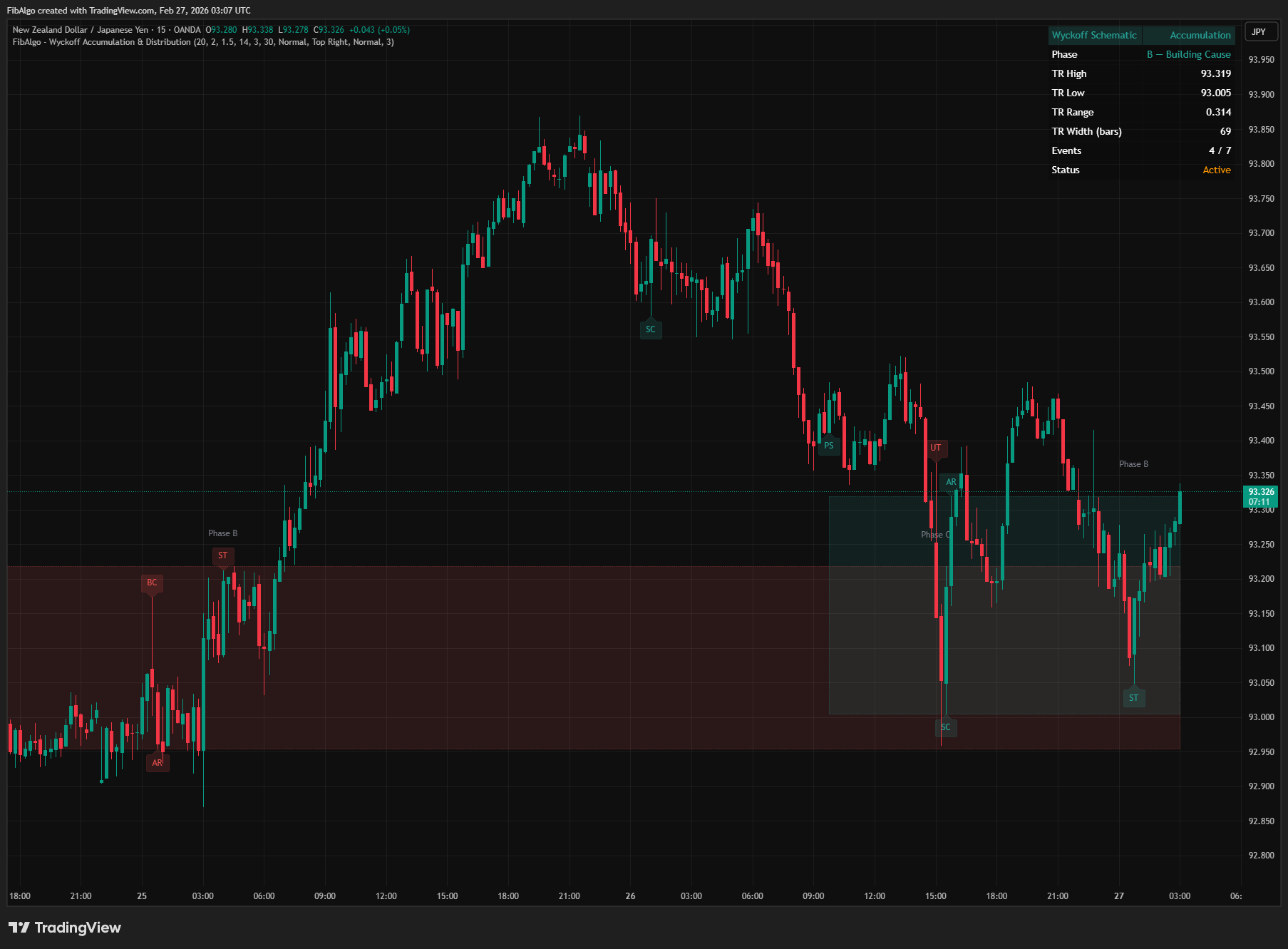
TradingView indicator that automatically detects Wyckoff Accumulation and Distribution schematics as each bar closes, with phase classification (A through E).
See Details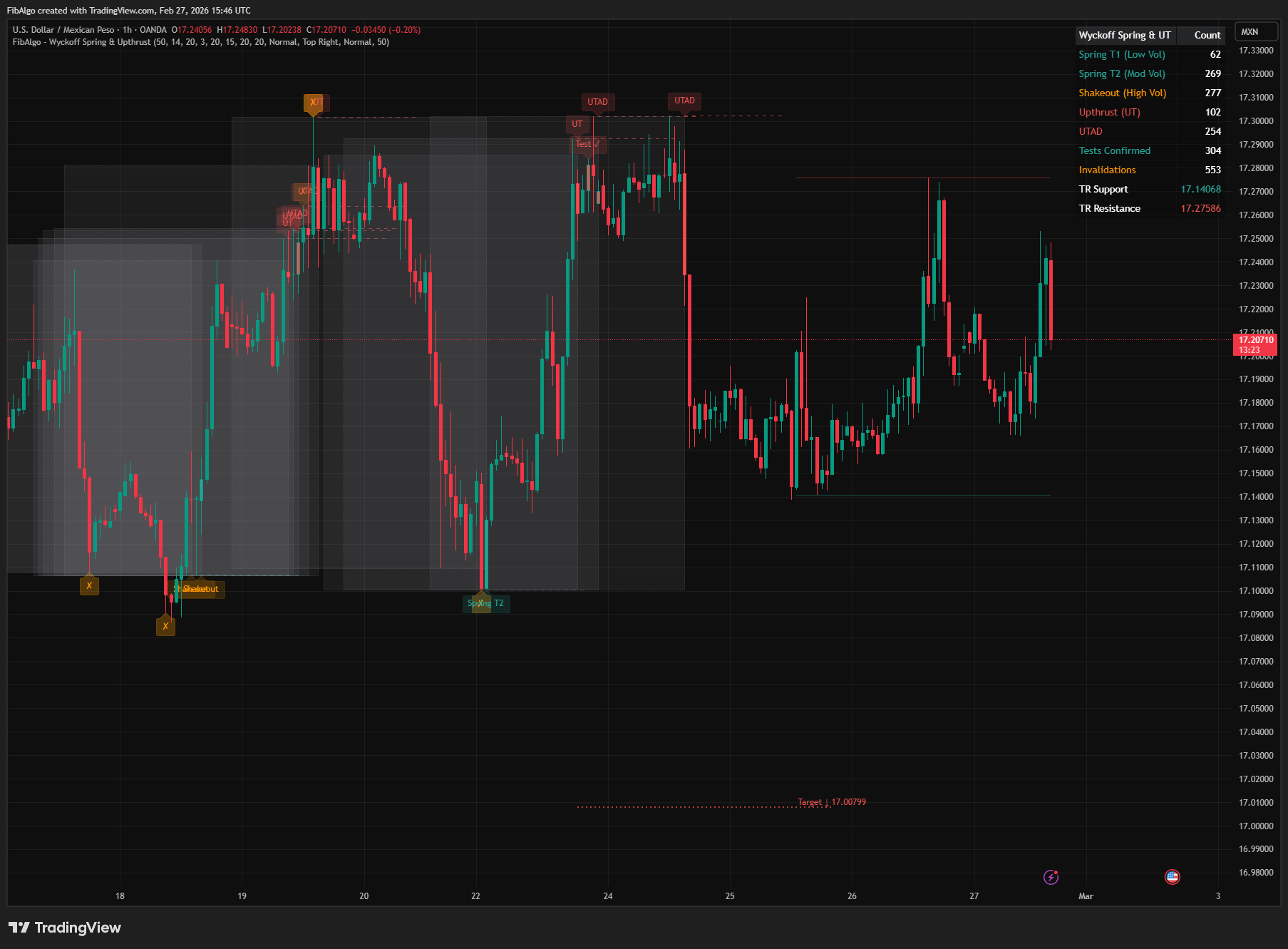
TradingView indicator that detects Wyckoff Springs and Upthrusts — the two most actionable reversal events with volume classification and price targets.
See Details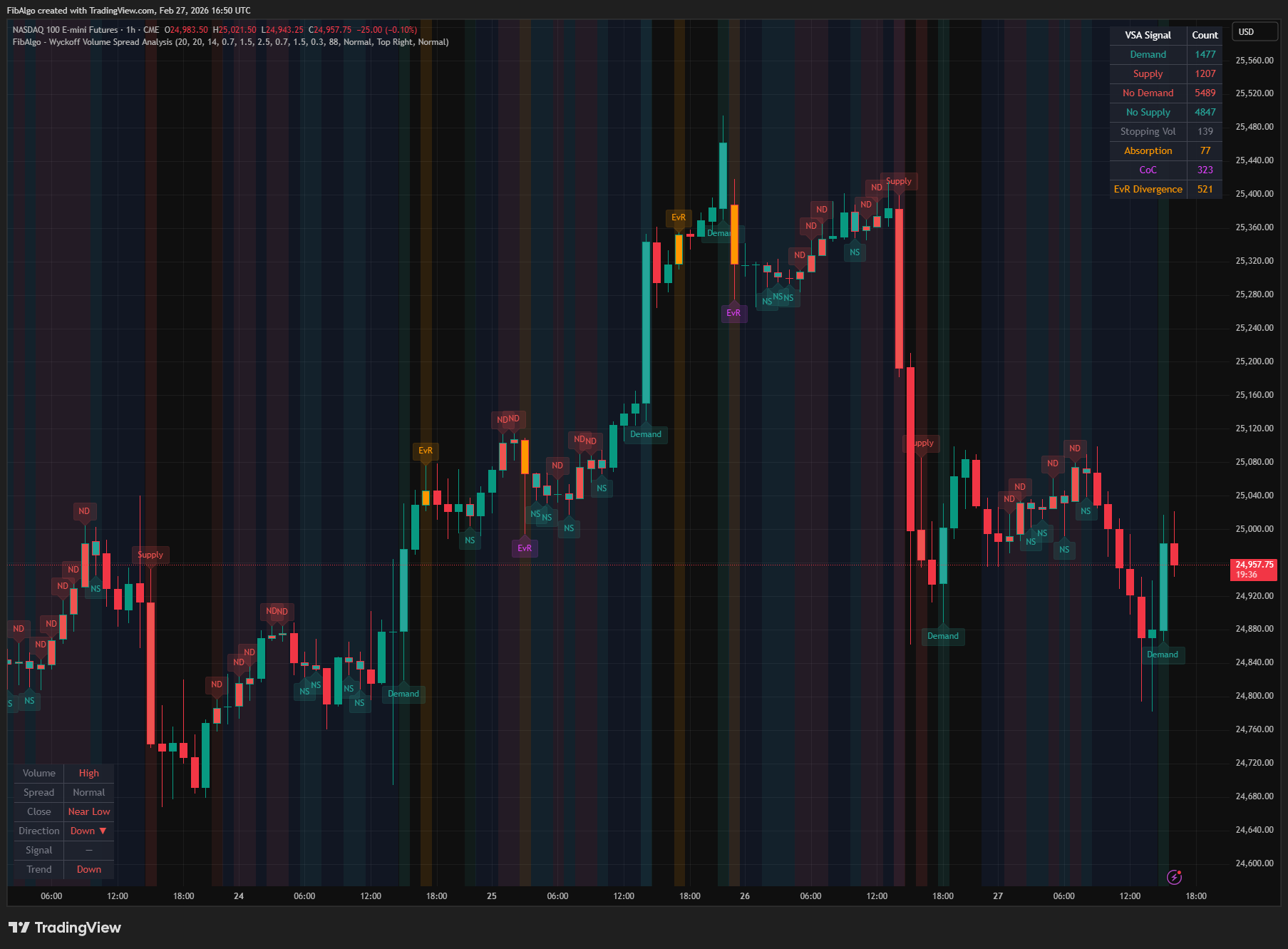
TradingView indicator that classifies bars into eight Wyckoff VSA signal types by analyzing volume, spread width, and close position.
See Details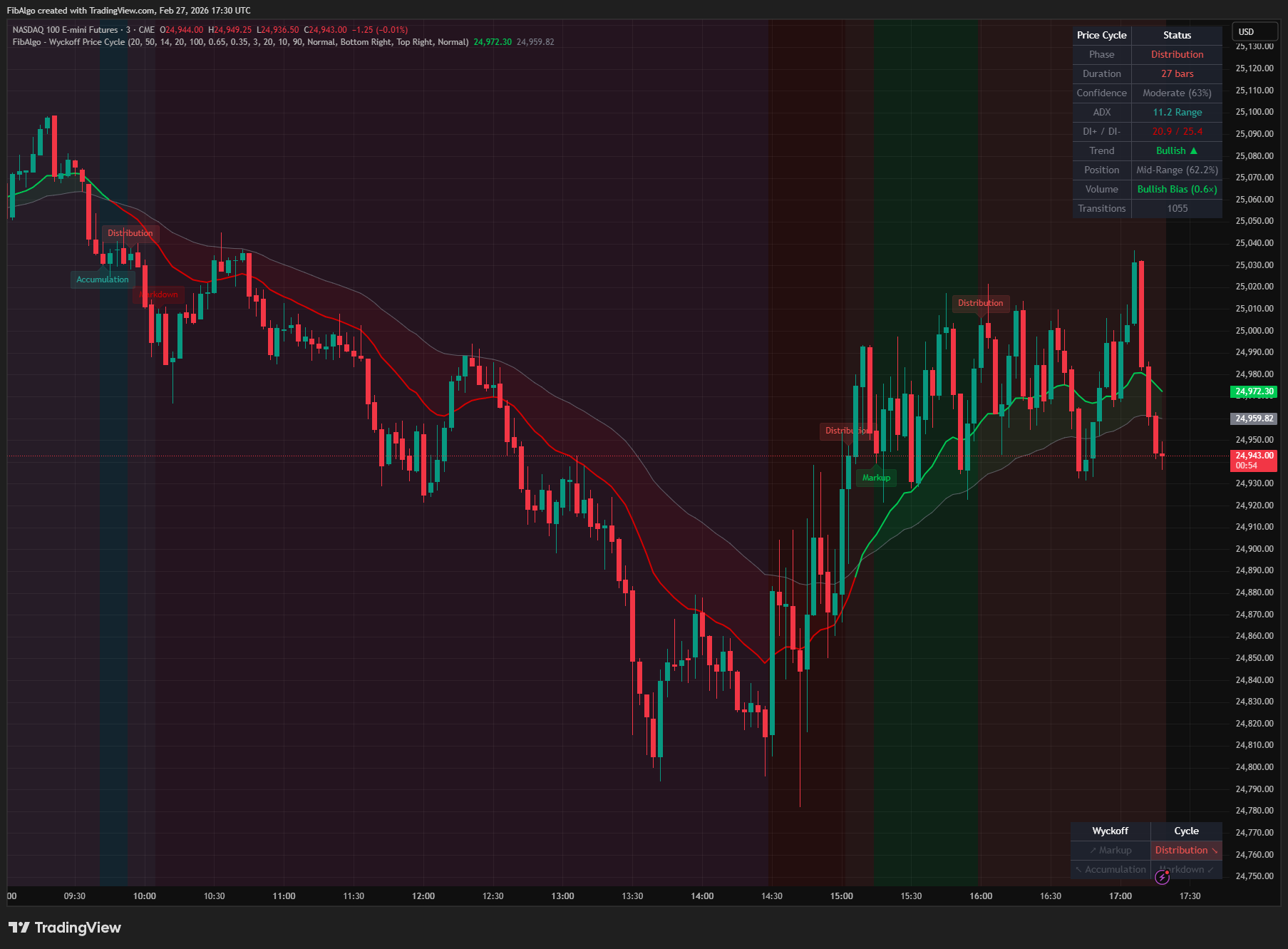
TradingView indicator that identifies the four Wyckoff market cycle phases — Accumulation, Markup, Distribution, and Markdown — confirmed on closed bars.
See Details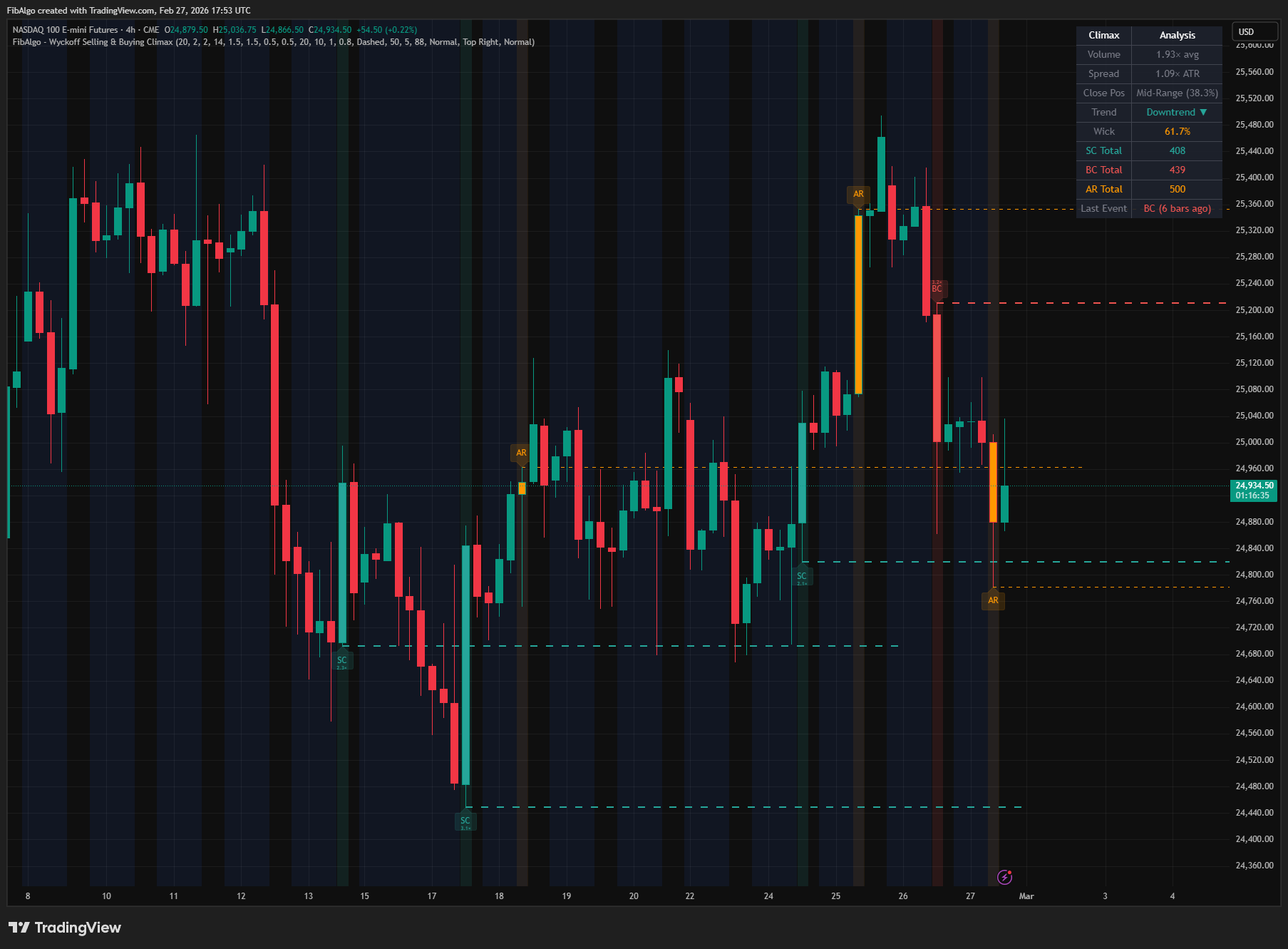
TradingView indicator that detects Wyckoff Selling and Buying Climax events — extreme institutional pressure signaling potential trend exhaustion.
See Details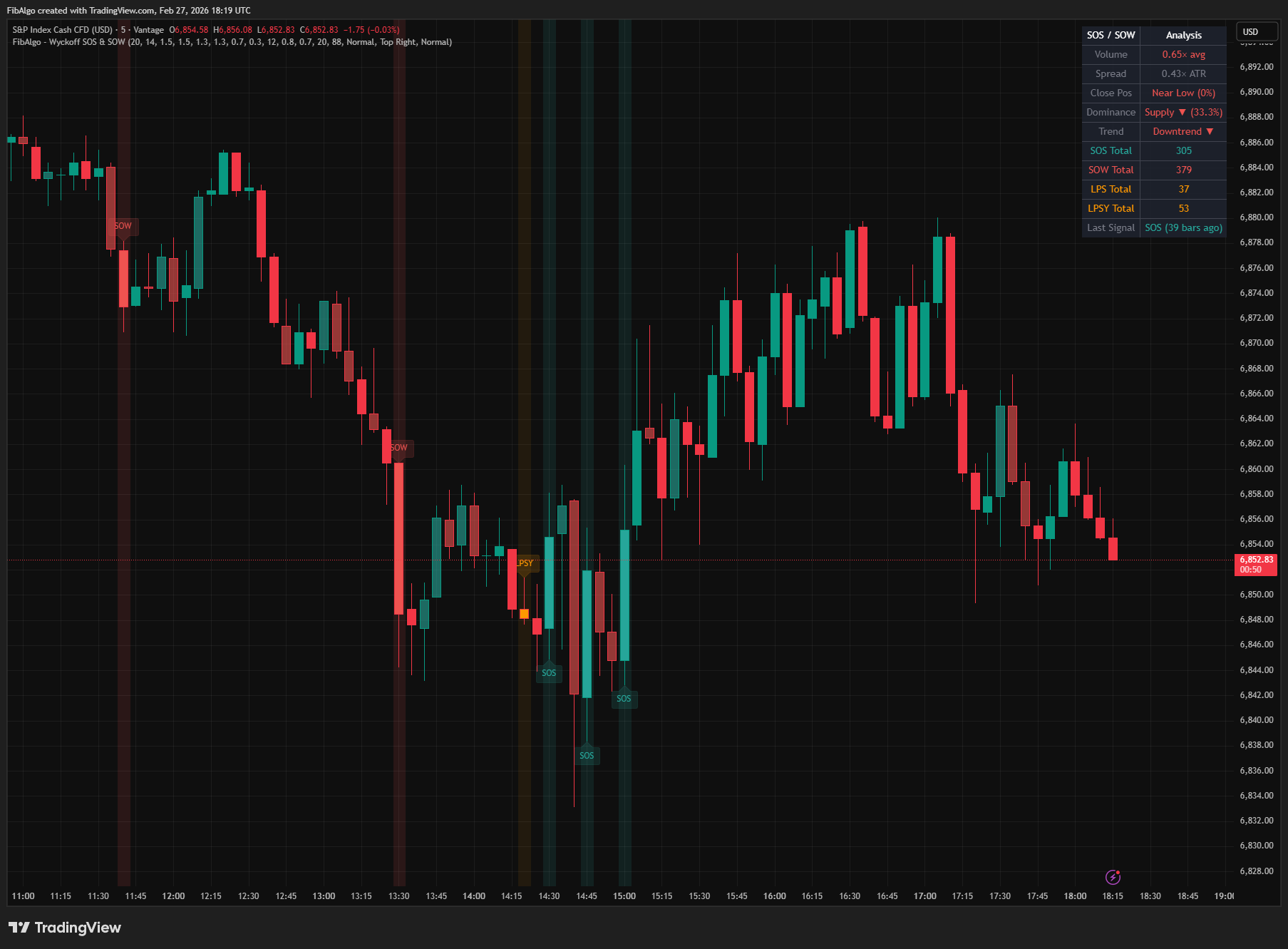
TradingView indicator that identifies Wyckoff Sign of Strength (SOS) and Sign of Weakness (SOW) events with LPS/LPSY confirmations.
See Details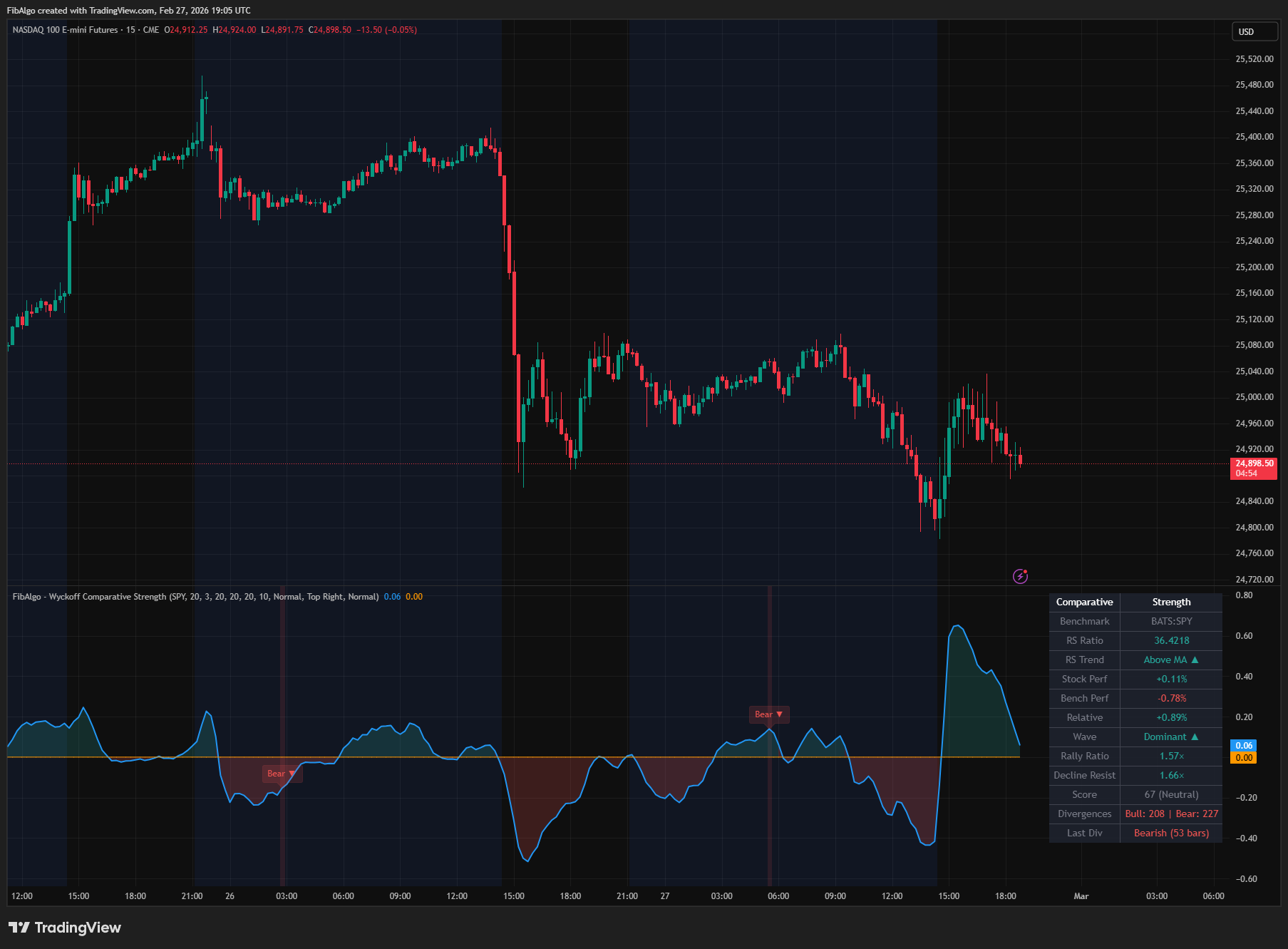
TradingView indicator that measures Wyckoff Comparative Strength — relative performance vs benchmark with RS oscillator and divergence analysis.
See Details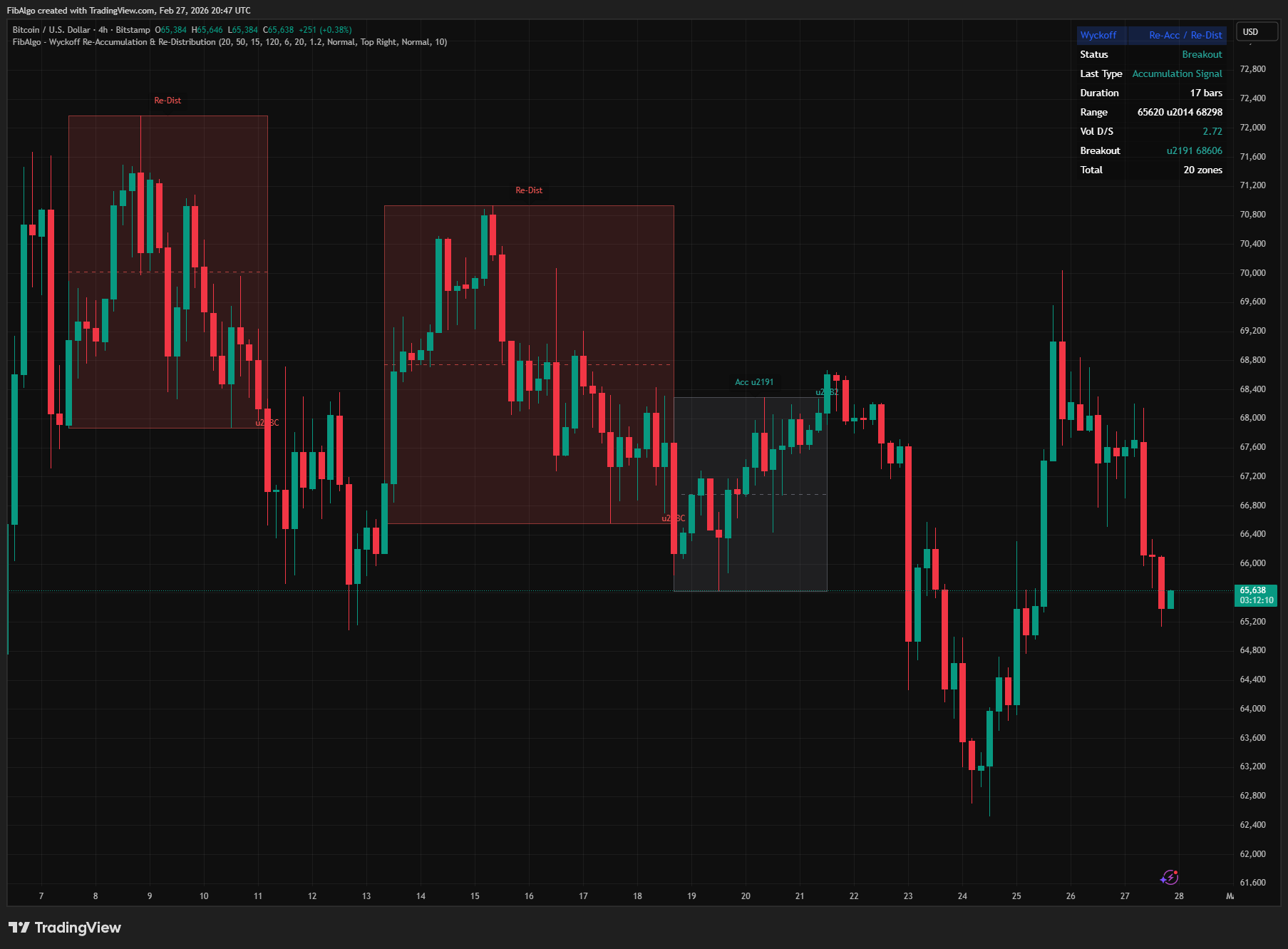
TradingView indicator that detects Wyckoff Re-Accumulation and Re-Distribution patterns — consolidation pauses within established market trends.
See DetailsGet the exclusive FibAlgo indicators: adaptive Fibonacci zones, trend and breakout tools, risk-to-reward setups and multi-symbol screening.