
Use this indicator directly on TradingView — the world's most popular charting platform.
What does the Wyckoff Selling & Buying Climax indicator do?
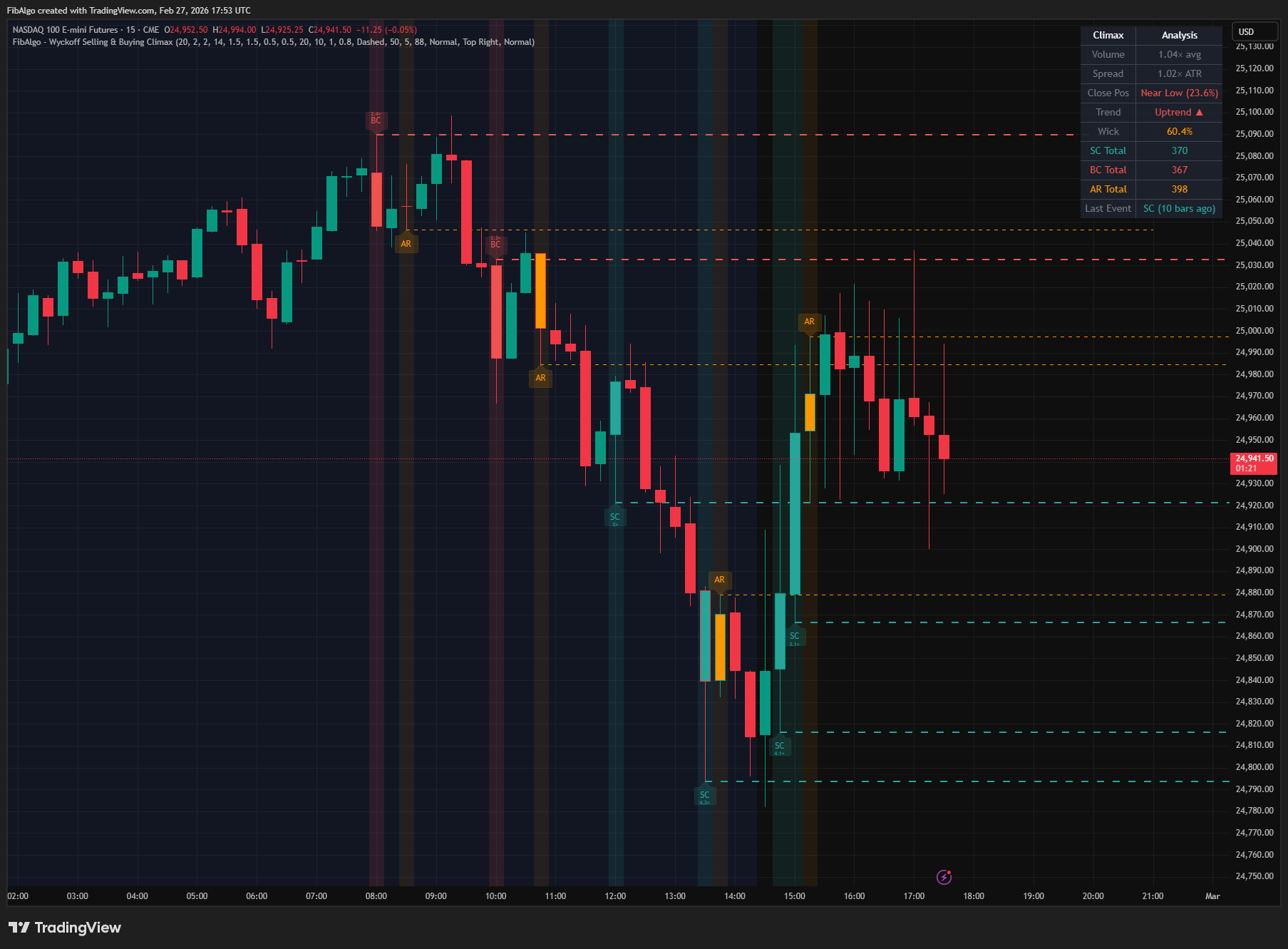
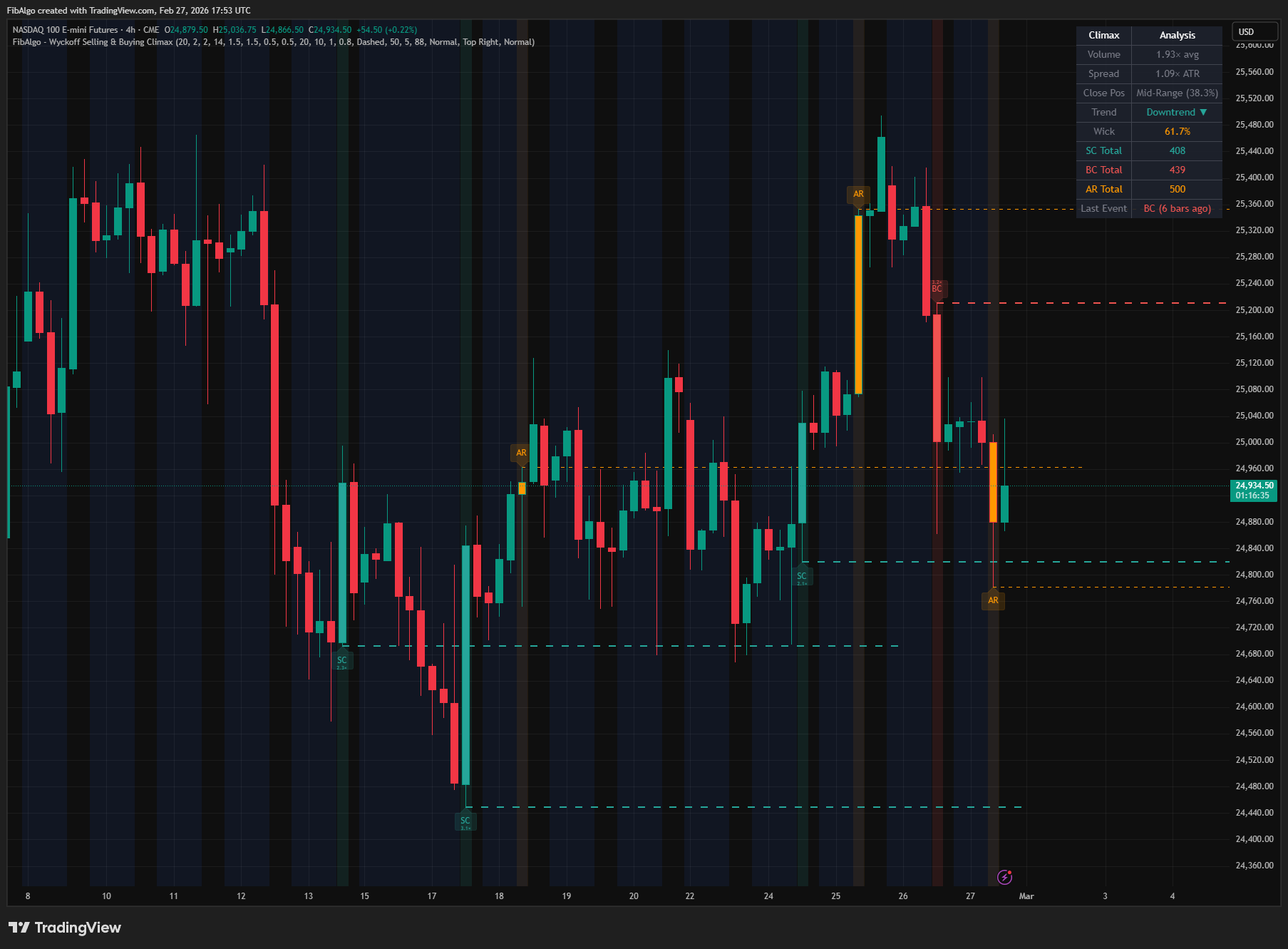
FibAlgo - Wyckoff Selling & Buying Climax detects the two most dramatic events in Wyckoff methodology: the Selling Climax (SC) and the Buying Climax (BC). These events mark the culmination of extreme selling or buying pressure where institutions absorb panic-driven public orders, often signaling the beginning of a new trading range. The indicator also identifies the Automatic Rally (AR) or Automatic Reaction that follows each climax, automatically drawing the resulting trading range boundaries. A multi-factor strength score grades each climax event.
Key Concepts
- Selling Climax (SC) — The point of maximum selling pressure at the end of a downtrend. Panicky selling by the public is absorbed by large institutional interests near a bottom. The bar shows extreme volume, wide spread, but the close is well off the low — indicating buyers stepped in. The SC low defines the lower boundary of the potential accumulation trading range.
- Buying Climax (BC) — The point of maximum buying pressure at the end of an uptrend. Urgent public buying is absorbed by institutional selling near a top. The bar shows extreme volume, wide spread, but the close is well off the high — indicating sellers stepped in. The BC high defines the upper boundary of the potential distribution trading range.
- Automatic Rally (AR) — The first significant counter-move after a Selling Climax. Intense selling pressure has diminished and a wave of buying plus short covering pushes prices up easily. The AR high defines the upper boundary of the trading range. AR volume is typically moderate — lighter than the climax itself.
- Automatic Reaction — The first significant counter-move after a Buying Climax. Buying pressure diminishes while heavy supply continues, causing a swift decline. The AR low defines the lower boundary of the trading range.
- Trading Range Formation — The SC low (or BC high) and the subsequent AR extreme together define the initial boundaries of the new trading range where accumulation or distribution will take place. This TR is the foundation for all subsequent Wyckoff analysis.
- Climax Strength Scoring — Each climax is graded (Strong/Moderate/Weak) based on the magnitude of the volume spike, bar spread relative to ATR, and the close position within the bar. Stronger climaxes carry higher reversal significance.
How does the Wyckoff Selling & Buying Climax indicator work?
1. Selling Climax Detection A Selling Climax requires all of the following conditions simultaneously:
- Prior downtrend confirmed via negative linear regression slope over the Trend Lookback period (default 20 bars)
- New extreme — the bar makes the lowest low of the Trend Lookback, so the climax marks the end of the decline
- Extreme volume — exceeding the Volume MA (default 20-period) of the preceding bars multiplied by the SC Volume Spike Multiplier (default 2.0×)
- Wide spread — bar range exceeding the ATR (default 14-period) of the preceding bars multiplied by the SC Spread Multiplier (default 1.5×)
- Close well off the low — close position above the SC Close Position Threshold (default 0.5) OR a long lower wick exceeding 50% of the bar range, indicating institutional absorption
Events are evaluated on closed bars only, and no event is produced until both averages have enough history.
2. Buying Climax Detection A Buying Climax requires all conditions below:
- Prior uptrend confirmed via positive linear regression slope
- New extreme — the bar makes the highest high of the Trend Lookback, so the climax marks the end of the advance
- Extreme volume exceeding the BC Volume Spike Multiplier (default 2.0×) times the volume average of the preceding bars
- Wide spread exceeding the BC Spread Multiplier (default 1.5×) times the ATR of the preceding bars
- Close well off the high — close position below the BC Close Position Threshold (default 0.5) OR a long upper wick exceeding 50% of the bar range, indicating supply entering from above
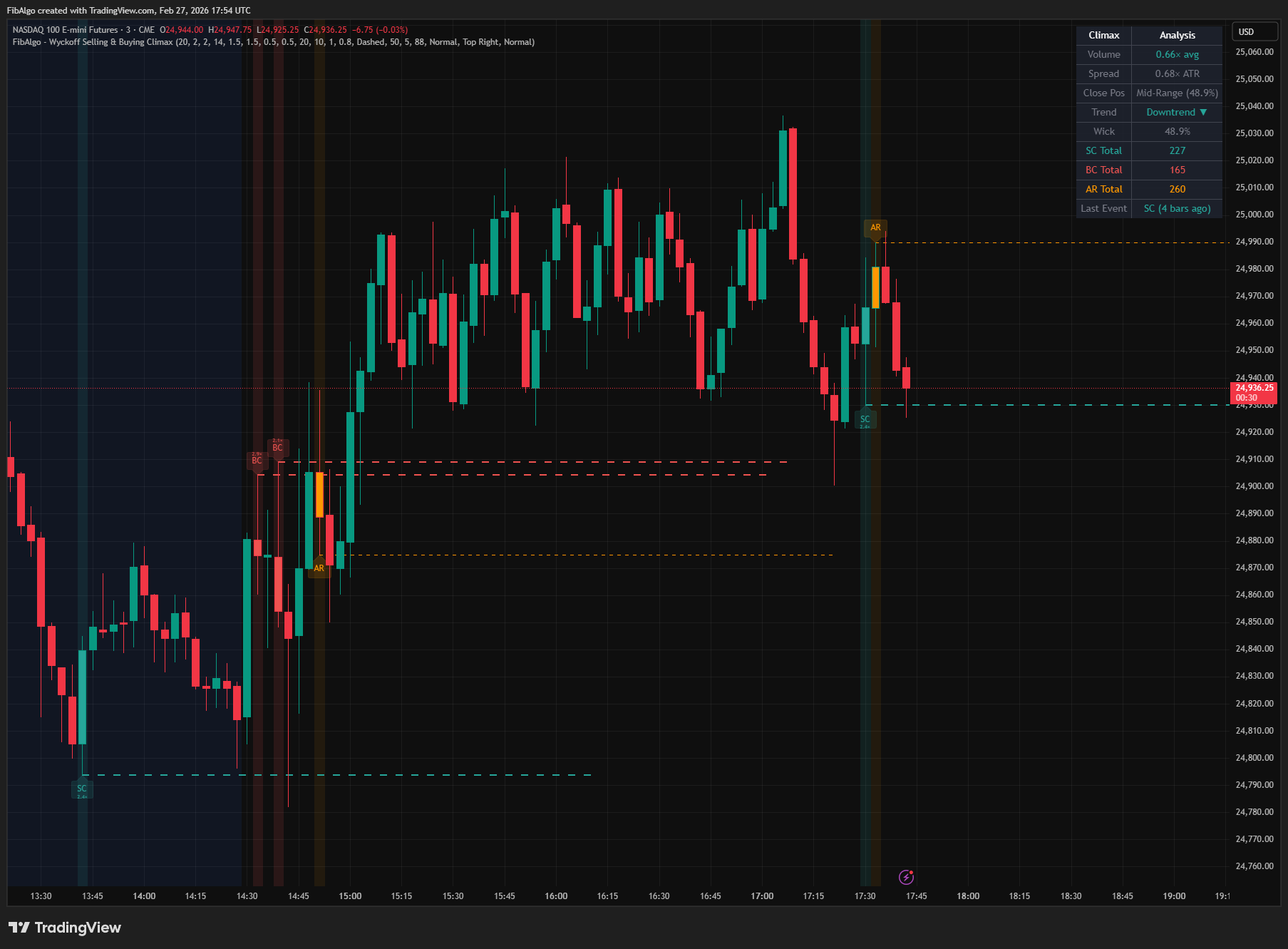
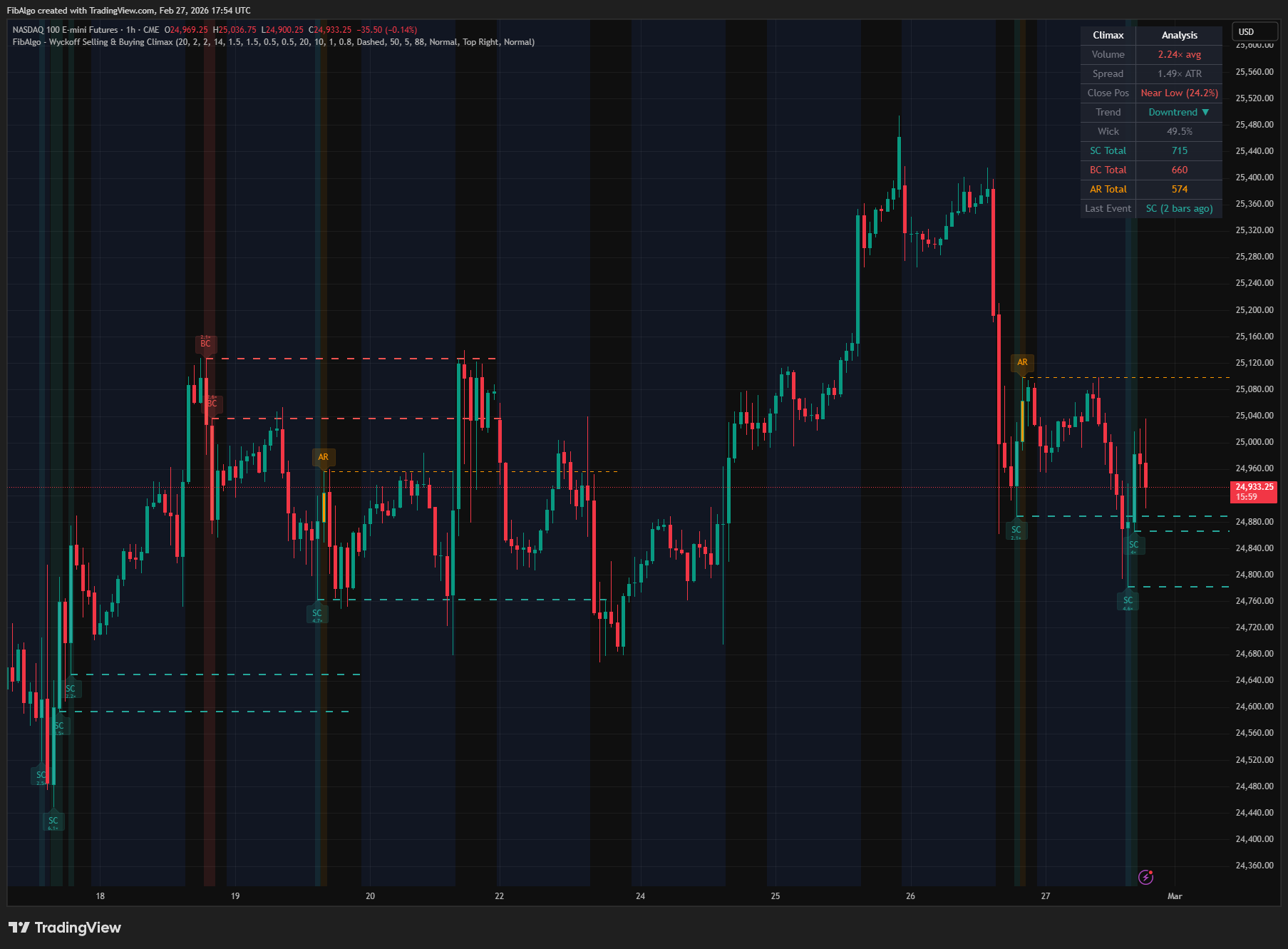
3. Automatic Rally / Reaction Detection After a climax is detected, the indicator watches for the first significant counter-move within a configurable window (default 10 bars):
- After SC: looks for an up bar closing in the upper half of its range, spread ≥ AR Minimum Spread (default 1.0× ATR), and volume ≥ AR Minimum Volume (default 0.8× average)
- After BC: looks for a down bar closing in the lower half of its range, meeting the same spread and volume criteria
If no AR is detected within the window, the search expires. The search is also cancelled when price closes below the SC low (or above the BC high) before an AR appears, because the climax level has already failed. Only one AR is matched per climax event.
The AR level is the extreme of the counter-move: the highest high since the SC (or the lowest low since the BC) when the AR is found. While the rally or reaction continues, the AR line follows new highs (lows) until a bar closes below the previous bar's low (above the previous bar's high after a BC) or the AR Detection Window length has passed. The AR label stays on the bar where the AR was recognized.
4. Trading Range Boundary Lines When enabled, the indicator automatically draws horizontal lines at critical levels:
- SC low — support line (thicker, climax color)
- AR high after SC — resistance line (thinner, AR color)
- BC high — resistance line (thicker, climax color)
- AR low after BC — support line (thinner, AR color)
Lines extend to the right by a configurable number of bars (default 50). Old lines are automatically cleaned up based on the Max TR Pairs setting (default 5) to prevent chart clutter; a climax line and its AR line are always removed together.
5. Climax Strength Scoring Each climax receives a 0-100% strength score based on three components:
- Volume component (0-40 pts) — how far above the minimum threshold the volume spike reaches (0 pts at the threshold, full points at twice the threshold)
- Spread component (0-30 pts) — how far the bar spread exceeds the ATR requirement (full points at twice the requirement)
- Close/wick component (0-30 pts) — for SC, the better of how far the close position is above the SC Close Position Threshold (absorption) or how far the lower wick exceeds 50% of the range; for BC, the better of how far the close position is below the BC Close Position Threshold (rejection) or how far the upper wick exceeds 50% of the range
Grades: Strong (75%+), Moderate (50-74%), Weak (below 50%). Displayed in label tooltips and alert messages.
Features
- Selling Climax Detection — Identifies extreme selling pressure bars with volume spikes, wide spreads, and institutional absorption (close well off the low or long lower wick)
- Buying Climax Detection — Identifies extreme buying pressure bars with volume spikes, wide spreads, and supply rejection (close well off the high or long upper wick)
- Automatic Rally/Reaction Detection — Detects the first significant counter-move after each climax within a configurable window, completing the trading range pair
- Trading Range Boundary Lines — Automatically draws support and resistance lines at SC low, AR high, BC high, and AR low to define the expected trading range
- Climax Strength Scoring — Grades each climax (Strong/Moderate/Weak) based on volume magnitude, spread width, and close position for reliability assessment
- Volume Spike Markers — The exact volume multiple shown inside each SC/BC tag for quick quantification
- Separate SC and BC Thresholds — Independent volume spike and spread multipliers for selling and buying climaxes, allowing asymmetric sensitivity tuning
- Wick Analysis — Detects long lower wicks (SC) and long upper wicks (BC) as alternative absorption/rejection signals beyond close position alone
- TR Line Management — Configurable line style, extension length, and maximum number of TR pairs with automatic old-line cleanup
- Background and Bar Coloring — Optional background tinting and candle coloring on climax and AR bars for instant visual identification
- Info Table — Detailed real-time metrics including Volume Ratio, Spread/ATR, Close Position, Trend, Wick Ratio, event counts, and last climax age; shows "No volume data" on symbols without volume
- Comprehensive Alert System — Individual alerts for SC, BC, and AR events, sent once at the close of the event bar, with detailed messages including symbol, timeframe, price, volume ratio, spread, strength grade (climaxes), and critical levels (SC low, BC high, AR level and trading range)
- Full Customization — 32 inputs across 6 groups covering climax detection, AR detection, trading range, visual style, display, and alerts
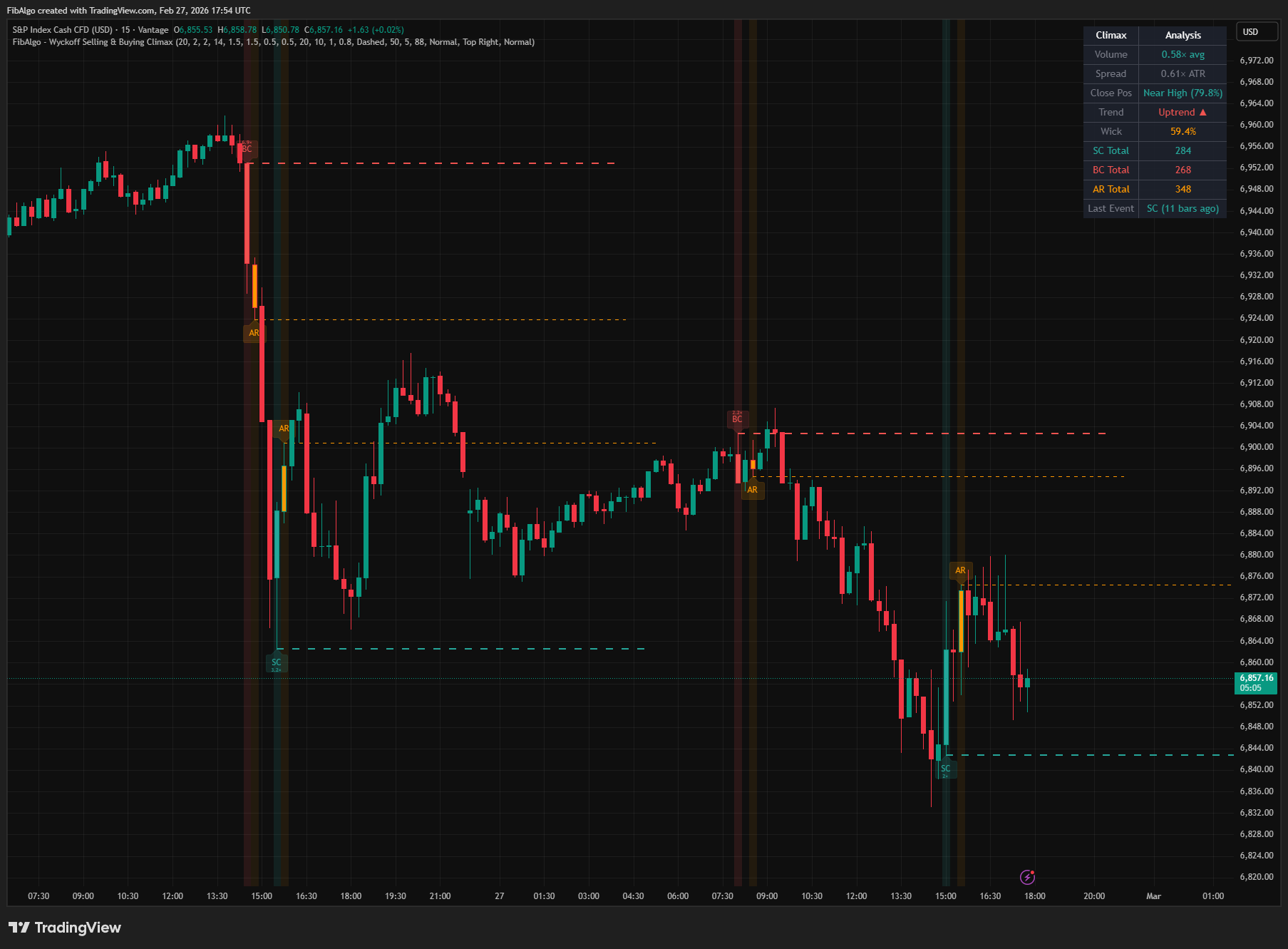
How to use the Wyckoff Selling & Buying Climax indicator
- Add the indicator to your chart. It works on all timeframes but is most effective on 15-minute to daily charts where climax volume dynamics are clearly visible.
- Watch for SC events after extended downtrends — these suggest institutional accumulation at low prices. The SC low becomes a key support level.
- When an AR follows the SC, the trading range is established. Expect price to oscillate between the SC low (support) and the AR high (resistance) during the accumulation phase.
- Watch for BC events after extended uptrends — these suggest institutions are distributing holdings to eager public buyers. The BC high becomes a key resistance level.
- Use the Climax Strength grade to filter events. Strong climaxes (75%+) carry more reversal significance than Weak ones.
- The volume multiple inside each SC/BC tag gives immediate visual feedback on how extreme the bar's volume was relative to its average.
- Combine with other Wyckoff indicators: after a SC, look for Spring/Upthrust signals (#2) within the trading range; use VSA (#3) to analyze bar-by-bar volume behavior; check the Price Cycle (#4) for phase confirmation.
- Adjust the Volume Spike Multiplier higher (2.5-3.0×) for less noise on volatile instruments, or lower (1.5-1.8×) for calmer markets or smaller timeframes.
- Increase the Trend Lookback on higher timeframes for more reliable trend context, or decrease it on lower timeframes for faster response.
- Watch the Info Table for real-time volume and spread conditions — when volume approaches the climax threshold during a trending market, a climax may be imminent.
Limitations
- This indicator does not generate buy or sell signals. It identifies climax events and trading range boundaries for educational and analytical purposes based on Wyckoff methodology.
- Climax detection is inherently a lagging identification — the climax bar is confirmed at bar close, not in real time during the bar formation. Alerts fire once, at the close of the event bar.
- Volume data reliability varies by instrument and exchange. Forex spot volume is typically tick volume and may not accurately represent institutional activity.
- Symbols without volume data produce no events; the info table then shows "No volume data".
- The AR line can move for a few bars after the AR is detected while the rally or reaction is still extending. The AR alert reports the level at the moment of detection.
- Not every extreme volume bar is a true climax. Some may be news-driven spikes without institutional accumulation/distribution. Use the strength score and subsequent price action (AR confirmation) to validate.
- The AR detection window has a finite length. In rare cases, the automatic rally/reaction may occur outside this window and go undetected.
- TR boundary lines are initial estimates. In practice, secondary tests (STs) and springs may create lower TR boundaries than the original SC low.
- Past climax events do not guarantee future reversal behavior.
- Maximum 500 labels and 500 lines are supported by Pine Script. Old TR lines are automatically cleaned up, but many climax events on low timeframes could approach label limits.
Trading involves risk. This indicator is an analysis tool, not financial advice: use it alongside your own analysis and risk management.
Release notes
v2.0LatestReal swing climaxes, bar-close events and a full strength scale
A climax must now make the lowest low or highest high of the Trend Lookback, events and alerts use closed bars only, and the strength score can show every grade.
After updating
- Delete and re-create your alerts for this indicator with the "Any alert() function call" condition. TradingView alerts keep running the script version they were created with.
- Alert messages now start with the symbol and timeframe. If you filter alert messages automatically, for example through a webhook, update your filters.
Fixed
- Events, labels, colors and alerts use closed bars only, and alerts fire once at bar close.
- The climax bar must make the lowest low (SC) or highest high (BC) of the Trend Lookback, so wide bars in the middle of a move, and AR bars, are no longer marked as climaxes.
- Volume and ATR thresholds use the bars before the signal, so a spike no longer raises its own threshold.
- False events at the start of the chart, before the averages had enough history, are gone.
- The volume multiple no longer overlaps the SC/BC tag; it now sits inside the tag. Max TR Pairs now removes climax and AR lines together.
Improved
- The AR level follows the rally or reaction to its extreme, and the AR search stops if price closes beyond the climax first.
- The strength score measures how far each factor exceeds its threshold, so all grades, including Weak, can appear. Alert messages include the symbol and timeframe, the AR alert adds its level and the trading range, and the info table shows when a symbol has no volume data.
Frequently Asked Questions
What is the Wyckoff Selling & Buying Climax indicator?
TradingView indicator that detects Wyckoff Selling and Buying Climax events — extreme institutional pressure signaling potential trend exhaustion.
Is Wyckoff Selling & Buying Climax free to use on TradingView?
Yes, Wyckoff Selling & Buying Climax is completely free to use. You can add it directly to your TradingView charts at no cost.
How do I add Wyckoff Selling & Buying Climax to my TradingView chart?
Open TradingView, click on "Indicators" at the top of your chart, search for "Wyckoff Selling & Buying Climax" by FibAlgo, and click to add it. It will appear on your chart immediately.
What trading strategies work best with Wyckoff Selling & Buying Climax?
Wyckoff Selling & Buying Climax is commonly used for Wyckoff Method, Volume Based, and Signals analysis. It works well as part of a multi-indicator confirmation strategy on any timeframe.
Learn More
- Technical Analysis for Crypto Trading: The Definitive GuideLearn technical analysis from basics to advanced for cryptocurrency trading. Master chart patterns, indicators, volume analysis, and multi-timeframe strategies.
- Smart Money Concepts (SMC): How Institutional Traders Move MarketsLearn Smart Money Concepts including order blocks, fair value gaps, liquidity sweeps, and breaker blocks. Understand how institutions trade.
- Risk Management in Crypto Trading: The Complete Survival GuideMaster position sizing, stop losses, portfolio allocation, and emotional discipline for crypto trading. Learn why risk management matters most.
Start Using Wyckoff Selling & Buying Climax
This indicator is free to use on TradingView. Add it to your charts and use it alongside your own analysis.
Related indicators
View All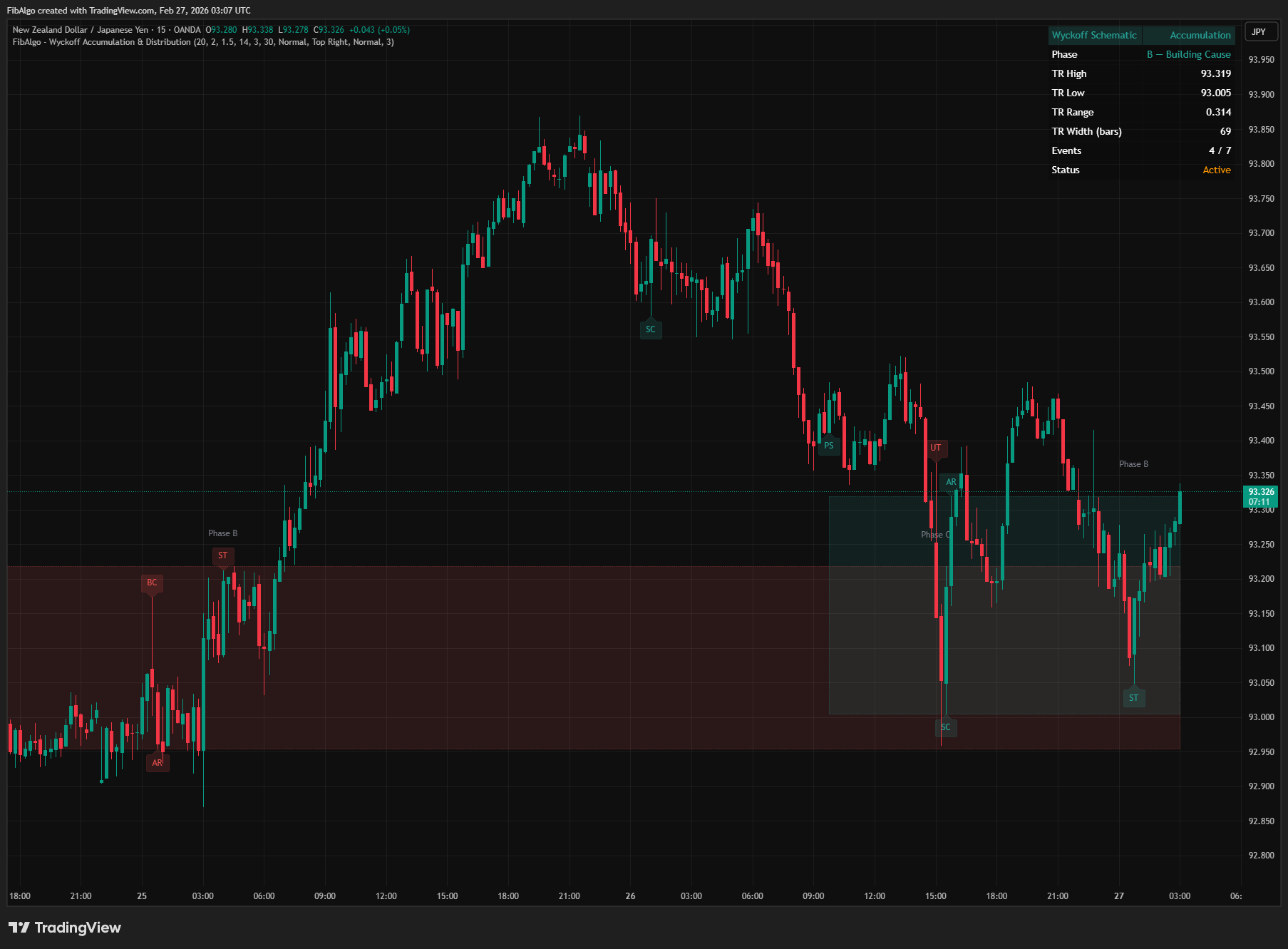
Wyckoff Accumulation & Distribution
TradingView indicator that automatically detects Wyckoff Accumulation and Distribution schematics as each bar closes, with phase classification (A through E).
See Details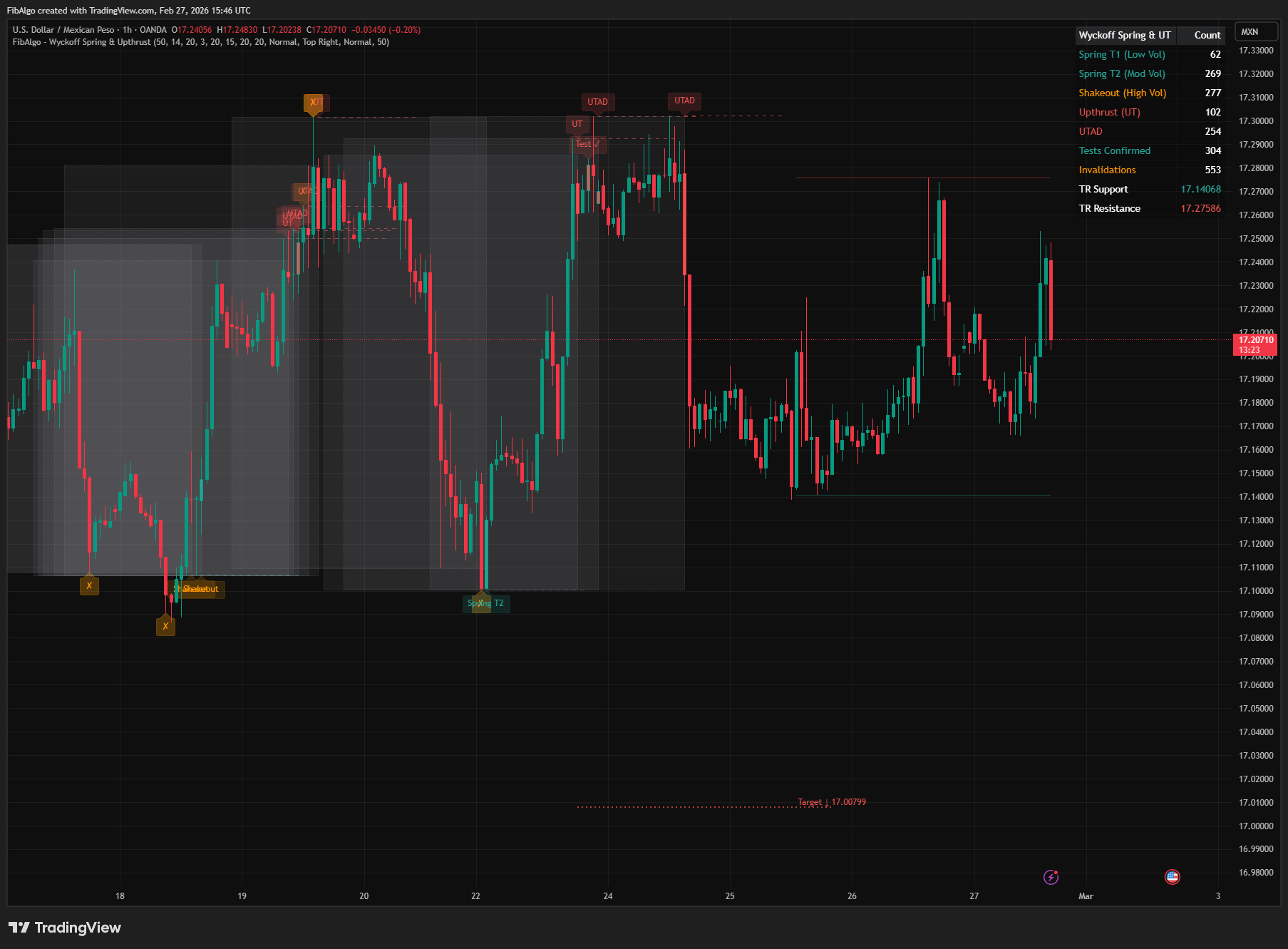
Wyckoff Spring & Upthrust
TradingView indicator that detects Wyckoff Springs and Upthrusts — the two most actionable reversal events with volume classification and price targets.
See Details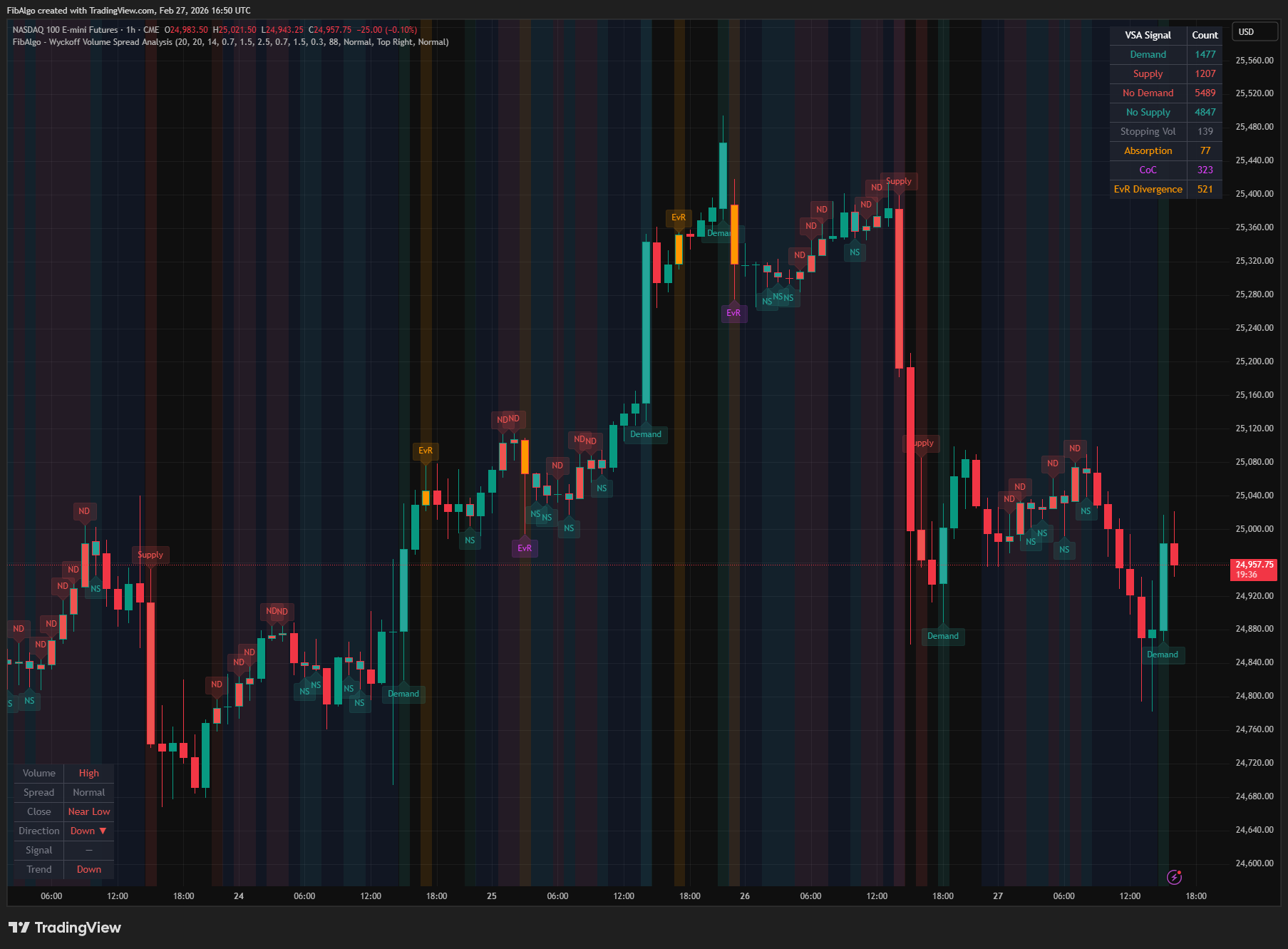
Wyckoff Volume Spread Analysis
TradingView indicator that classifies bars into eight Wyckoff VSA signal types by analyzing volume, spread width, and close position.
See Details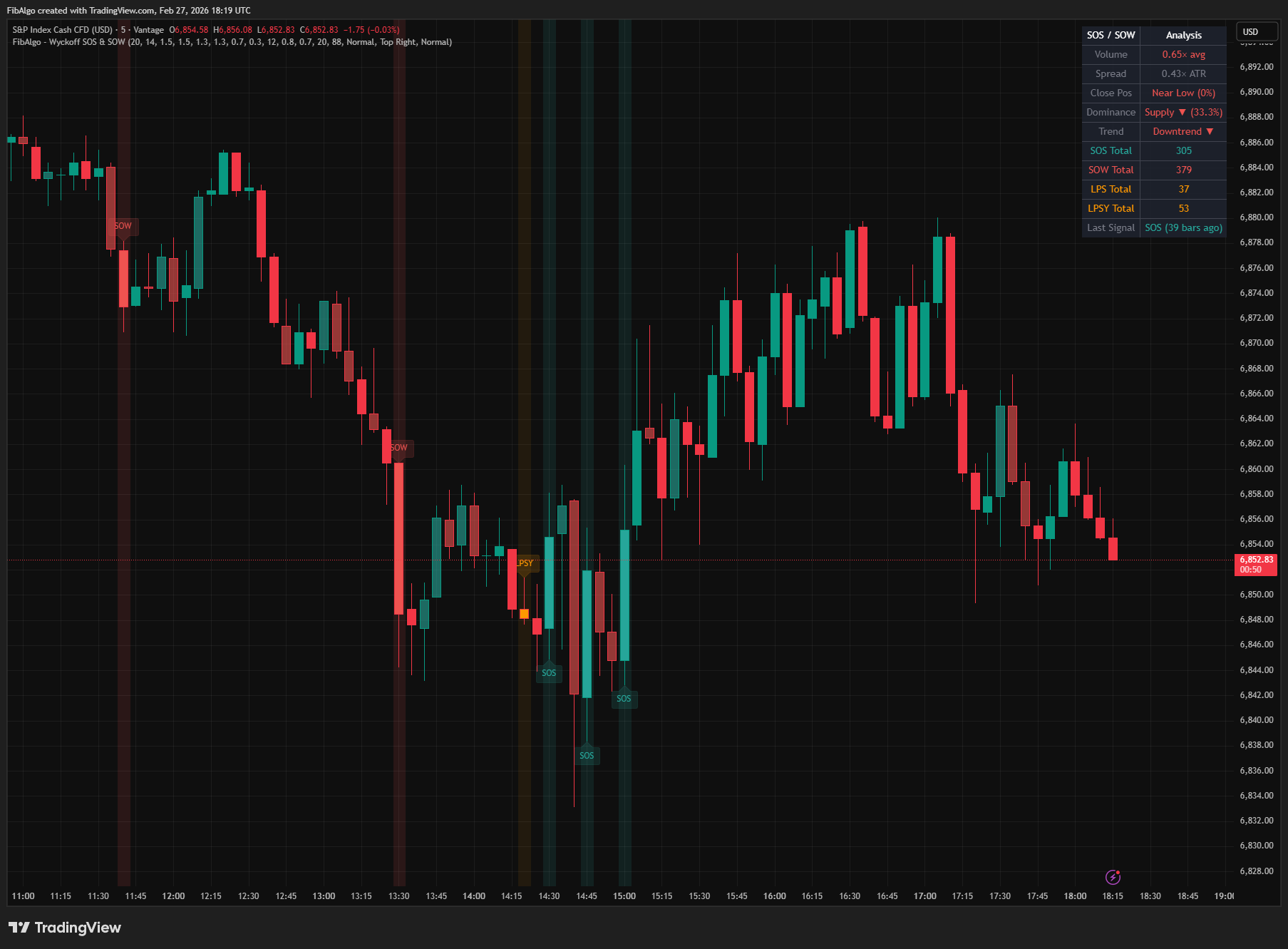
Wyckoff SOS & SOW
TradingView indicator that identifies Wyckoff Sign of Strength (SOS) and Sign of Weakness (SOW) events with LPS/LPSY confirmations.
See Details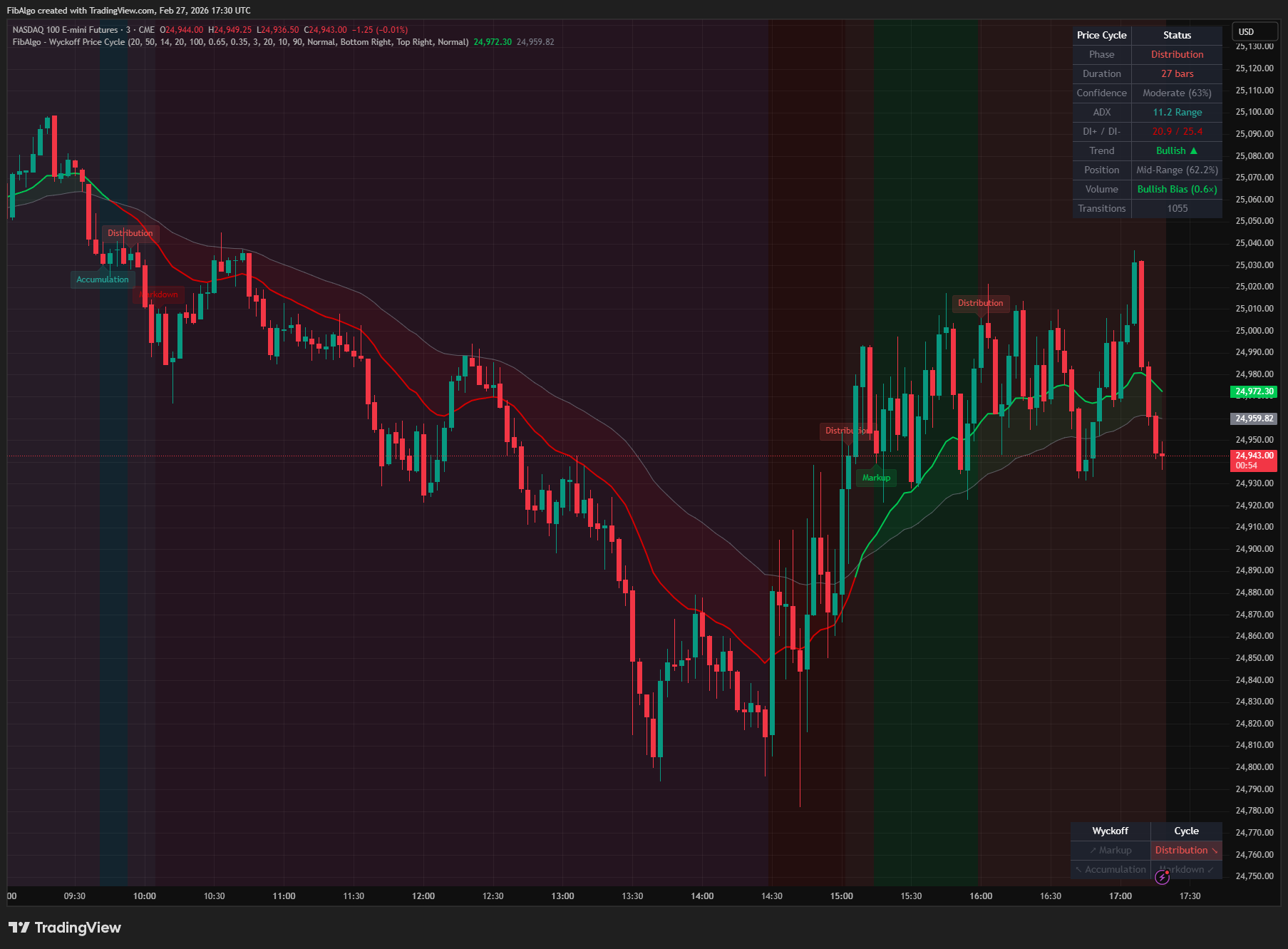
Wyckoff Price Cycle
TradingView indicator that identifies the four Wyckoff market cycle phases — Accumulation, Markup, Distribution, and Markdown — confirmed on closed bars.
See Details