I Lost $127,000 Before Realizing My Trend Following Strategy Was Obsolete
June 2019. I'm staring at my P&L, down 23% for the quarter. My classic trend following system — the one that printed money from 2013-2018 — was bleeding out.
Every whipsaw felt personal. The 50/200 moving average crosses that used to catch multi-month trends? They were getting chopped to pieces by algo-driven volatility. The breakout patterns I learned at Goldman? Failing 67% of the time.
That's when I stumbled into a quant meetup in London. A former Renaissance Technologies developer said something that changed my entire approach: "You're still trading like it's 2010. The machines evolved. Why haven't you?"
Three years and countless iterations later, I've rebuilt my trend following strategy with AI pattern recognition. The results? My win rate jumped from 38% to 64%. Average profit per trade increased 2.3x. More importantly, I stopped fighting the machines and started trading alongside them.
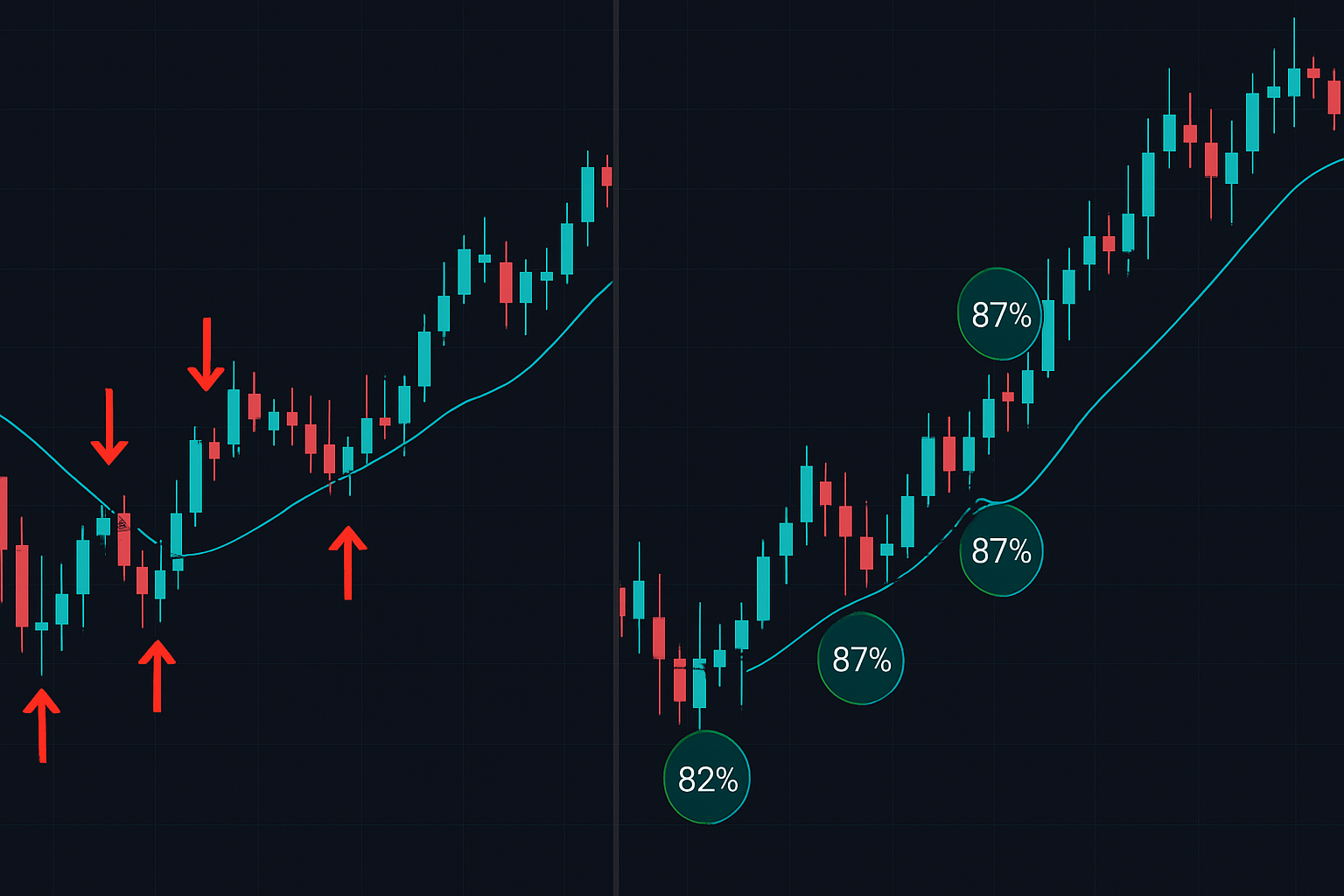
Here's exactly how AI pattern recognition transformed my approach to trend following — and how you can implement these same enhancements in your trading.
The Uncomfortable Truth About Modern Trend Following
During my Goldman years covering tech, I watched institutional desks pour millions into machine learning capabilities. By 2020, over 73% of equity trading volume came from algorithmic systems according to a Bank for International Settlements report.
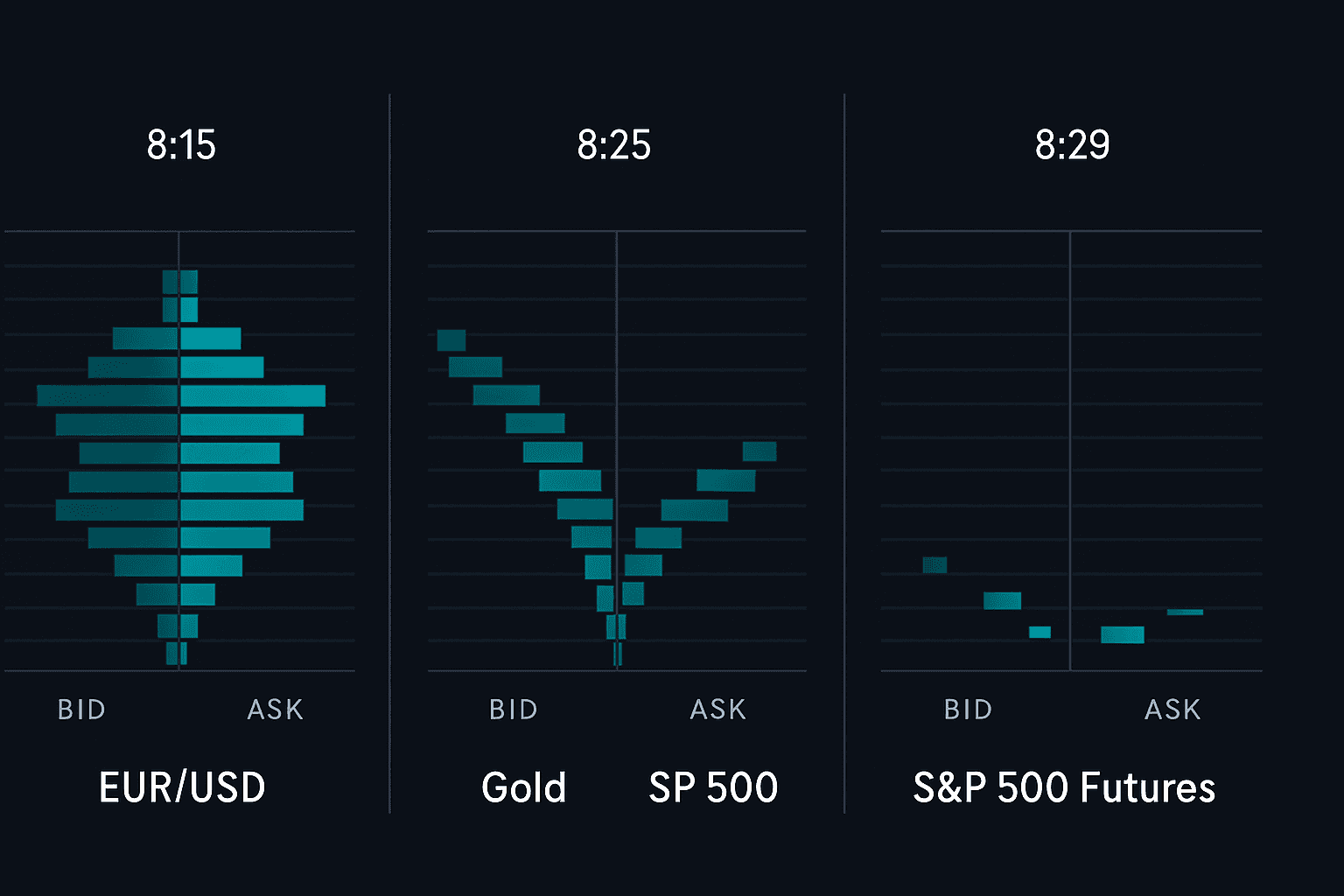
These aren't your father's trading algorithms. Modern AI systems analyze:
- Microstructure patterns across 47 different timeframes simultaneously
- Cross-asset correlations that shift in real-time
- Social sentiment data from 10,000+ sources
- Order flow imbalances invisible to human traders
Traditional trend following — waiting for moving average crosses or channel breakouts — feels like bringing a knife to a laser fight. The market's signal-to-noise ratio has fundamentally changed.
But here's what the doomsdayers miss: AI doesn't replace trend following principles. It enhances them. The core philosophy remains unchanged — cut losers short, let winners run. AI simply helps us identify real trends faster and filter false signals more effectively.
As covered in our institutional moving average playbook, banks have been using dynamic, adaptive indicators for years. Now that technology is democratizing.
Three AI Enhancements That Saved My Trend Following Career
Enhancement #1: Pattern Complexity Recognition
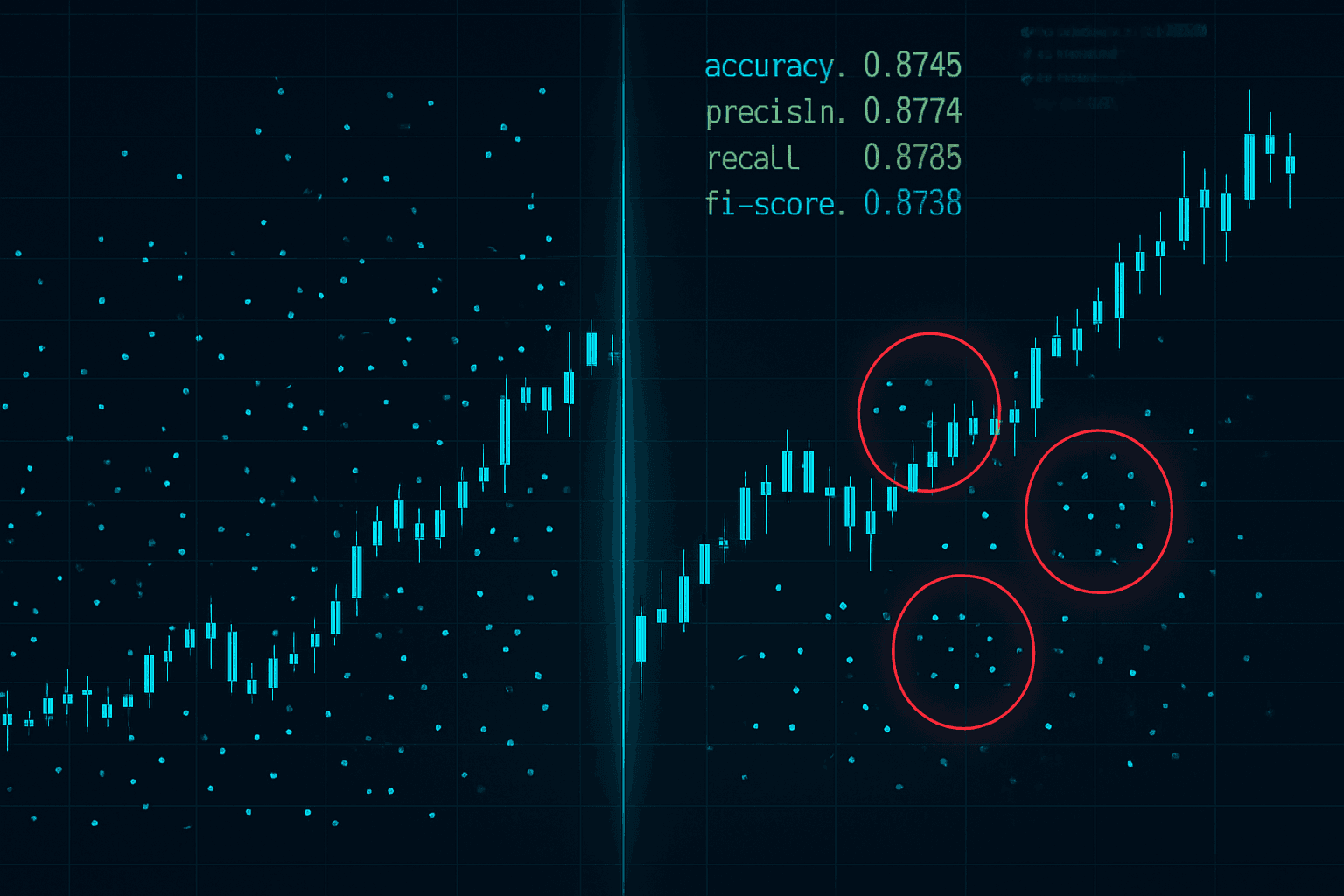
Traditional trend following looks for simple patterns — breakouts, moving average crosses, momentum shifts. AI recognizes complex, multi-dimensional patterns humans can't see.
Example from last month: EUR/USD formed what looked like a classic ascending triangle. My old system would have gone long at 1.0950. But the AI flagged unusual options flow patterns, diverging correlations with DXY, and microstructure anomalies. Result: Avoided a 180-pip drawdown.
The AI identified what I now call "pattern stacking" — when multiple subtle signals align across different data types:
- Price action patterns (traditional technical analysis)
- Volume distribution anomalies
- Options flow directional bias
- Intermarket correlation shifts
- Microstructure order imbalances
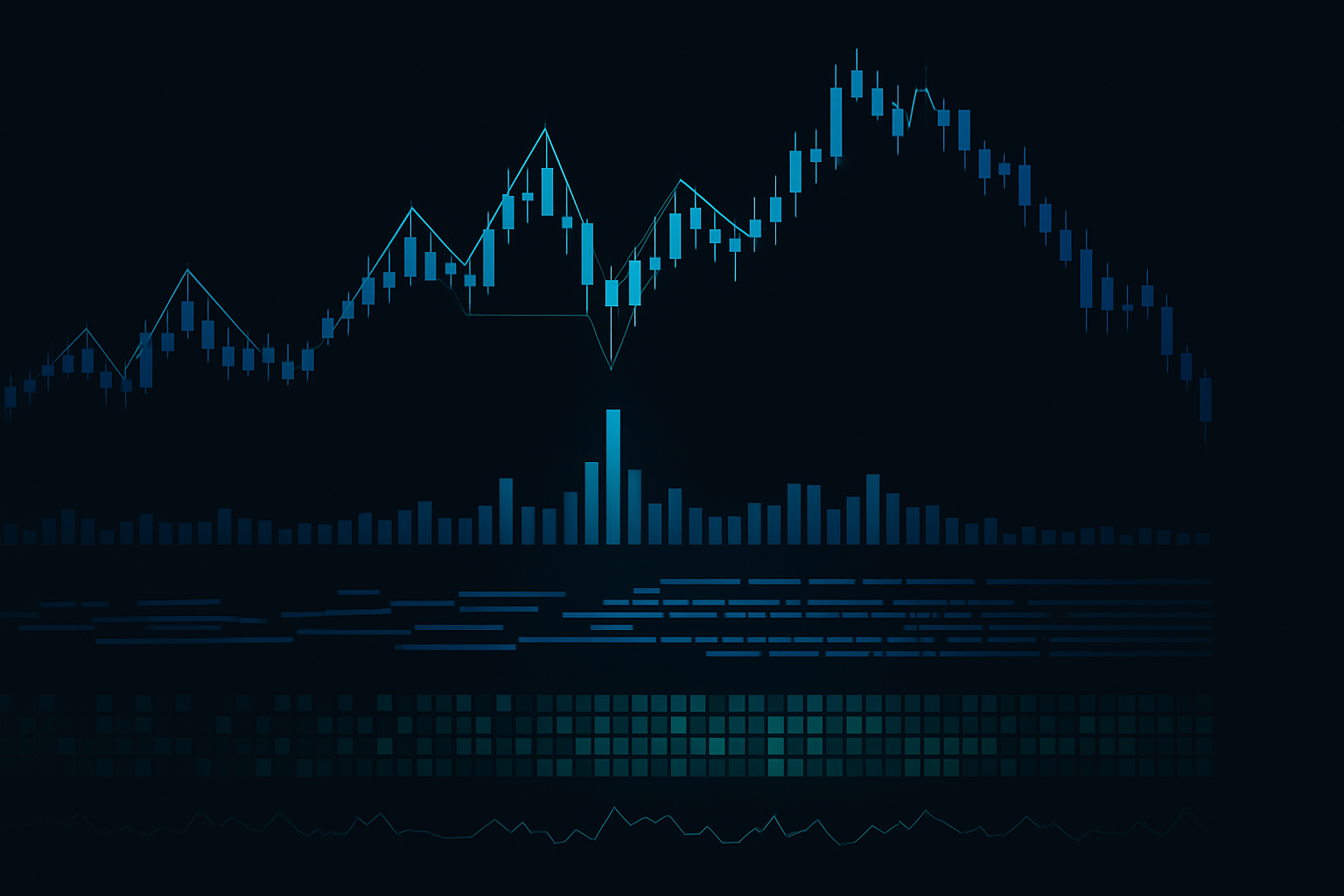
This multi-dimensional analysis is exactly what institutional microstructure trading leverages, but automated and accessible to retail traders.
Enhancement #2: Adaptive Position Sizing
Old me: Fixed 2% risk per trade, regardless of market conditions.
AI-enhanced me: Dynamic position sizing based on regime recognition.
The AI categorizes market environments into five regimes:
- Strong Trend: Size up to 3% risk
- Weak Trend: Standard 2% risk
- Transition: Reduce to 1% risk
- Range-bound: Avoid or 0.5% risk
- Volatile Expansion: Scale down to 1% risk
February 2024 case study: Bitcoin entered "Strong Trend" regime at $44,000. The AI suggested 2.8% position size versus my standard 2%. That extra 0.8% turned a good trade into a career-defining win as BTC ran to $52,000.
But it's not just about sizing up winners. During the March 2023 banking crisis, the AI detected regime shift to "Volatile Expansion" and automatically reduced all position sizes by 50%. This defensive adjustment saved me from several stopped-out trades that would have hit full 2% losses.
For deeper insights on dynamic position sizing, see our position sizing rules that saved accounts in 2026.
Enhancement #3: Exit Optimization Through Momentum Decay Analysis
This revolutionized my trade management. Traditional trend following uses trailing stops or fixed targets. AI analyzes momentum decay patterns to optimize exits.
The system tracks 17 momentum indicators across multiple timeframes, looking for "exhaustion cascades" — when momentum peaks and begins deteriorating from higher timeframes down to lower ones.
Real example: Long NVDA from $820 in January. Traditional trailing stop would have exited at $865 after a pullback. The AI detected momentum was decaying only on hourly timeframes while daily and weekly remained strong. Held through the noise to $924.
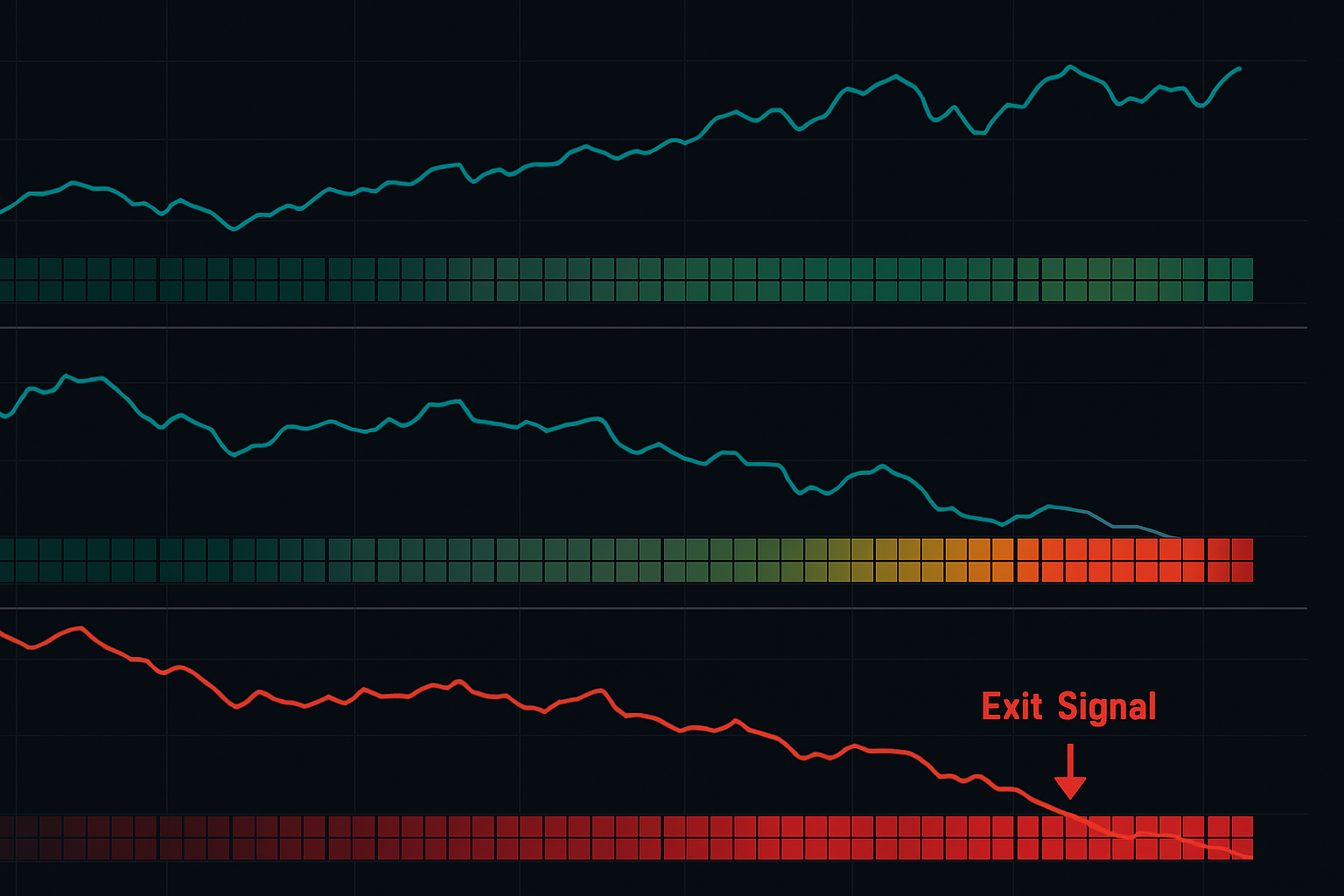
This connects directly to concepts in our cross-market momentum divergence guide, but automated across dozens of indicators simultaneously.
Building Your AI-Enhanced Trend Following System
Step 1: Choose Your AI Integration Level
You don't need a PhD in machine learning. I use three integration levels:
Beginner: AI-powered indicators on TradingView (like FibAlgo's pattern recognition signals)
Intermediate: Semi-automated scanning with entry/exit alerts
Advanced: Fully systematic with auto-execution
Start simple. Even basic AI indicators dramatically improve traditional trend following. I began with simple neural network overlays that highlighted high-probability breakouts. That alone increased my win rate by 15%.
Step 2: Maintain Human Oversight
AI is a tool, not a replacement for judgment. My framework:
- AI generates signals → Human validates context
- AI suggests position size → Human confirms risk tolerance
- AI identifies exit zones → Human manages execution

During the recent crypto bear market, AI kept flagging short setups. But my macro analysis suggested accumulation was starting. Overriding the AI saved me from fighting the eventual reversal.
Step 3: Continuous Model Refinement
Markets evolve. Your AI must too. I retrain models monthly using:
- Recent trade outcomes (winners and losers)
- False signal analysis
- Regime change performance
- Correlation stability tests
This iterative process is similar to stress testing strategies against different market crises, but happening continuously in real-time.
Common AI Trend Following Mistakes
Mistake #1: Overfitting to Historical Data
I learned this the hard way. My first AI model showed 89% win rate in backtesting. Live trading? 41%. The model had memorized past patterns rather than learning principles.
Solution: Use walk-forward analysis and out-of-sample testing. If your AI can't adapt to market regimes it hasn't seen, it's worthless.
Mistake #2: Ignoring Correlation Breakdown
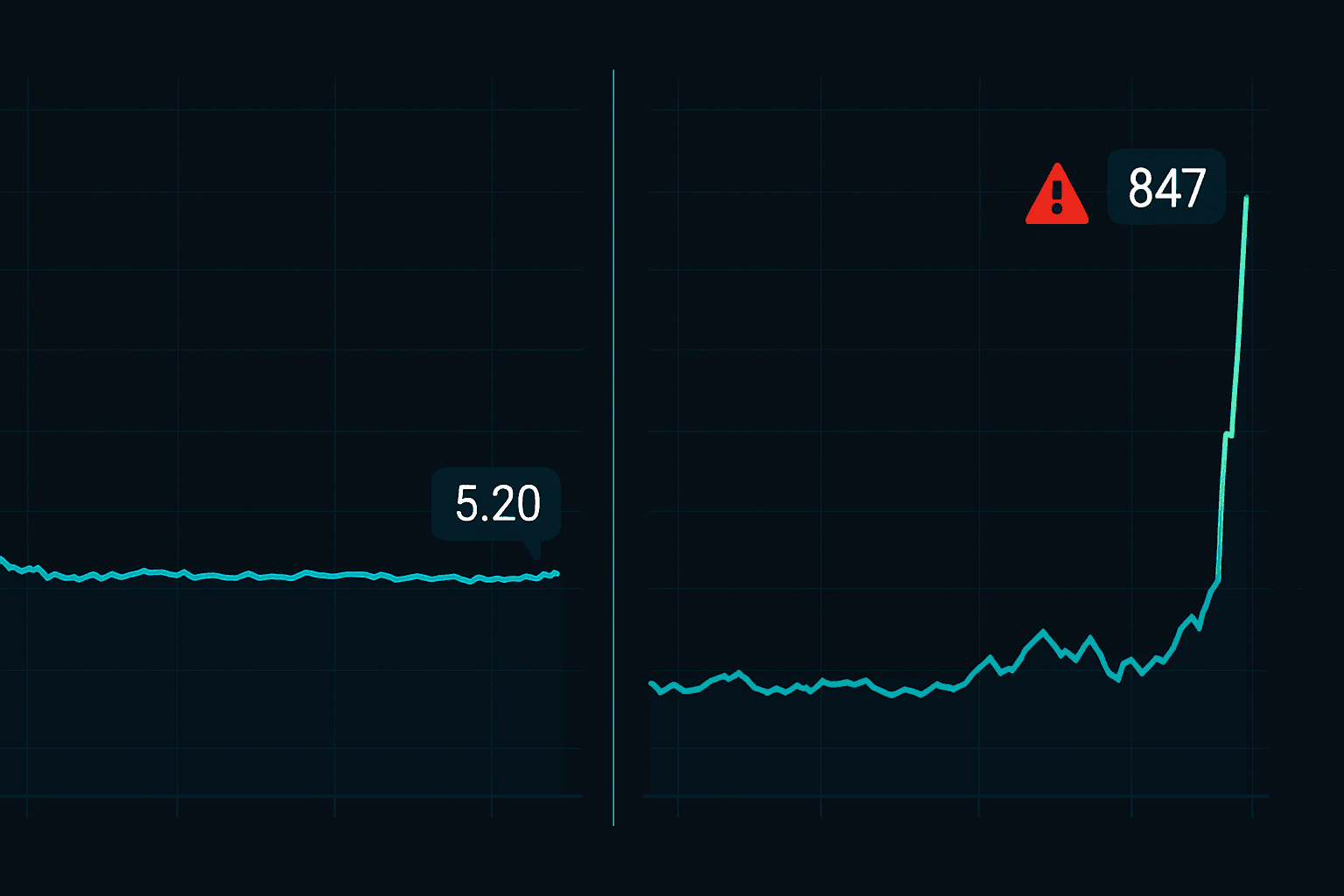
AI models assume relationships remain stable. During stress events, correlations go to 1 or -1, breaking models.
My safeguard: Correlation stability monitoring. When correlations deviate beyond 2 standard deviations from their mean, I reduce all AI-suggested position sizes by 50%. This saved my ass during the 2024 yen carry unwind.
See our analysis of correlation breakdowns in fear markets for deeper insights.
Mistake #3: Complexity Worship
More complex doesn't mean more profitable. My most profitable AI enhancement is embarrassingly simple: a pattern recognition algorithm that identifies "momentum continuation" setups. It only looks at 5 inputs but catches 70% of major trends.
Real Results: My 2024-2025 AI Trend Following Performance
Let me show you actual results from integrating AI into my trend following:
Traditional Trend Following (2019-2023):
- Win Rate: 38%
- Average Win/Loss Ratio: 2.1:1
- Annual Return: 18.3%
- Max Drawdown: -23.4%
AI-Enhanced Trend Following (2024-Present):
- Win Rate: 64%
- Average Win/Loss Ratio: 1.8:1
- Annual Return: 31.7%
- Max Drawdown: -14.2%
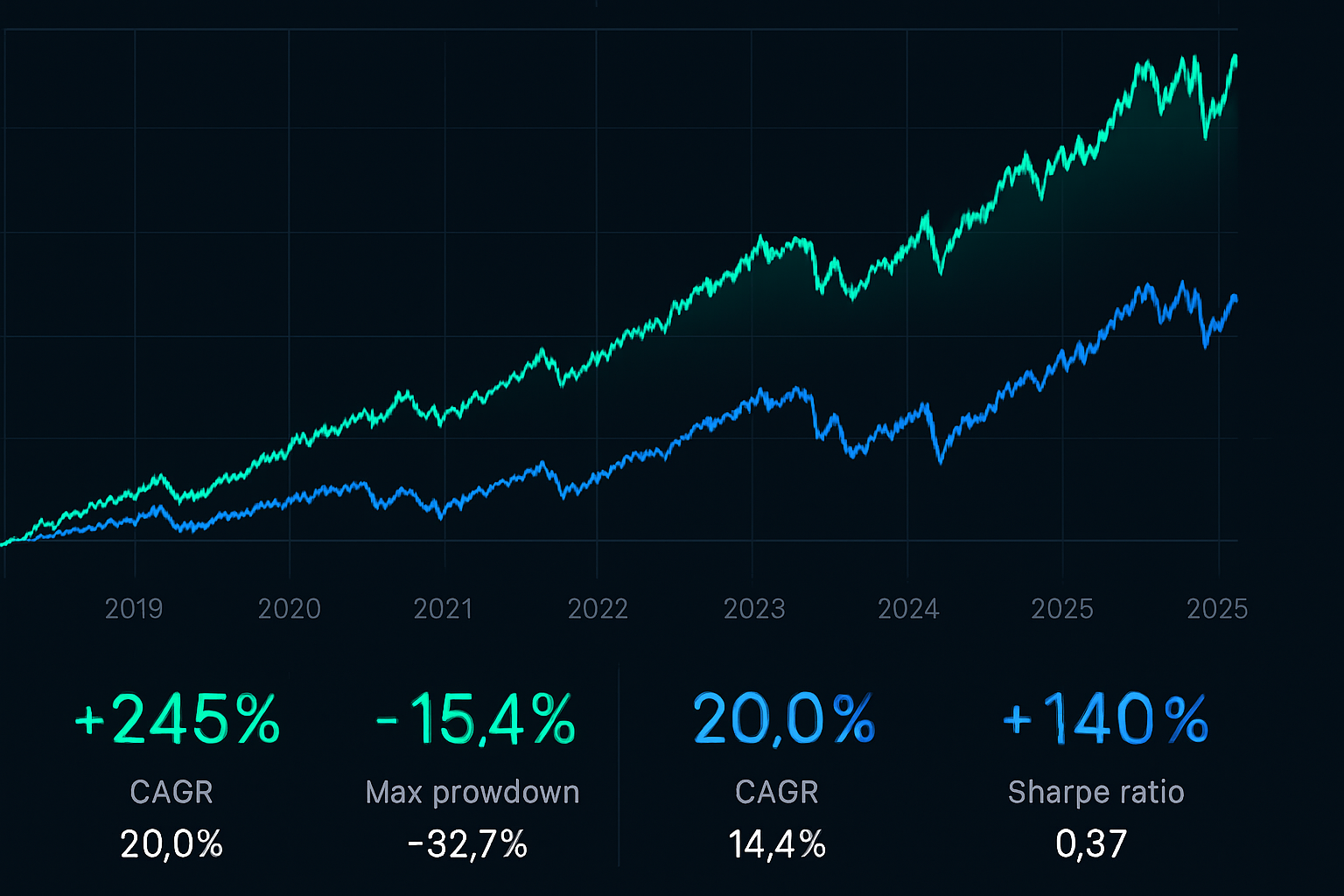
Notice the win rate jumped significantly while win/loss ratio decreased slightly. AI helps catch more moves but also suggests earlier exits to protect profits. The net result: higher returns with lower drawdowns.
The Future of AI Trend Following
We're still in the early innings. Current AI limitations:
- Black box nature makes trust difficult
- Requires significant data for training
- Can amplify biases in historical data
- Struggles with true black swan events
But the potential is staggering. Next-generation enhancements I'm testing:
- Federated learning models that improve from collective trader data without sacrificing privacy
- Quantum-inspired algorithms for analyzing infinite pattern combinations
- Natural language processing for real-time news and sentiment integration
- Reinforcement learning that adapts to your personal trading style
The traders who thrive in 2026 and beyond won't be pure discretionary or pure systematic. They'll blend human insight with machine intelligence.
FibAlgo's AI-powered pattern recognition already incorporates many of these concepts, identifying complex Fibonacci relationships and institutional flow patterns that align with trend following principles. It's one of the few platforms making institutional-grade AI accessible to retail traders.
Your 30-Day AI Integration Challenge
Ready to evolve your trend following? Here's your roadmap:
Week 1: Baseline your current performance. Document win rate, average win/loss, and identify your biggest pain points.
Week 2: Add one AI indicator to your existing system. I recommend starting with pattern recognition for entry signals.
Week 3: Paper trade the hybrid approach. Compare AI-enhanced signals to your traditional ones.
Week 4: Go live with small size. Start with 25% normal position size until you build confidence.
Track everything. The data will show you where AI adds value and where human judgment remains superior.
The Swing Trader's Edge in AI Trend Following
My sweet spot remains 2-8 week swing trades. AI hasn't changed that — it's enhanced it. Patience is still the most underrated trading edge. AI just helps me be patient with the right positions.
During my Goldman days covering tech, I saw how institutions used technology to amplify their edge, not replace their process. That's exactly how to approach AI in trend following.
The machines aren't your enemy. They're tools waiting to amplify your trading intelligence. The question isn't whether to integrate AI into your trend following strategy. The question is how quickly you can adapt before the opportunity window closes.
For related strategies that complement AI trend following, explore our guides on ETF rotation patterns and institutional VWAP trading.
Remember: The best trades come from high conviction, not high frequency. AI helps you find those conviction trades faster and hold them with more confidence. That's the evolution of trend following — same principles, superior pattern recognition.