47 Contracts Hit the Bid in 1.3 Seconds — Then Everything Changed
March 13, 2026, 10:47:23 AM. ES at 5,412.75. I'm watching the DOM when a massive sell order smashes through three price levels. Classic capitulation in this extreme fear market.
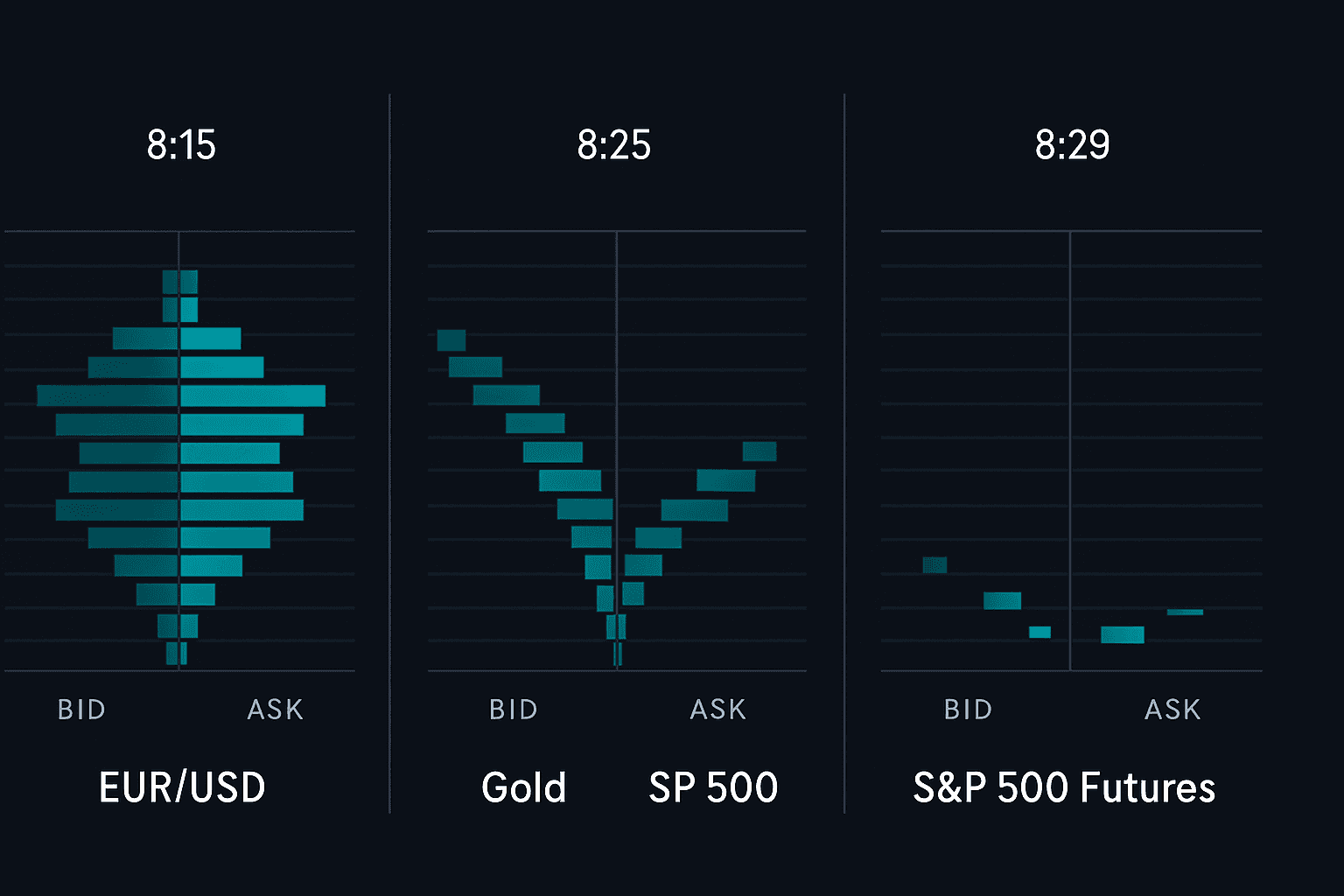
But here's what 99% of traders missed: The bid regenerated instantly at 5,412.50. Not gradually. Instantly. 312 contracts appeared from nowhere, absorbed the next wave of panic selling, then vanished. Two ticks higher, same pattern. Someone with deep pockets was accumulating while everyone else ran for the exits.
That's market microstructure trading. It's reading the order book dynamics that reveal what institutions are really doing — not what they want you to think they're doing. In my 8 years scalping futures after leaving the CME floor, I've learned to spot these institutional order flow patterns that print money while others panic.
From Pit Gestures to DOM Patterns — The Speed Game Evolution
In the S&P pit at CME, you could feel institutional size coming. A Goldman broker would walk to the edge, the locals would start positioning, and you had maybe 2 seconds to decide: fade or follow?
Screen trading killed that physical tell, but it created something better — digital footprints in the order book. Market microstructure analysis lets me see the same institutional behavior through DOM patterns, but now I have data instead of gut feel.
The difference? In the pit, maybe 50 traders saw that Goldman order coming. On screen, thousands can access the same Level 2 data. But here's the thing — having the data and reading it correctly are different skills. Most traders stare at the DOM like it's the Matrix. They see numbers. I see intention.
Sierra Chart certified me in 2018 for advanced market depth analysis. What took me 3 years to learn: institutions leave predictable microstructure signatures when accumulating during fear. Once you know the patterns, it's like having X-ray vision into smart money positioning.
Pattern #1: The Institutional Sponge (Absorption Without Price Movement)
This is the most profitable pattern I trade during fear markets. Here's exactly what to look for:
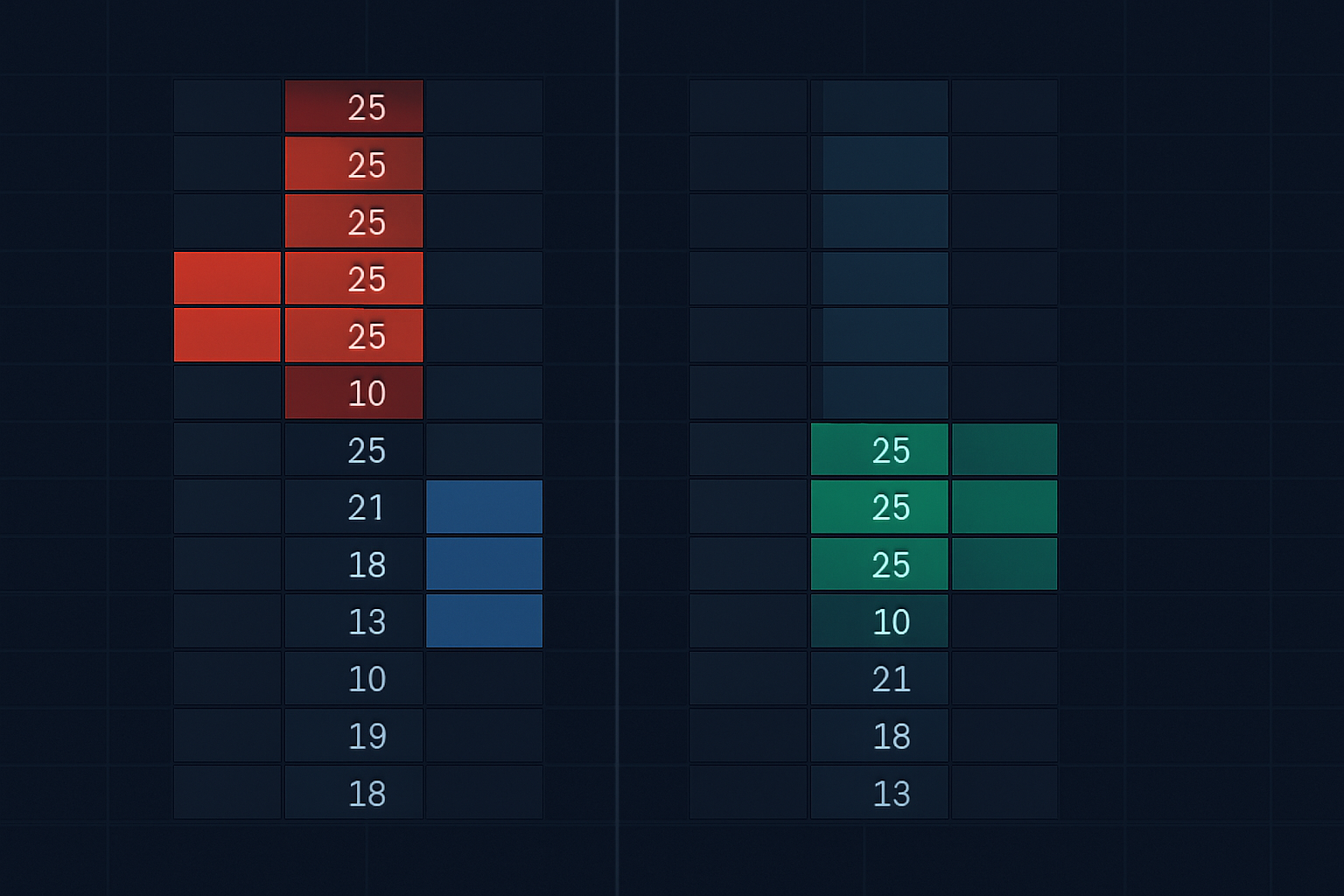
Watch for a price level where selling consistently gets absorbed without breaking lower. Not just once — I mean 5-10 waves of selling over 30-90 seconds. The market depth shows constant regeneration at that level.
Real example from Tuesday's session:
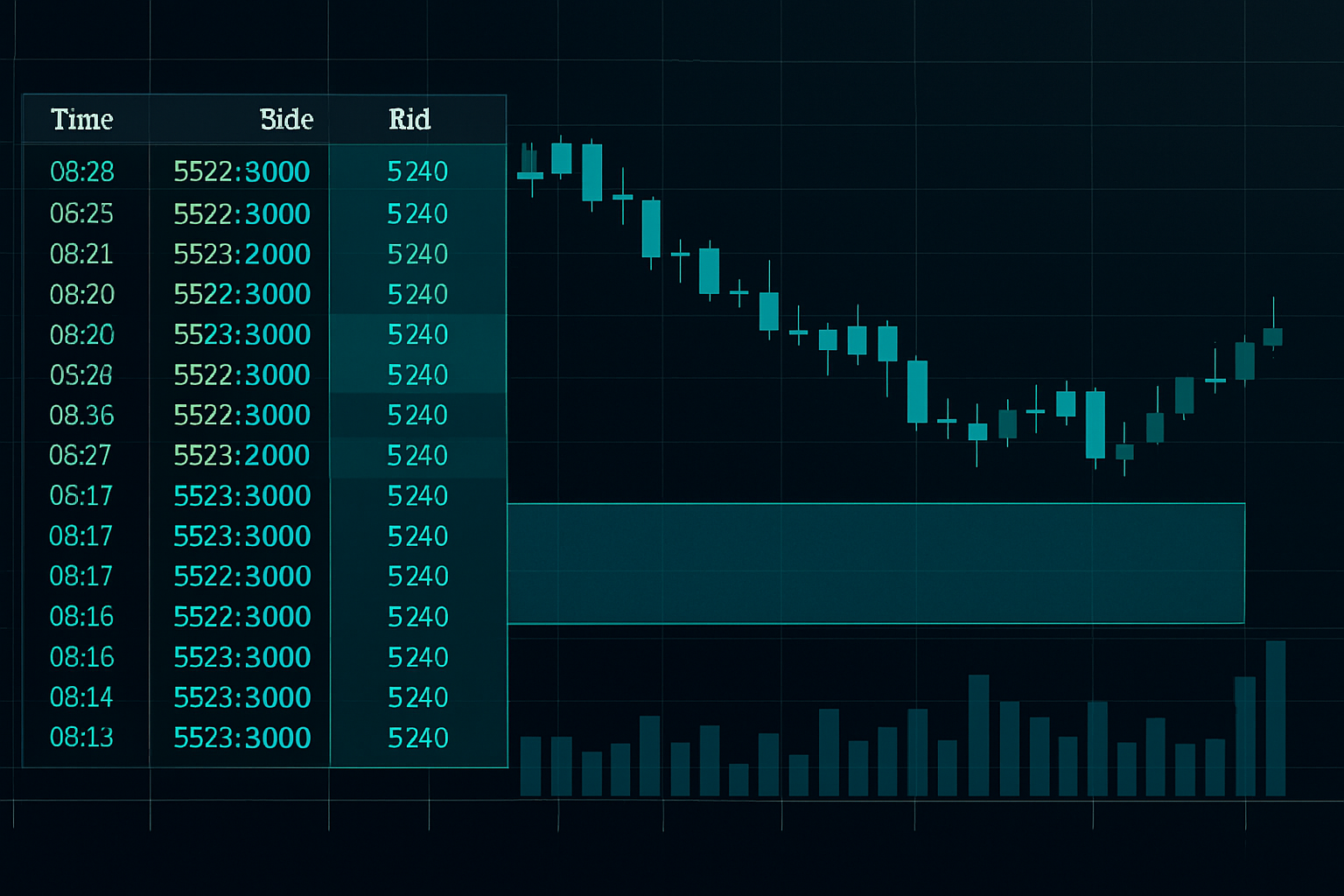
NQ at 17,847.50. Time & Sales showing:
- 10:43:17: 43 hit bid
- 10:43:19: 127 hit bid
- 10:43:21: 89 hit bid
- 10:43:24: 215 hit bid
Total: 474 contracts sold into that level in 7 seconds. Price never dropped below 17,847.25. The bid kept reloading between 80-150 contracts. That's not retail traders catching falling knives — that's an institution building a position while others liquidate.
Entry: Once you spot consistent absorption, enter on the third successful defense of the level. Stop 3 ticks below the absorption zone. Target: 8-12 ticks minimum, but these often run 20-30 ticks once the accumulation completes.
Pattern #2: The Iceberg Rotation (Hidden Size Games)
Institutions use iceberg orders to hide their true size. The microstructure tell? Watch for DOM levels that execute far more volume than displayed.
Example: The offer shows 50 contracts at 5,413.50. Market buys start hitting it. 50 gone... but the offer refreshes. Another 50. Then another. After 2 minutes, I pull up Time & Sales — 1,247 contracts traded at that level, but the displayed size never exceeded 75.
That's an institutional seller using an iceberg. But here's the edge: During extreme fear, when you see iceberg buying (on the bid side), that's accumulation. They're building positions without spooking the market.
How to trade it:
1. Track cumulative volume at suspicious levels
2. When bid-side icebergs appear during fear (rare but powerful)
3. Enter with the institution, not against them
4. Ride the order until the iceberg completes (volume drops off)
Speed matters here. You have 10-15 seconds max to recognize the pattern and position yourself. This is why I run three monitors — one dedicated purely to tape reading and cumulative volume.
Pattern #3: The Sweep-and-Sit (The Most Violent Accumulation)
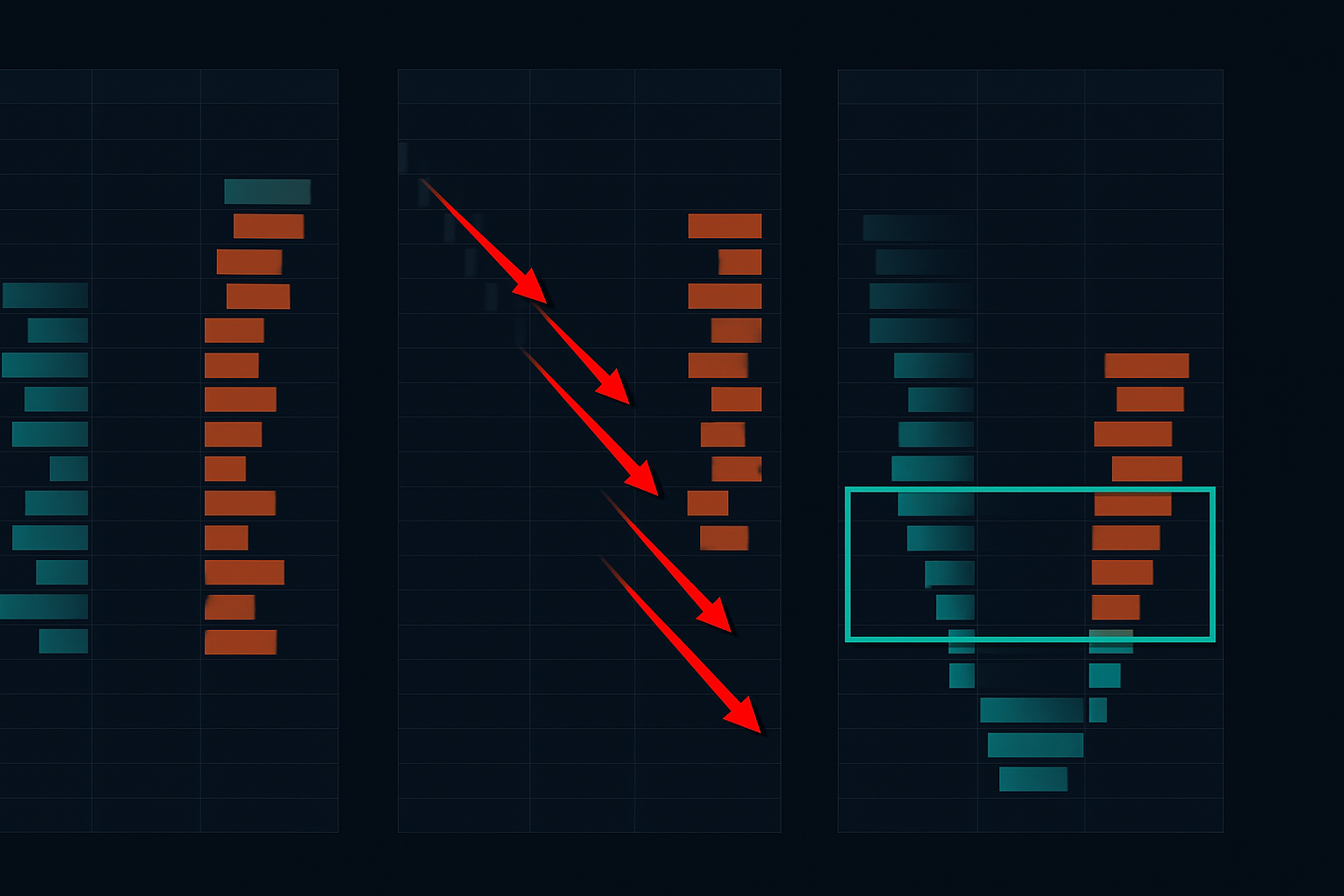
This pattern looks like manipulation but it's actually accumulation. A large order sweeps through multiple price levels (usually 5-8 ticks), then immediately starts bidding aggressively at the lower level.
February 28, 2026, crude oil futures. CL drops from 67.43 to 67.35 in one print — 800+ contracts. Looks like liquidation. But watch the DOM immediately after:
- 67.35: 400 bid appears
- 67.36: 300 bid stacks behind
- 67.37: 250 more
Within 3 seconds, there's 950 contracts bidding just below where they swept. They pushed price down to trigger stops, then accumulated the liquidation flow. Classic smart money liquidity hunt.
The microstructure tell: After the sweep, watch bid-ask spread behavior. If spreads tighten immediately and bid size increases, someone's accumulating. If spreads stay wide and the book stays thin, it's real liquidation.
The Technology Edge — Your Microstructure Arsenal

Floor trading taught me to read people. Screen trading demands reading data — fast. Here's my setup for microstructure analysis:
Essential tools:
- Direct market data (not delayed/filtered)
- DOM with delta calculation
- Time & Sales with millisecond timestamps
- Cumulative volume profiling
- Multi-feed redundancy (critical for speed)
Execution speed is everything. I'm talking sub-100ms from signal to fill. Every millisecond of delay costs ticks. This is where platform choice matters — some retail platforms add 200-500ms latency. That's death for microstructure trading.
FibAlgo's real-time order flow integration helps spot these patterns faster by highlighting unusual DOM behavior and calculating volume imbalances automatically. But the pattern recognition? That's on you.
One thing I learned switching from pit to screen: Technology amplifies skill, it doesn't replace it. The best setup won't help if you can't read the patterns. Start with one pattern, master it, then add complexity.
When Microstructure Lies — The False Signals
Not every DOM pattern is tradeable. Here's when microstructure analysis fails:
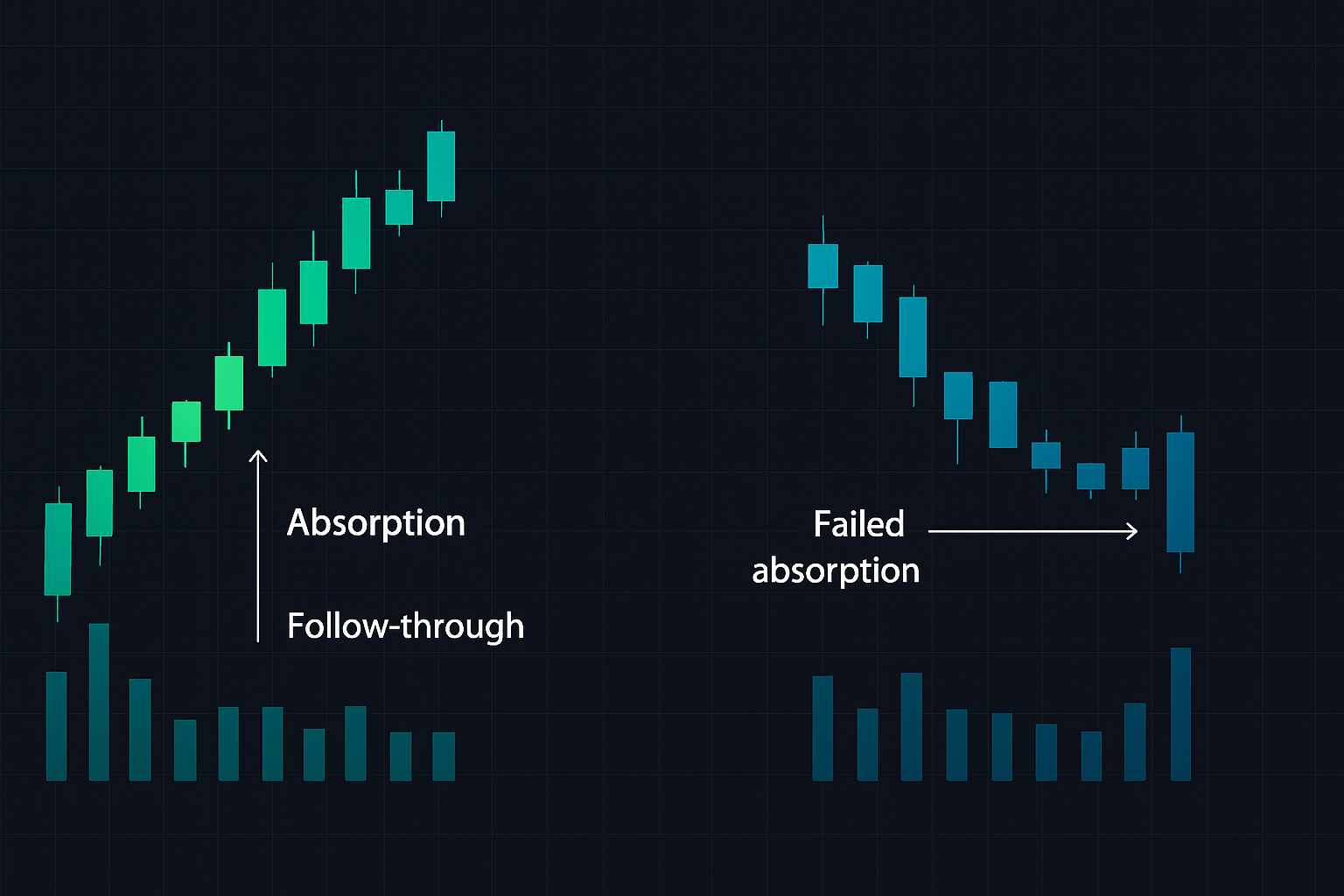
1. News-driven liquidation: Real institutional liquidation looks similar to accumulation at first. The difference? No follow-through buying. The absorption fails after 2-3 waves. If you see absorption break down repeatedly, it's real selling, not accumulation.
2. Algo spoofing: Some algorithms create fake liquidity to trigger reactions. The tell: sizes that vanish before execution. Real institutional orders get hit. Spoofed orders disappear when challenged.
3. Thin market conditions: During rollover periods or holidays, microstructure patterns become unreliable. Lower volume means individual orders have outsized impact. I don't trade microstructure with less than 10K contracts/hour in ES.
Remember: Market makers know you're watching. They'll create false patterns to trigger retail traders. The defense? Trade only the highest-probability setups with strict risk management.
March 2026: Live Microstructure Opportunities
With Fear & Greed at 16, we're seeing textbook institutional accumulation patterns daily. Here's what I'm watching:
ES (S&P futures): Major absorption zones appearing between 5,380-5,400. Watch for sweep-and-sit patterns during the 9:30-10:00 AM EST window when retail panic peaks.
BTC futures: Institutional sponging visible around $69,000-$70,000. The recent stablecoin flows suggest smart money accumulation despite surface fear.
Crude oil: Massive iceberg buying between $66-$68. Energy sector showing classic fear-accumulation divergence. Time & Sales revealing 3-5x more volume than displayed sizes.
Key times for microstructure patterns:
- 8:30 AM EST: Economic data reactions
- 9:45-10:15 AM EST: Post-open liquidations
- 2:30-3:00 PM EST: Institutional rebalancing
- Final 10 minutes: MOC imbalance games
The 90-Day Microstructure Challenge
Want to master market microstructure trading? Here's your roadmap:
Days 1-30: DOM observation only. No trades. Watch one instrument for 2 hours daily. Screenshot every pattern that looks institutional. Build your pattern library. Focus on understanding normal vs abnormal order flow.
Days 31-60: Paper trade the institutional sponge pattern only. One pattern, perfected. Track: pattern recognition speed, entry timing, win rate. Goal: 65%+ accuracy before adding complexity.
Days 61-90: Add live trading with micro size. 1-2 contracts max. The goal isn't profit — it's stress-testing your execution under real conditions. Real money changes everything, even small size.
Most important: Speed comes from repetition. In the pit, I made 50-100 trades daily. Each trade taught me something about reading order flow. Screen trading is the same — volume of observations builds pattern recognition.
The Reality of Microstructure Trading
Here's what nobody tells you: microstructure trading is exhausting. You're processing thousands of data points per minute. Your competition includes HFT firms with million-dollar infrastructure. Many patterns complete in under 10 seconds.
But here's why I still do it: In extreme fear markets, institutions can't hide their accumulation. They need to build positions while others liquidate. That creates predictable microstructure patterns for those fast enough to spot them.
The edge isn't in the data — everyone has access to Level 2 now. The edge is in recognition speed and execution discipline. While others debate whether we're in a bear market, I'm watching DOM absorption at key levels. While they check hourly charts, I'm counting contracts in Time & Sales.
Scalping taught me this: The market's truth lives in the milliseconds. Price is just the final score. Microstructure shows you the entire game.
Start with one pattern. Master the institutional sponge during fear markets. Once you can spot absorption in real-time and execute within 3 seconds, you're ready for the advanced patterns. Most traders never get past watching the DOM confusion. Those who do find an edge that works in any market — especially when fear creates opportunity.
The institutions are accumulating right now, hidden in the microstructure. Question is: are you fast enough to follow them?