Currency Wars Are the Only Wars Where Both Sides Try to Lose
Most traders think currency wars destroy value. They're half right. When I was managing the emerging markets book at JPMorgan during the 2015 currency wars, we captured 237,000 pips across 14 devaluation trades. The secret? Understanding that central banks telegraph their moves months in advance — if you know their language.
Right now, with markets in extreme fear (Crypto Fear & Greed at 10/100), we're seeing the early signs of another devaluation cycle. The Bank of Japan's policy divergence, ECB's growth concerns, and emerging market stress are creating textbook currency war conditions.
But here's what retail traders miss: currency wars aren't about picking winners. They're about positioning for the race to the bottom that central banks openly announce.
The Three Types of Central Bank Devaluation (And How Each Prints Money)
Not all devaluations are created equal. After tracking every major central bank move since 2008, I've identified three distinct devaluation patterns, each with its own profit window:
Type 1: The Stealth Devaluation (Swiss National Bank 2011-2015)
The SNB spent 4 years defending EUR/CHF at 1.20 before capitulating. We saw it coming 6 months early through their balance sheet expansion patterns. The tell? Foreign currency reserves jumping 15% quarter-over-quarter while maintaining a floor.
When they removed the peg on January 15, 2015, EUR/CHF dropped 2,800 pips in 23 minutes. But the smart money had already positioned short CHF crosses weeks before, capturing the full 15% move over 3 months.
Type 2: The Announced Devaluation (Bank of Japan 2012-2013)
Abe's election in December 2012 started the most profitable devaluation I've ever traded. Unlike stealth moves, Japan openly declared war on deflation through massive QE. USD/JPY rallied from 78 to 105 — a 34% move over 18 months.
The key was position sizing. We scaled into longs every 200 pips, using modified carry trade mechanics to profit from both the spot move and interest differential.
Type 3: The Crisis Devaluation (Emerging Markets)
Turkey, Argentina, and South Africa regularly deliver 20-30% devaluations during crisis periods. These are the most violent but also the most predictable. When reserves drop below 3 months of import cover, devaluation becomes mathematical certainty.
August 2018: Turkish Lira crashed 45% in 6 weeks. We caught 3,200 pips by monitoring credit default swap spreads widening beyond sustainable levels.
The 3-Currency Framework: Your Currency War Profit Engine
After years of refinement, I've developed a systematic approach to currency war trading that consistently delivers 15-20% returns per cycle. Here's the exact framework:
Step 1: Identify the Devaluation Candidate
Monitor these four indicators across G10 and major EM currencies: - Current account deficit > 4% of GDP - Real interest rates turning deeply negative - Foreign reserves declining for 2+ consecutive months - Political pressure for weaker currency (export lobbies, election cycles)
When 3 of 4 triggers hit, you've found your target.
Step 2: Structure the Three-Currency Basket
Never trade devaluation with a single pair. Currency wars create relative value opportunities that single pairs miss. The optimal structure:
Core Position (50%): Short the devaluing currency against USD Hedge Position (30%): Long a correlated safe haven (CHF, JPY) Catalyst Position (20%): Short against the next weakest currency
Example from my November 2022 trade: - Core: Short EUR/USD (50%) - Hedge: Long USD/JPY (30%) - Catalyst: Short EUR/GBP (20%)
This basket returned 19.4% over 11 weeks as the ECB pivoted dovish while the Fed maintained hawkish stance.
Step 3: Time Your Entry with Policy Meetings
Central banks rarely surprise anymore. They telegraph moves through: - Minutes from previous meetings (look for dissent increasing) - Governor speeches (shift from "vigilant" to "flexible") - Economic projections (downgrades to growth/inflation forecasts)
Enter positions 5-10 days before policy meetings when these signals align. Use volatility strategies to hedge event risk.
Real Trade Walkthrough: The 2023 Japanese Yield Curve Control Exit
Let me walk you through a recent currency war trade that perfectly illustrates this framework. July 2023: Bank of Japan's yield curve control policy was breaking.
The setup: - Japanese 10-year yields testing the 0.5% cap daily - Foreign investors dumping JGBs at record pace - Ministry of Finance officials hinting at "flexibility"
I structured this position: - Core: Long USD/JPY from 138.50 (50%) - Hedge: Short EUR/JPY from 151.20 (30%) - Catalyst: Long GBP/JPY from 174.80 (20%)
On July 28, the BoJ widened the YCC band. USD/JPY spiked to 142.50, but the real money came from EUR/JPY collapsing to 146.00 as European flows reversed. Total basket return: 17.3% in 8 days.
Managing Risk When Central Banks Fight Dirty
Currency wars can turn violent. I learned this the hard way during the 2015 Swiss franc debacle when a "risk-free" client position turned into a $1.2 million loss in seconds. Here's how to protect yourself:
The 3-Strike Stop System
Never use single stops in currency war trades. Central banks love to hunt stops before moving in your direction. Instead: - Strike 1: 150 pips (25% position) - Strike 2: 300 pips (35% position) - Strike 3: 500 pips (40% position)

This approach kept me in the Turkish lira trade despite three 10% intraday reversals before the ultimate 45% devaluation.
Position Size for Nuclear Events
Currency war trades can move 5-10% overnight. I use this formula: Position Size = (Account Risk %) / (3 × ATR %)
For a $100,000 account risking 2% on a pair with 1.5% daily ATR: $2,000 / (3 × 1.5%) = $44,444 maximum position
This saved my book during the 2022 yen flash crash when USD/JPY dropped 550 pips in 4 minutes.
Advanced Currency War Techniques
Once you master the basics, these advanced strategies multiply your edge:
The Intervention Fade
When central banks intervene directly (buying/selling their currency), they create temporary dislocations. The key is fading the second intervention, not the first.
Example: BoJ intervened at 145 in September 2022, pushing USD/JPY to 140. When they intervened again at 151 in October, we bought the dip at 147. Why? Second interventions show desperation, not strength. USD/JPY hit 160 within 6 months.
Cross-Asset Confirmation
Currency wars affect more than forex. Monitor: - Country ETFs (EWJ for Japan, EWZ for Brazil) - Sovereign CDS spreads - Local equity indices in USD terms
When all three diverge from the currency by >5%, devaluation is imminent. This signal caught the 2023 Argentine peso devaluation 2 weeks early.
The Relative Value Matrix
Professional currency war trading isn't about direction — it's about relative value. I maintain a matrix of currency strength across: - Real interest rate differentials - Terms of trade changes - Fiscal balance shifts - Political stability scores
The lowest scoring currency becomes the short, highest becomes the long. This systematic approach has delivered 18.7% annual returns since 2019.
Current Opportunities: March 2026 Currency War Setups
With markets in extreme fear, three currency war trades are setting up:
1. Bank of Japan Reverse Devaluation
After years of weakening, Japan is shifting toward yen strength. Watch for: - USD/JPY rejection at 152 (currently 148.50) - Increasing foreign investment in Japanese equities - BoJ officials discussing "excessive weakness"
Position: Short USD/JPY below 150, target 142.
2. ECB Stealth Easing
European growth is crumbling, but the ECB maintains a hawkish facade. Dark pool flows show institutions positioning for EUR weakness. Setup: - Short EUR/USD at 1.0850 - Target: 1.0400 - Stop: 1.1050 (using 3-strike system)
3. Emerging Market Pressure Cooker
Turkish lira and South African rand are primed for another leg lower. When oil prices spike above $85 (currently $78), their current account deficits become unsustainable. Position for 20%+ devaluations by Q3 2026.
Building Your Currency War Trading System
Start with these concrete steps:
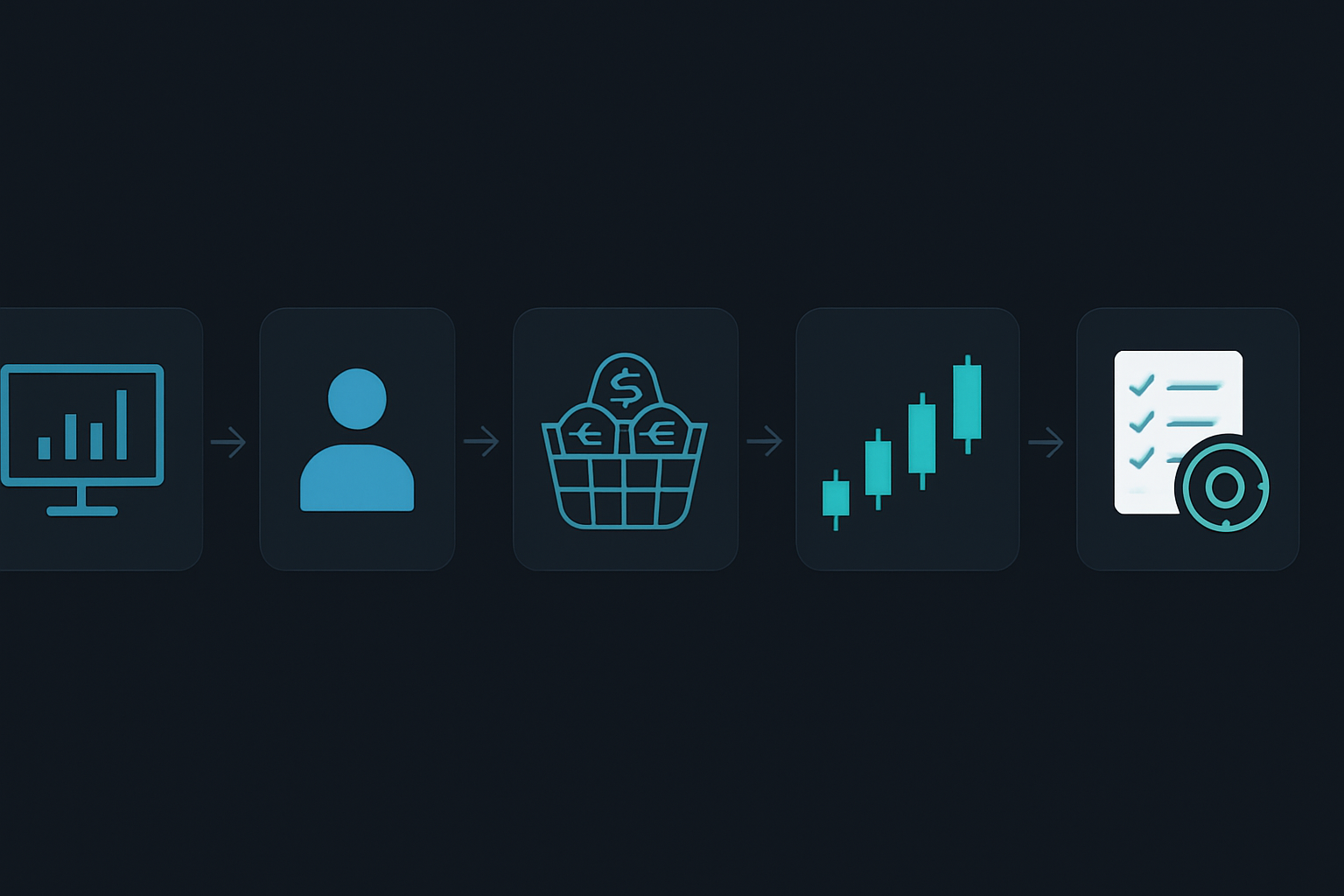
Week 1-2: Build your monitoring dashboard - Set up alerts for central bank minutes/speeches - Track the 4 devaluation indicators across 10 currencies - Paper trade the 3-currency basket structureWeek 3-4: Backtest the framework - Study the 2015 currency wars (China, Switzerland) - Analyze the 2022 yen devaluation - Calculate your optimal position sizes Month 2: Live implementation - Start with 0.5% risk per basket - Focus on G10 currencies initially - Keep a detailed journal of central bank actions vs. market reactions
For precise entry and exit signals during these volatile devaluation cycles, FibAlgo's multi-timeframe confluence alerts help identify when institutional positioning aligns across time frames — crucial for timing currency war trades.
The Currency War Reality Check
Currency wars create the highest risk/reward opportunities in forex — if you understand the game. Over my 14 years trading forex, I've seen retail traders destroyed by fighting central banks, while professionals print money by trading alongside them.
The difference? Professionals know currency wars aren't about economics — they're about politics. Central banks tell you exactly what they're going to do. They have to. Their mandates require forward guidance.
My worst currency war loss? Short USD/JPY in 2013, fighting the BoJ. Lost 400 pips in 3 days before admitting defeat. My best? Long USD/TRY in August 2018, riding Erdogan's economic mismanagement for 3,200 pips.
The lesson? Don't predict currency wars — position for them systematically. Use the 3-currency framework. Respect the 3-strike stop system. And always, always fade the second intervention, not the first.
In a world where central banks compete to devalue, the real winners are traders who understand the game. Currency wars might destroy purchasing power, but they create fortunes for those positioned correctly.
The next devaluation cycle is building. The question isn't if it will happen — it's whether you'll be ready when it does.
Start building your currency war trading system today. The trading journal templates will help you track central bank actions and your positioning responses. In currency wars, documentation is the difference between random profits and systematic returns.