The Hidden Pattern in Rate Announcement Chaos
Most traders treat interest rate announcements like lottery tickets. They place random trades, hope for big moves, and wonder why they get whipsawed every time.
Here's what I've learned after watching hundreds of rate decisions: **the real money isn't made on the announcement itself**. It's made by understanding the three-phase cycle that unfolds around every rate event.
The forex interest rate impact follows a predictable pattern that smart traders can exploit. But you need a systematic approach, not gut instincts.

Rate announcements create opportunity in three distinct phases: pre-positioning (72 hours before), execution (announcement + 30 minutes), and trend continuation (1-5 days after).
Understanding the Three Types of Rate Impact
Not all interest rate changes affect currency pairs equally. The **impact magnitude** depends on which type of rate event you're dealing with.
Type 1: Expected Rate Changes
When markets already price in a 25 basis point hike, the actual announcement usually creates minimal movement. The real opportunity lies in the forward guidance that follows.
Type 2: Surprise Rate Decisions
These create the biggest immediate moves. Think of when central banks pause rate hikes unexpectedly or deliver emergency cuts.
Type 3: Rate Differential Shifts
Sometimes the announcement itself is boring, but it changes the interest rate gap between two currencies. This creates weeks or months of trending opportunities.
Suppose the Federal Reserve holds rates steady at 5.25%, but hints at two cuts in the next six months. Meanwhile, the ECB signals they're done hiking. This widens the USD/EUR rate differential, potentially creating a multi-week EUR/USD uptrend even though neither bank actually changed rates.
The Pre-Positioning Phase: 72 Hours Before
Smart money doesn't wait for announcements. They position based on **rate expectation gaps** in the derivatives markets.
Here's your pre-positioning checklist:
- Check fed funds futures for implied rate probabilities
- Monitor 2-year bond yield spreads between currency pairs
- Identify which pairs have the highest volatility expectations
- Look for positioning extremes in COT reports
I always focus on currency pairs where **market expectations differ significantly** from what forward guidance suggests.
Use the CME FedWatch tool to compare market rate expectations with actual Fed communication. When there's a gap larger than 30%, volatility usually spikes around announcements.
The key is finding pairs where one central bank is clearly more hawkish or dovish than current pricing suggests. This connects directly to modern carry trade strategies that go beyond simple rate differentials.
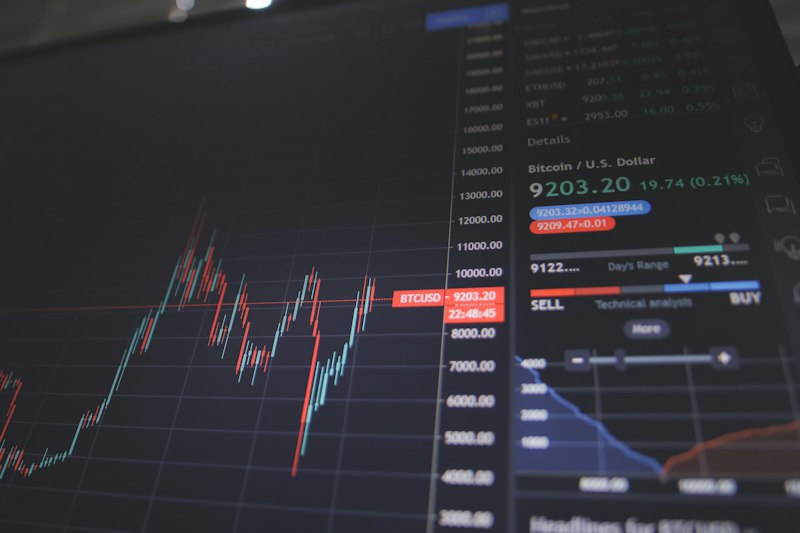
Real-Time Execution Framework
When the announcement hits, you have roughly **30 seconds to 2 minutes** before algorithmic trading takes over. Your edge comes from reading the reaction correctly, not being fastest.
Here's my battle-tested execution sequence:
Step 1: Read the Initial Reaction (First 30 Seconds)
Don't trade the immediate spike or drop. Instead, watch which currency pairs move together and which diverge. This tells you whether it's a broad dollar move or pair-specific.
Step 2: Identify the Dominant Theme (Minutes 1-5)
Is the market focused on the rate decision, the statement language, or the dot plot? The theme that creates the biggest moves usually continues for 15-30 minutes.
Step 3: Execute on Continuation or Reversal (Minutes 5-15)
If the initial move makes sense given your pre-positioning analysis, trade the continuation. If it seems like an overreaction, wait for the reversal setup.
Step 4: Manage the Position (Minutes 15-30)
Rate announcement moves often retrace 40-60% within the first hour. Set your profit targets and stops accordingly.
Imagine the Fed raises rates by 25bp as expected, but Chair Powell says "we're likely done for now" in the press conference. EUR/USD initially drops 20 pips on the rate hike, then reverses and rallies 60 pips on the dovish forward guidance. The smart play was waiting for the reversal after the initial reaction.
The Rate Differential Monitoring System
Most traders focus on individual rate decisions and miss the bigger picture: **changing rate differentials create the strongest trending moves** in forex.
Here's how to build your monitoring system:
Create a Rate Differential Dashboard
Track these key differentials weekly:
- US 2-year yield minus German 2-year yield (USD/EUR strength)
- US 10-year minus Japanese 10-year (USD/JPY direction)
- Australian cash rate minus US fed funds rate (AUD/USD bias)
- UK base rate minus ECB deposit rate (GBP/EUR momentum)
When any differential changes by more than 50 basis points over a month, you usually get a sustained trend in the corresponding currency pair.
Rate differentials predict medium-term trends better than individual rate decisions predict short-term moves.
I track these differentials using a simple spreadsheet that I update after each major central bank meeting. The patterns become obvious after a few months of data.
This systematic approach to rate differential analysis pairs perfectly with multi-timeframe correlation strategies for risk management.
Post-Announcement Trend Development
The real forex interest rate impact often unfolds over days or weeks after the announcement. This is where patient traders make their money.
The 24-48 Hour Rule
Major rate-driven moves need time to develop. If a currency pair doesn't follow through within 48 hours of an announcement, the move probably lacks conviction.

Volume Confirmation Signals
Look for increasing volume in the direction of the rate-driven move. If volume decreases while price continues, it's often a false breakout.

Don't assume every rate change creates a trend. Sometimes markets are more focused on economic data, risk sentiment, or technical levels than interest rates.
The strongest post-announcement trends happen when rate changes align with existing technical setups and economic momentum.
Risk Management Around Rate Events
Interest rate announcements create unique risks that standard position sizing doesn't account for. Here's how to protect yourself:
Volatility Expansion Risk
ATR (Average True Range) often doubles during rate announcement weeks. Adjust your position sizes accordingly.
Gap Risk
Surprise rate decisions can create price gaps that blow through stop losses. Consider using options for protection on your largest positions.
Correlation Breakdown Risk
Currency pairs that normally move together can diverge wildly during rate events. Document these correlation changes in your trading journal to spot patterns.
Use a "rate event position sizing matrix" where you reduce position sizes by 30-50% in the 48 hours before major announcements, then scale back up once volatility normalizes.
Common Mistakes That Kill Profits
After watching traders navigate hundreds of rate announcements, I've seen the same mistakes repeatedly destroy accounts.
Mistake #1: Trading the Headline, Ignoring the Context
A 25bp rate hike when markets expected 50bp is actually dovish. Always compare the decision to market expectations, not to previous rates.
Mistake #2: Overtrading During Volatility
Rate announcements create tempting setups every few minutes. Stick to your planned trades and ignore the noise.
Mistake #3: Forgetting About Forward Guidance
The actual rate decision often matters less than what central bankers say about future policy. Listen to the entire press conference before declaring victory.
Let's say you're trading GBP/USD before a Bank of England meeting. Markets expect a 25bp hike, but you think they'll hold steady based on recent inflation data. You short GBP/USD with a $1,000 position. The BoE holds rates as you predicted, but signals more aggressive hikes ahead. GBP/USD rallies 150 pips against you, showing why forward guidance matters more than the immediate decision.
The best approach? Plan multiple scenarios before each announcement and have predetermined responses for each.

Advanced Rate Impact Strategies
Once you master the basics, these advanced techniques can significantly improve your results:
The Rate Surprise Fade Strategy
When rate decisions create moves larger than 150 pips in major pairs, they often retrace 30-50% within 24 hours. This creates high-probability counter-trend opportunities.
Central Bank Divergence Plays
Look for periods where major central banks are moving in opposite directions. These create the strongest multi-month trends.
Forward Curve Arbitrage
Advanced traders use interest rate swaps and forward curves to identify mispriced currency pairs before rate announcements.
Professional traders often make more money trading the anticipation of rate changes than the changes themselves.
These strategies require larger accounts and more sophisticated tools, but they're worth understanding even if you can't implement them immediately.
Building Your Rate Impact Playbook
Success with forex interest rate impact comes from having predetermined responses to different scenarios. Here's how to build your playbook:
Create Decision Trees
Map out "if-then" scenarios for each major central bank. If the Fed hikes and sounds hawkish, then trade USD strength. If they hike but sound concerned about growth, then fade the initial USD rally.
Backtest Your Frameworks
Use historical rate announcements to test your pre-positioning and execution strategies. Focus on risk-adjusted returns, not just win rates.
Keep Detailed Records
Track not just your trades, but your thought process before each announcement. A comprehensive risk management plan should include specific protocols for rate event trading.
🧭 Your Action Items
- Build a rate differential monitoring system using 2-year bond yields
- Create pre-positioning checklists for each major central bank
- Develop specific risk management rules for rate announcement periods
- Practice reading initial market reactions without immediately trading them
- Document correlation changes and volatility patterns around rate events
Understanding forex interest rate impact isn't just about knowing when rates change. It's about building systematic frameworks that help you profit from the predictable patterns that emerge around these events.
The traders who consistently profit from rate announcements treat them as **structured opportunities**, not chaotic gambles. They prepare extensively, execute deliberately, and manage risk obsessively.
Your next step is choosing one major currency pair and tracking its behavior around the next three central bank meetings. Start building your own database of rate impact patterns. The insights you discover will become the foundation of your most profitable trading strategies.
Need help implementing these frameworks with precision timing and risk management? FibAlgo's AI-powered indicators can help you identify the high-probability setups that align with your rate impact analysis.