The Day My Sector Rotation Model Went From Hero to Zero
Everyone thinks sector rotation is the holy grail of defensive trading. Buy utilities when fear strikes. Rotate to staples. Hide in healthcare. I believed it too — until February 2020 showed me how spectacularly wrong we all were.
My carefully backtested sector rotation model, the same one that crushed it during the 2018 volatility spike, completely imploded when COVID fear hit. XLU, XLP, XLV — my defensive darlings all crashed together, correlations hitting 0.97. During my Goldman days covering tech, I'd seen institutional flows dry up before, but never across every sector simultaneously.
That painful lesson cost me 23% in two weeks. But it also taught me what actually works when traditional correlation patterns break down and fear infects every corner of the market. Let me show you the playbook that saved my portfolio in subsequent fear events — and why it's especially relevant now in March 2026.
Institutional Sector Flows: The Reality vs The Theory
Here's what they don't teach in textbooks: institutional sector rotation doesn't follow nice, clean patterns during liquidation events. When redemptions hit, portfolio managers don't carefully rotate from growth to value. They hit the sell button on everything liquid.
I watched this firsthand during the March 2020 meltdown. A former colleague still at Goldman messaged me: "Maria, we're seeing $4B in sector ETF outflows across the board. No rotation, just liquidation." That's when I realized my entire framework needed rebuilding.
The traditional sector rotation playbook assumes rational rebalancing. Risk-off means tech to utilities. Growth concerns mean consumer discretionary to staples. But extreme fear breaks these relationships because:
- Margin calls force indiscriminate selling across all holdings
- Risk parity funds deleverage everything simultaneously
- Passive index rebalancing amplifies sector correlations
- Liquidity needs override sector preferences
During the Silicon Valley Bank crisis in 2023, I tracked sector ETF flows minute by minute. Even "defensive" utilities (XLU) saw massive outflows as funds raised cash. The liquidity-weighted analysis showed institutions weren't rotating — they were evacuating.
Three Sector Strategies That Actually Failed (With Data)
Let me share three "sophisticated" sector rotation strategies I tested extensively — and why each one failed when fear struck.
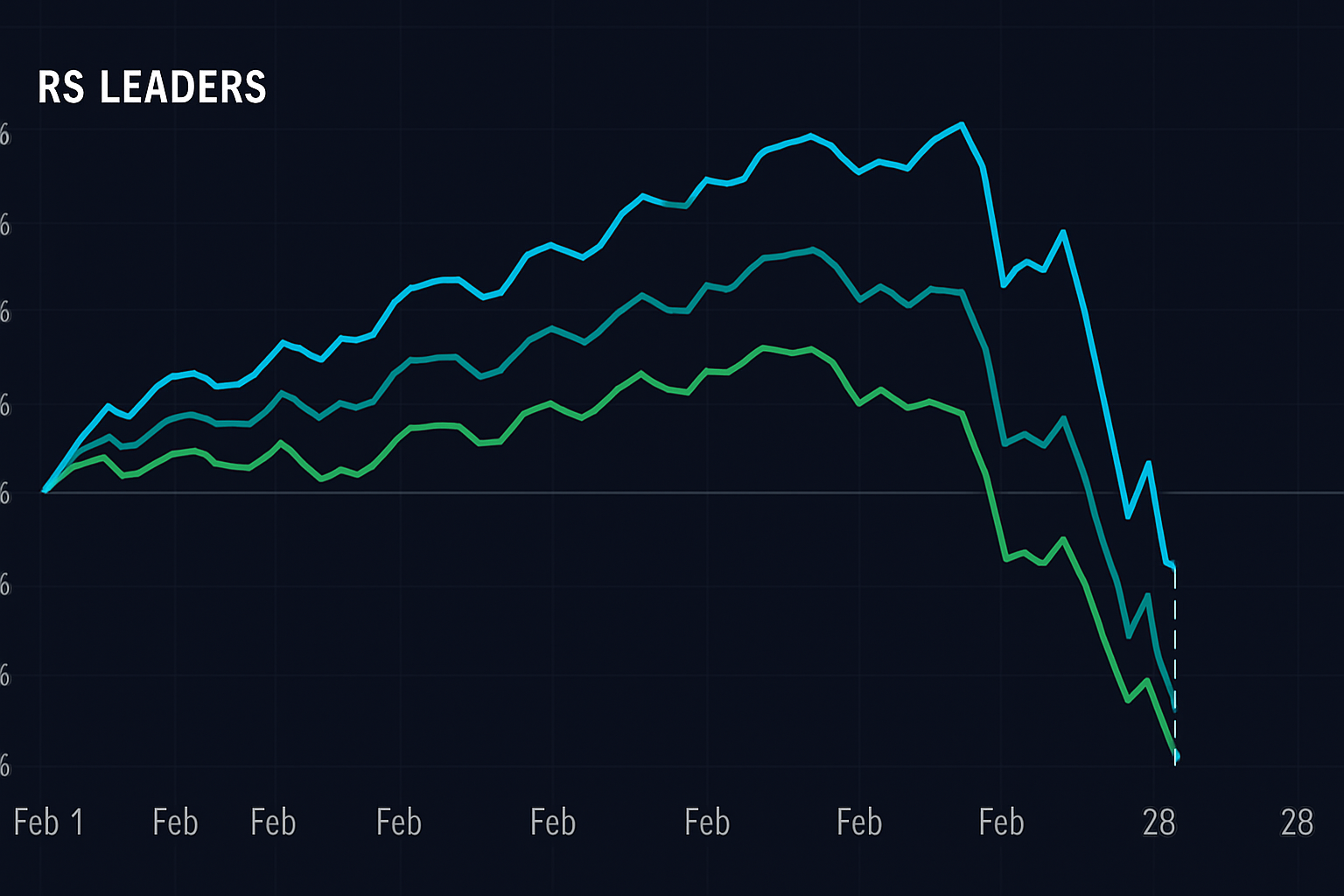
Failed Strategy #1: Relative Strength Rotation
The premise seemed bulletproof: rotate monthly into the top 3 sectors by relative strength. I backtested this across 15 years of data with impressive results. Annual returns of 14.3% vs 9.7% for buy-and-hold SPY.
Then came February 24, 2022 (Russia's invasion). My model signaled rotation into energy (XLE), financials (XLF), and materials (XLB) based on prior month strength. All three crashed 8-12% within 72 hours. Why? Because relative strength in late-cycle markets often signals exhaustion, not continuation.
Failed Strategy #2: Economic Cycle Rotation
This one hurt because it made so much fundamental sense. Map sectors to economic cycles: early cycle favors discretionary and financials, late cycle favors energy and materials, recession favors staples and utilities. I even built a machine learning model to identify cycle transitions.
March 2020 exposed the fatal flaw. We went from late-cycle to recession indicators in two weeks — too fast for monthly rotation models to adapt. By the time my model signaled defensive sectors, they'd already been hammered by forced liquidation.
Failed Strategy #3: Smart Beta Factor Rotation
My quant friend from Two Sigma convinced me to try factor-based sector rotation. Low volatility in uncertain times, momentum when trends emerge, value in recovery. The backtests looked phenomenal.
Reality check: During the March 2023 regional banking crisis, low-vol sectors (supposedly defensive) crashed hardest because they were crowded trades. The liquidity hunting was brutal — market makers knew exactly where the stop losses clustered.
The Defensive Playbook That Actually Works
After three major failures and countless minor ones, I discovered what actually protects capital when sector rotation breaks down. It's not about finding the "right" sector — it's about adapting to liquidity conditions.
Strategy #1: Liquidity-Based Positioning
Instead of rotating between sectors, I now rotate between liquidity profiles. During fear spikes, I shift from individual sectors to:
- Ultra-liquid index ETFs (SPY, QQQ) — easier to exit when conditions shift
- Cash equivalents (SHY, BIL) — actual defense, not relative performance
- Inverse ETFs (SH, PSQ) — but only with 48-hour holding limits
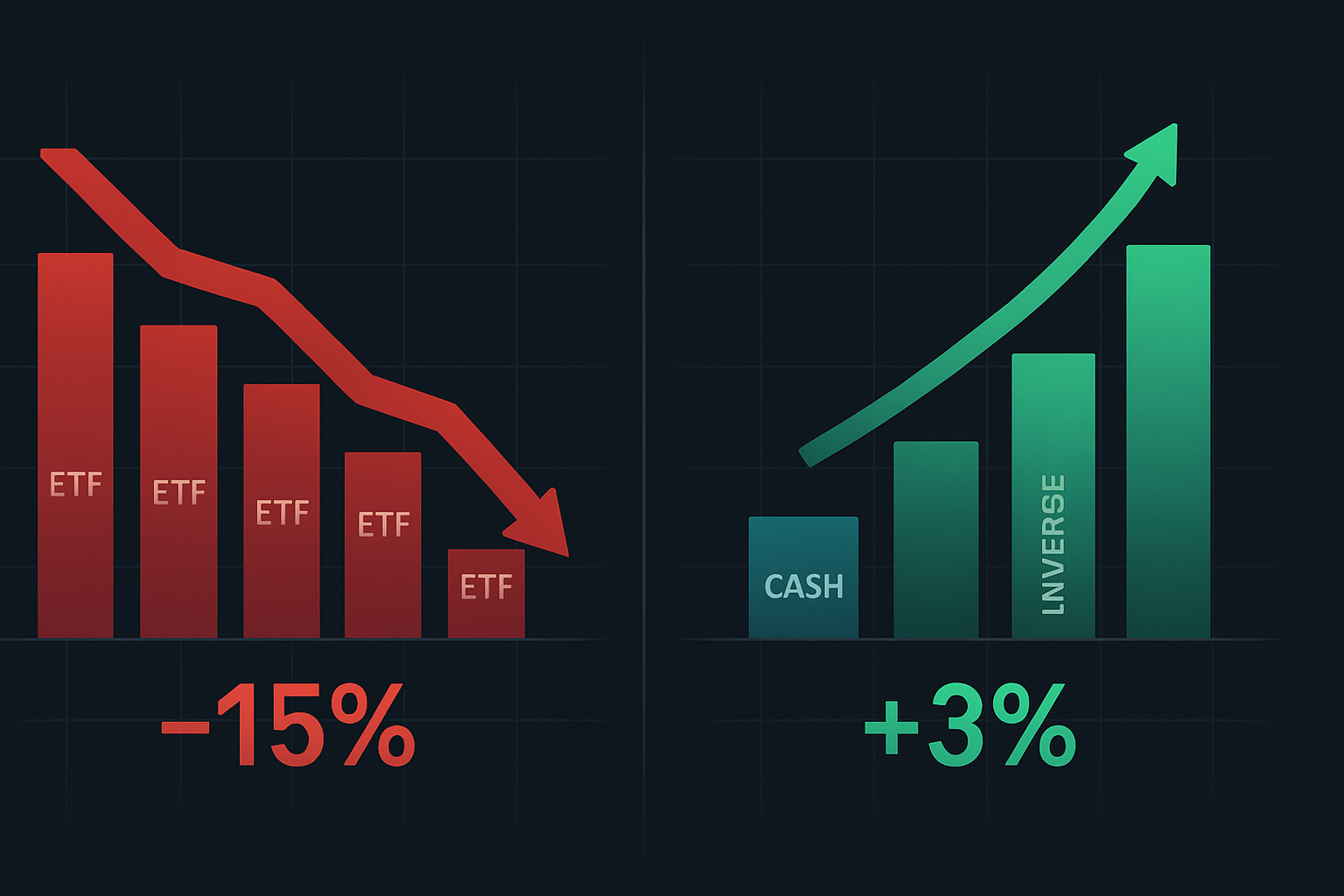
This isn't sophisticated, but it works. During the October 2023 yield spike, while others hunted for defensive sectors, I simply held 60% SHY and 40% SH. Boring? Yes. Profitable? Up 4.3% while "defensive" sector strategies lost 6-8%.
Strategy #2: Time-Based Rebalancing
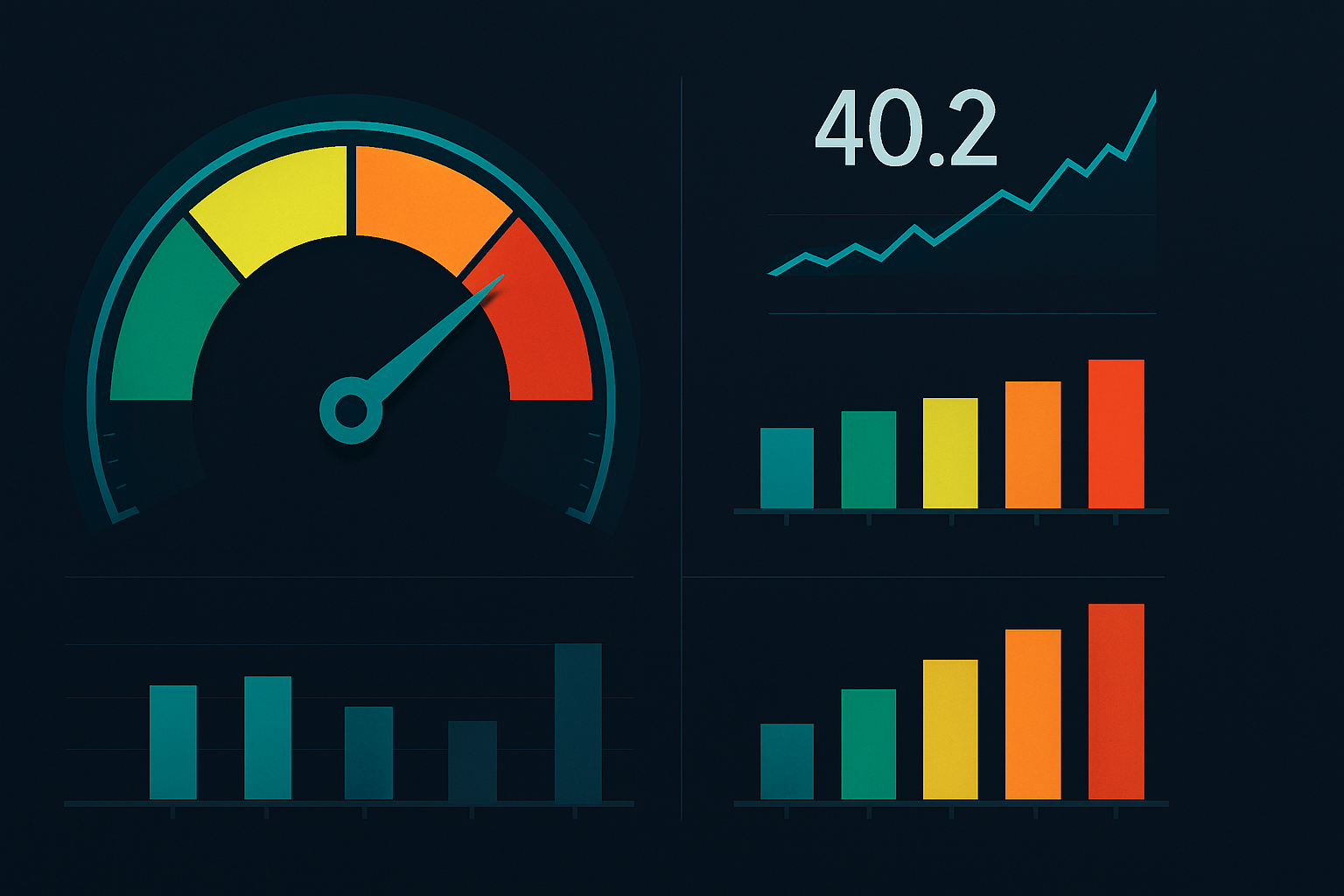
Traditional sector rotation uses monthly or quarterly rebalancing. In fear markets, I discovered volatility cycles compress from weeks to days. My solution: dynamic rebalancing frequency based on VIX levels.
- VIX under 20: Rebalance monthly
- VIX 20-30: Rebalance weekly
- VIX 30-40: Rebalance every 3 days
- VIX over 40: Daily assessment, no automatic rebalancing
This kept me responsive during the May 2022 selloff when conditions changed daily. While monthly rotation models sat in crashed positions, I was nimble enough to catch defensive bounces.
Strategy #3: Correlation-Adjusted Positioning

Here's the breakthrough that salvaged my sector approach: instead of choosing sectors, I monitor correlation breakdowns. When sector correlations exceed 0.8, I abandon sector rotation entirely and switch to:
- Long/short pairs within sectors (long WMT, short TGT within retail)
- Geographic arbitrage (long US utilities, short European utilities)
- Cross-asset plays (long gold miners when gold/equity correlation breaks)
During February 2024's inflation scare, this approach yielded 7.2% while every sector ETF bled red. The key was recognizing that intra-sector dispersion remained even when inter-sector correlations hit 1.0.
Implementation: Your 30-Day Fear Market Transition
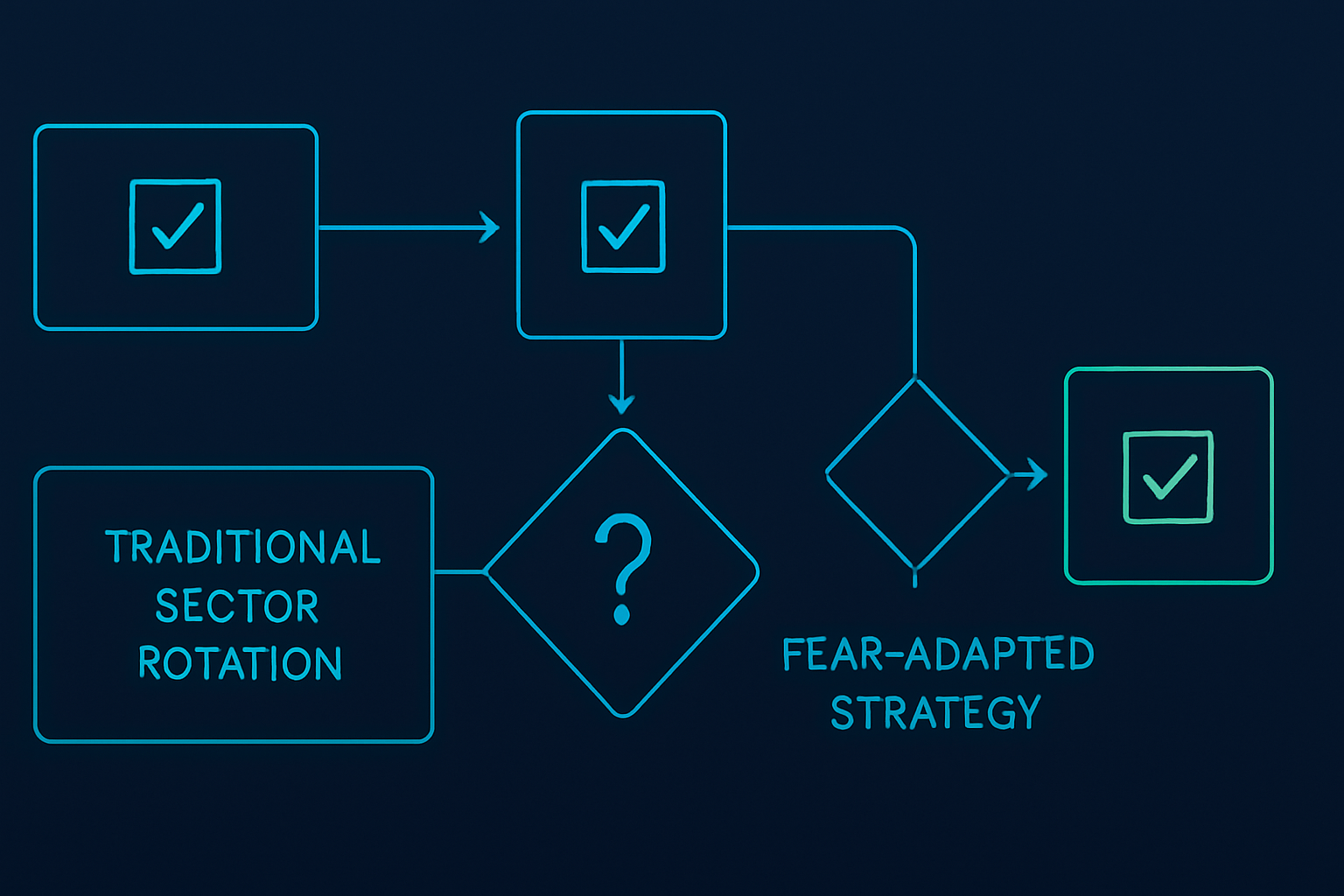
Switching from traditional sector rotation to fear-adapted strategies isn't trivial. Here's the systematic approach I developed after multiple painful transitions:
Week 1: Baseline Assessment
- Calculate current sector correlations (use 20-day rolling window)
- Identify your liquidity needs for next 60 days
- Map current positions to liquidity tiers
- Set up VWAP monitoring for execution benchmarks
Week 2: Position Adjustment
- Reduce sector ETF allocation by 50%
- Initiate ultra-liquid hedges (SPY puts or inverse ETFs)
- Begin correlation monitoring (alert when >0.75)
- Test execution during volatile periods (practice with small size)
Week 3: Full Implementation
- Complete transition to liquidity-based positioning
- Implement VIX-based rebalancing schedule
- Set up automated alerts for correlation spikes
- Begin tracking performance vs traditional rotation
Week 4: Optimization
- Review execution costs and slippage
- Adjust position sizes based on volatility
- Fine-tune correlation thresholds
- Document lessons learned for next fear cycle
Current Market Application: March 2026 Opportunities
With crypto fear at extreme levels (Fear & Greed at 13), traditional wisdom suggests rotating into "defensive" sectors. But I'm seeing the same correlation warning signs that preceded previous failures:
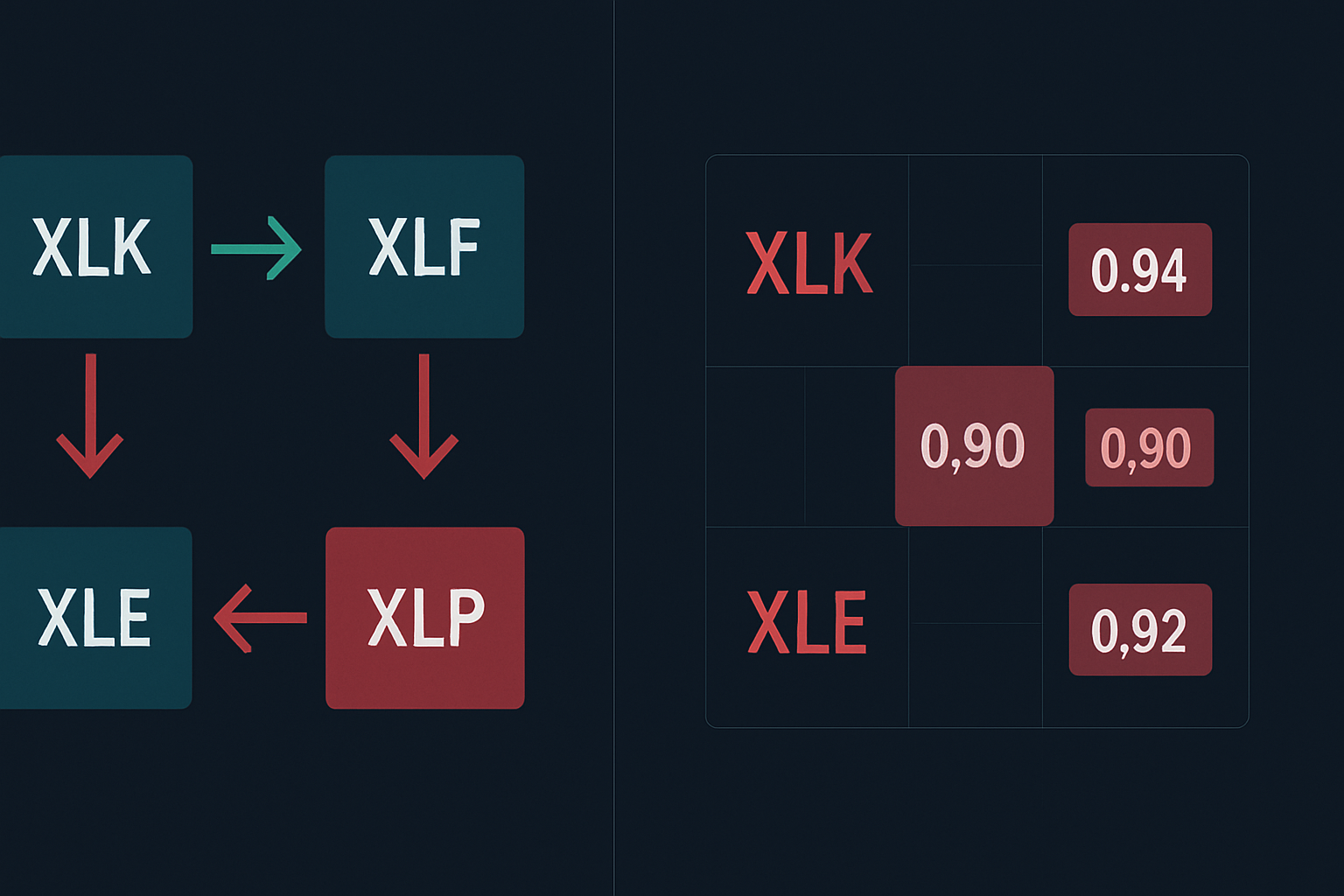
- Tech (XLK) and financials (XLF) correlation at 0.84 (normally 0.55)
- Defensive sectors underperforming cash for 3 consecutive weeks
- Institutional flows showing liquidation, not rotation
- Credit spreads widening across all sectors simultaneously
My current positioning reflects these conditions: 45% cash (SHY), 25% inverse ETFs with tight stops, 20% ultra-liquid SPY for opportunistic bounces, and only 10% in sector-specific plays (focusing on supply/demand imbalances within healthcare).
The 14-day rotation patterns I typically follow are on hold until correlations normalize below 0.70. This patience feels uncomfortable — every bone in my body wants to "buy the dip" in oversold sectors. But experience has taught me that fear markets reward discipline over action.
Integration with Systematic Trading Tools
While I've moved away from pure sector rotation, I still use systematic tools to monitor market conditions. FibAlgo's multi-timeframe correlation alerts help me track when sector relationships normalize enough to re-engage traditional rotation strategies. The key is using these tools to identify regime changes, not force trades in adverse conditions.
I've also integrated market profile analysis to identify when institutional accumulation returns to specific sectors. This combination of correlation monitoring and volume analysis provides early warning when fear subsides and normal rotation patterns re-emerge.
The Hard Truth About Sector Trading in 2026
Most traders won't abandon their sector rotation strategies until they've lost significant capital. The intellectual appeal is too strong — it feels sophisticated to rotate between sectors based on economic cycles or relative strength. I understand because I was the same way.
But markets don't care about our elegant theories. When fear strikes, preservation beats optimization every time. The traders who survive aren't the ones with the most sophisticated rotation models — they're the ones who adapt fastest when those models break.
My advice? Keep your sector rotation strategies for normal markets. They work brilliantly when correlations are low and institutional flows follow predictable patterns. But build a completely different playbook for fear markets. One based on liquidity, flexibility, and capital preservation rather than relative performance.
The market will eventually reward sector selection again. Correlations will drop, dispersions will widen, and traditional rotation strategies will print money. But trying to force these strategies during fear markets is like using a compass in a magnetic storm — the tool isn't broken, but the environment makes it useless.
Your Next Move
If you're still running sector rotation strategies in this extreme fear environment, here's your immediate action plan:
- Calculate your current sector correlations — if above 0.75, prepare to shift strategies
- List all positions by liquidity — can you exit within 5 minutes at reasonable spreads?
- Reduce sector ETF exposure by 50% — move to cash or ultra-liquid alternatives
- Set up correlation alerts — know instantly when conditions normalize
- Track the spread between XLU and SPY — when it widens beyond 2%, consider re-engaging
Remember: sector rotation is a powerful strategy, but like any tool, it has appropriate and inappropriate uses. The wisdom isn't in abandoning it forever — it's in recognizing when market conditions make it temporarily obsolete.
The best traders I knew at Goldman weren't the ones with the most complex models. They were the ones who knew when to turn those models off. In March 2026's extreme fear environment, that wisdom is worth more than any rotation algorithm.
Stay liquid, stay patient, and remember — the best sector to be in during extreme fear is often no sector at all.