Three months ago, I watched a trader blow up a $250,000 portfolio using what he thought was "bulletproof" on-chain data. He had all the fancy tools — Glassnode, Santiment, CryptoQuant — and spent hours analyzing whale wallets, exchange flows, and network metrics. His thesis seemed rock solid. The on-chain data was "screaming" accumulation.
He went all in. Bitcoin dropped 40% over the next eight weeks.
This wasn't some newbie with a $500 Robinhood account. This was an experienced trader who'd been profitable for years using technical analysis. But like many others, he'd fallen into the on-chain trap — believing these crypto on chain analysis tools gave him some kind of insider's edge. They didn't.
Here's the uncomfortable truth I've learned after spending the last two years deep in on-chain analytics: most traders are using these tools completely backwards. They're applying stock market logic to blockchain data and wondering why it keeps failing them.
The Seductive Lie of On-Chain "Signals"
Let me paint you a picture. It's a Tuesday morning, and you're scanning your on-chain dashboard. You notice large Bitcoin transfers from exchanges to unknown wallets — classic accumulation pattern, right? The number of addresses holding over 1 BTC just hit a new high. Long-term holder supply is increasing. Every metric points to smart money buying.
You pull the trigger on a leveraged long position, confident you're trading alongside the whales.
Forty-eight hours later, China announces another crypto ban (yes, again), and the market tanks 25%. Your stop loss hits. You're confused — didn't the on-chain data show accumulation?

This scenario plays out every single week in crypto markets. I've been there myself more times than I'd like to admit. The problem isn't the data — it's how we interpret it.
On-chain data shows what happened, not what will happen. There's always a story behind the numbers that raw metrics miss.
Think about it this way: when you see a whale move 10,000 BTC off an exchange, what are they actually doing? Maybe they're accumulating for a long-term hold. Or maybe they're moving to another exchange for arbitrage. Maybe they're preparing for an OTC deal. Maybe they're about to dump on another chain entirely.
The on-chain data doesn't tell you their intent. It just shows the movement.
The Whale Games: How Smart Money Uses YOUR Analysis Against You
Here's something that'll make you paranoid: sophisticated traders know exactly what on-chain metrics retail watches. And they use this knowledge to their advantage.
I first noticed this pattern in late 2021. Every time certain on-chain indicators flashed "bullish," the market would pump for 24-48 hours, then dump harder. It was too consistent to be coincidence.
Imagine a whale wants to distribute 50,000 ETH without crashing the price. They start by moving 10,000 ETH off exchanges in small batches — this triggers "accumulation" alerts across on-chain platforms. Retail traders see this and start buying. Price pumps 5-10%. Now the whale can sell their remaining 40,000 ETH into stronger liquidity at better prices.
I've seen this playbook dozens of times. The most reliable on-chain patterns are often the ones being gamed the hardest.
Remember the circuit breaker method I've written about? Same principle applies here — when everyone's watching the same signals, those signals lose their edge.
The Three On-Chain Metrics That Actually Matter (And Why I Ignore Everything Else)
After getting burned enough times, I stripped my on-chain analysis down to the bare essentials. Out of the hundreds of metrics available, I now track exactly three.
But before I share them, let me be clear about something: I never trade solely on on-chain data anymore. These metrics are context, not signals.

1. Exchange Reserve Trends (But Not How You Think)
Most traders obsess over daily exchange flows. "10,000 BTC left Coinbase!" they shout. I ignore this noise completely.
Instead, I look at 90-day exchange reserve trends across all major exchanges. Not the absolute numbers — the rate of change. When this rate accelerates beyond two standard deviations from the mean, it usually signals something significant brewing. But here's the kicker: I use this as a volatility indicator, not a directional one.
Rapid reserve changes in either direction mean big moves coming. Direction? That's where other analysis comes in.
2. Stablecoin Concentration Shifts
This is my favorite contrarian indicator. Everyone watches Bitcoin and Ethereum flows. I watch where the stablecoins are going.
When stablecoins concentrate on a few addresses (usually exchange-related), it's like gunpowder accumulating. Doesn't tell you when the explosion happens or which direction — but it warns you something's coming.
Map stablecoin movements between DeFi protocols and CEXs. When DeFi → CEX flows spike, institutional players are usually positioning for something.
3. Network Fee Dynamics (The Hidden Tell)
This is the metric nobody talks about, probably because it's boring. But Bitcoin and Ethereum network fees tell you more about real activity than any whale watching ever could.
When fees spike without a corresponding price move, it usually means one thing: smart money is reshuffling positions while retail sleeps. I've caught some of my best trades by noticing fee anomalies during quiet market hours.
Building Your Anti-Fragile On-Chain Framework
Here's my approach to crypto on chain analysis tools — and fair warning, it's probably different from what you'll read elsewhere.
First, I assume all obvious on-chain signals are compromised. If retail can see it, whales can game it. This paranoid mindset has saved me more money than any indicator ever has.
Second, I use on-chain data for risk management, not entry signals. When multiple chains show unusual activity, I reduce position sizes. When things look too quiet, I prepare for volatility.
Third, I combine on-chain data with completely unrelated datasets. My best performing system right now uses on-chain metrics plus:
- Options flow from traditional markets (yes, SPY options can predict crypto moves)
- DXY correlation breaks
- Funding rate arbitrage opportunities
- Social sentiment — but inversely weighted
Never use on-chain analysis in isolation. The blockchain doesn't exist in a vacuum — macro events will override any on-chain signal.
The Tools I Actually Use (And The Ones I Dumped)

Let's talk specific platforms. I've tried them all, burned money on most of them.
What I kept:
- Glassnode for macro trends (their free tier is honestly enough)
- Etherscan/Blockchair for manual investigation
- DeFi Llama for cross-chain liquidity tracking
- A custom Python script that aggregates data I actually care about
What I dumped:
- Any platform promising "AI-powered on-chain signals"
- Whale alert bots (pure noise)
- Most paid indicator packages
- Anything with a Telegram group attached
The dirty secret? Free on-chain tools are 90% as good as paid ones. The edge isn't in having more data — it's in interpreting it differently than the crowd.
Real Examples: When On-Chain Analysis Saved My Ass (And When It Didn't)
November 2022. FTX is collapsing, and everyone's panicking. Traditional technical analysis is useless — every support level gets sliced through like butter. But on-chain data showed something interesting: despite the chaos, Bitcoin's network fundamentals remained steady. Fees stayed consistent. Long-term holder behavior didn't change.
This told me the crash was exchange-specific, not Bitcoin-specific. I started accumulating around $16,000 while others waited for $10,000. Sometimes on-chain data helps you see through the noise.
But then there's May 2023. On-chain metrics suggested massive accumulation for weeks. Exchange reserves hit multi-year lows. Every YouTuber with a Glassnode subscription called for a moon shot. I went heavy long.
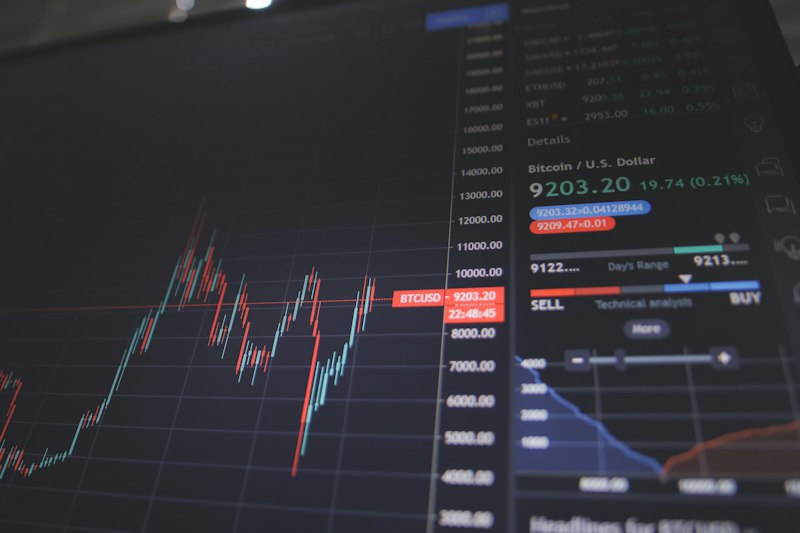
The SEC sued Binance and Coinbase back-to-back. Market nuked 20% in two days. No on-chain metric predicted regulatory bombs.
Lesson learned: on-chain analysis is one tool in the toolkit, not a crystal ball.
The Psychology Trap: Why On-Chain Data Messes With Your Head
Here's something Van Tharp talks about in "Trade Your Way to Financial Freedom" — we desperately want to believe we have an edge. On-chain analysis feeds this desire perfectly. It feels like insider information. You're literally watching the blockchain! How could you be wrong?
This false confidence is deadly. I've seen traders leverage up based on on-chain "certainty" only to get liquidated when reality disagrees with their blockchain thesis.
The psychological impact goes deeper. When you spend hours analyzing on-chain data, you become emotionally invested in your conclusion. You want the data to be right because you worked so hard to understand it. This emotional attachment clouds judgment faster than any leveraged position.
I combat this by setting strict rules: on-chain analysis can only ever be 20% of my decision-making process. If I can't find confluence with price action patterns and macro conditions, I don't trade. Period.
The Future of On-Chain Analysis: Where We're Heading
The on-chain analysis space is evolving rapidly. Every month brings new metrics, new tools, new ways to slice the data. But I'm not optimistic about retail traders' ability to maintain an edge here.
Why? Because institutional players are pouring millions into proprietary on-chain analytics. They're not using Glassnode — they're building custom systems that analyze patterns we can't even see yet.
Renaissance Technologies allegedly has a team dedicated solely to blockchain analysis. Jump Trading is rumored to track on-chain data across 50+ chains simultaneously. When the smartest quants in the world are competing in your space, your edge disappears fast.
My prediction? Within two years, obvious on-chain edges will be completely arbed away. The future belongs to traders who can combine on-chain data with alternative data sources in non-obvious ways.
Building Your Personal On-Chain System: A Practical Framework
Enough theory. Let me walk you through exactly how I incorporate crypto on chain analysis tools into my trading today.
Step 1: Define Your Universe
I only track on-chain data for BTC, ETH, and the top 3 DeFi protocols by TVL. Everything else is noise. Trying to monitor 20 chains will paralyze you.
Step 2: Choose Your Timeframe
On-chain data is terrible for day trading, decent for swing trading, and excellent for position trading. I use it exclusively for trades with 2-4 week horizons.
Step 3: Create Composite Indicators
Never rely on single metrics. I combine 3-5 on-chain indicators into composite scores. When multiple indicators align, confidence increases. When they diverge, I stay out.
Step 4: Set Alerts, Not Signals
On-chain anomalies trigger alerts that make me investigate further. They never trigger trades directly. This distinction has saved me from countless false signals.
Step 5: Journal Everything
I track every on-chain-influenced decision in my trading journal. After six months, patterns emerge. Most of my "brilliant" on-chain insights turned out to be random noise.
The best on-chain analysts aren't the ones with the most tools — they're the ones who understand the limitations of their tools.
Conclusion: The On-Chain Reality Check
If you've made it this far, you probably realize I'm not exactly bullish on on-chain analysis as a standalone strategy. That's intentional. Too many traders treat blockchain data like some kind of market cheat code. It's not.
But here's what on-chain analysis IS good for: context, confluence, and risk management. Used properly, it adds a valuable dimension to your analysis. Used poorly, it's just another way to lose money with extra steps.
My advice? Start simple. Pick one or two on-chain metrics that make intuitive sense to you. Track them for a month without trading. See how they correlate with price action. Build your own understanding instead of copying someone else's system.
And remember — the blockchain records history, not the future. Every on-chain movement already happened. By the time you see it, smart money has moved on to the next play.
🎯 Key Takeaways
- On-chain data shows what happened, not what will happen — intent matters more than movement
- Sophisticated traders actively game popular on-chain metrics — assume all obvious signals are compromised
- Focus on three core metrics maximum: exchange reserve trends, stablecoin flows, and network fees
- Never trade solely on on-chain data — use it for context and risk management only
- The edge isn't in having more data, it's in combining on-chain with unrelated datasets creatively
Want to see how on-chain analysis fits into a complete trading system? FibAlgo's AI-powered indicators combine multiple data sources — including sentiment and price action — to filter out the noise that pure on-chain analysis misses. Because at the end of the day, profitable trading isn't about having all the data. It's about knowing which data actually matters.