Bear market rallies are designed to hurt you. That's not hyperbole — it's market structure.
In my 14 years trading forex at JPMorgan and through countless market cycles, I've watched these rallies destroy more accounts than any other pattern. The cruelest part? They're mathematically predictable, yet 80% of traders fall for them every single time.
Right now, with crypto fear at extreme levels and everyone calling for capitulation, we're in prime bear rally territory. The next violent 20% bounce will convince traders the bottom is in. It won't be.
The Three False Hope Patterns That Destroy Accounts
When I traded the EUR/USD book during the 2008 crisis, we had a name for retail traders who bought every bounce: "rally food." Harsh? Perhaps. But understanding why requires examining the three patterns that create these traps.
Pattern #1: The Oversold Rocket
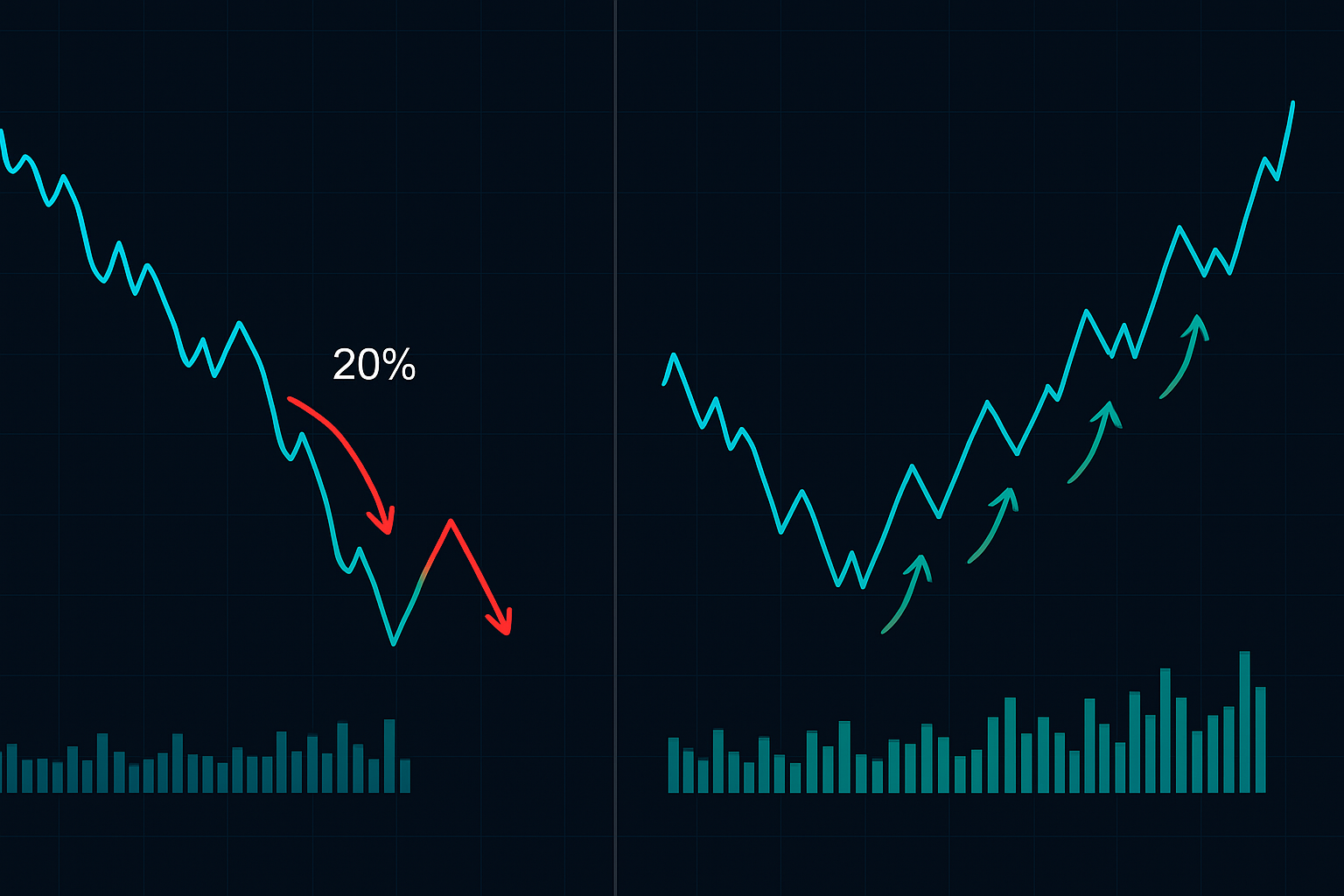
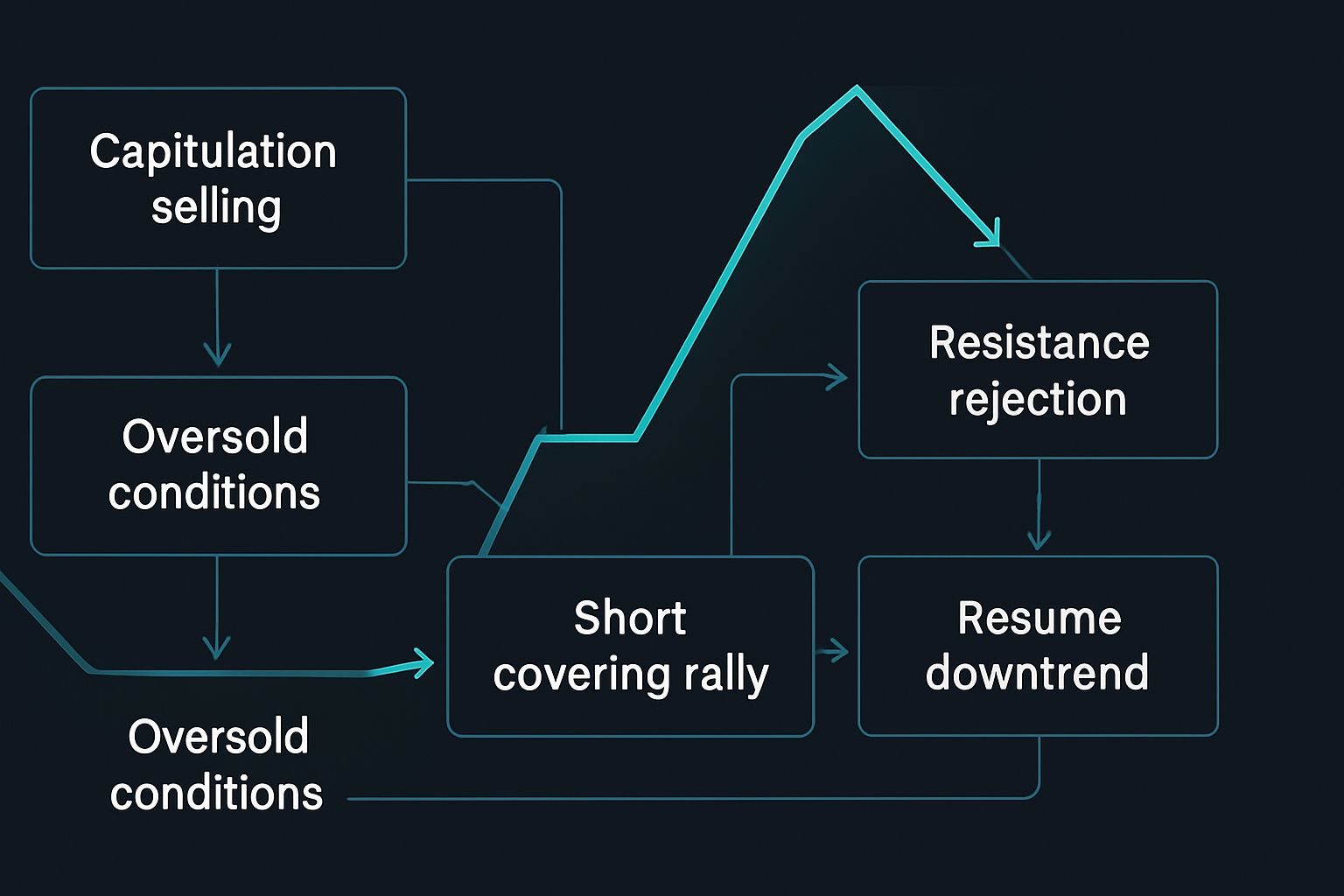
This pattern killed me twice before I learned. Price drops 30-40% in weeks, RSI hits 20, everyone screams "oversold!" Then comes a face-ripping 15-20% rally in 48 hours. Traders pile in, convinced they've caught the bottom.
Here's what actually happens: short covering, not genuine buying. When overleveraged shorts get squeezed, they create violent upward price action with zero fundamental support. I watched this destroy traders in Bitcoin's 2018 descent from $20,000 to $3,000 — seven major rallies, all failed.
Pattern #2: The News Hope Surge
March 2020: Fed announces unlimited QE. Stocks explode 10% in minutes. October 2022: Bank of England pivots. GBP/USD rockets 500 pips. Every bear market has these moments where positive news creates explosive rallies.
The trap? Bear markets don't end on single news events. They end on exhaustion and time. When I see traders betting their accounts on Fed pivot rumors or bailout hopes, I remember colleagues at JPMorgan who tried catching the knife in 2008 on every government announcement. Most aren't trading anymore.
Pattern #3: The Technical Trap
This one's insidious because it looks so clean on charts. Price perfectly bounces off the 200-day moving average or a major Fibonacci level. Technical traders flood in, stops tight, convinced the setup is bulletproof.
What they miss: liquidity hunting. Institutions know exactly where retail places orders. They gun for these obvious levels, trigger entries, then dump. I've executed these trades from the institutional side — it's not conspiracy, it's business.
The Mathematics of False Hope
Let me share something that changed my approach to bear markets forever. During a risk management meeting at JPMorgan in 2011, our quant team presented data on S&P 500 bear market rallies since 1929. The findings:
- Average bear market features 3-7 rallies of 10% or more
- The third rally traps the most capital (exhausted bears capitulate)
- Volume decreases on each successive rally
- Time between rallies shortens as the bear market matures
This isn't random — it's crowd psychology expressed through market structure. Each rally exhausts more buyers until none remain. Then, and only then, can a genuine bottom form.
The Professional's Bear Rally Framework
After losing money on false rallies in 2008 and 2018, I developed a framework that's kept me (mostly) on the right side of these moves. It's not about predicting — it's about responding with probability on your side.
Step 1: Identify the Rally Type
Not all bear rallies are equal. Map these characteristics:
Technical Rallies: Bounce from oversold, clear resistance target, typically 10-15%
News-Driven Rallies: Explosive start, 5-20% in days, fade quickly
Short-Covering Rallies: Violent, low volume, retrace 38-50% of recent decline
Each requires different tactics. Technical rallies offer the best risk/reward for nimble traders. News rallies are pure gambling. Short-covering rallies can be traded but only with strict discipline.
Step 2: The Three-Filter Entry System
If you must trade bear rallies (and most shouldn't), use these filters:
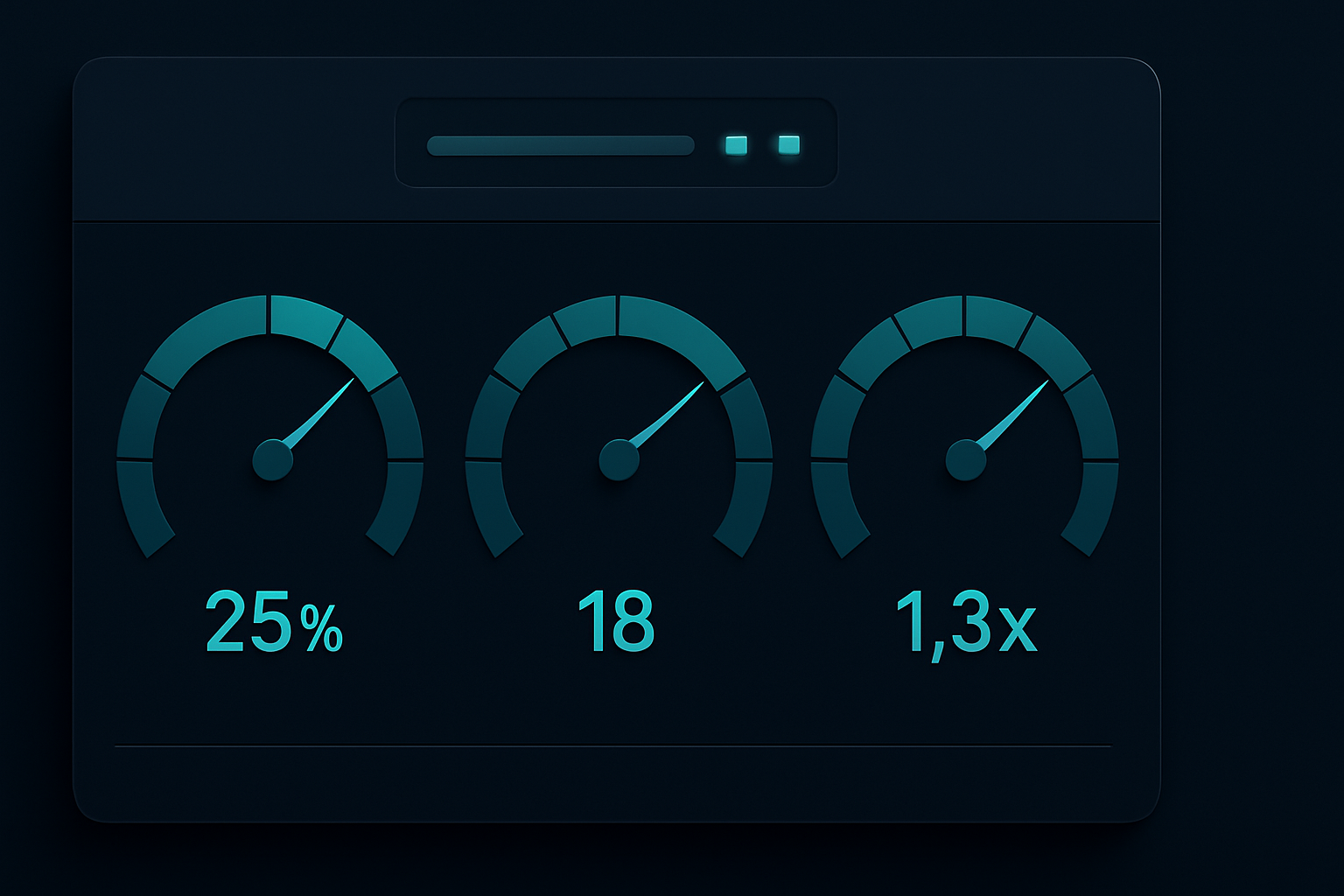
Filter 1 - Structure: Only enter after a 20%+ decline from recent highs
Filter 2 - Sentiment: Extreme fear readings (under 20 on relevant indices)
Filter 3 - Volume: First day of rally must exceed 20-day average
All three must align. This kept me out of six false rallies in crypto during 2022's decline.
Step 3: The 48-Hour Rule
Most bear rally failures reveal themselves within 48 hours. Here's what to monitor:
Hour 1-12: Initial thrust should hold 80% of gains
Hour 12-24: Look for follow-through buying or distribution
Hour 24-48: Key resistance test determines rally fate
If price fails to break resistance with volume by hour 48, exit immediately. This rule alone would have saved traders millions in Bitcoin's 2022 bear market.
Position Sizing: The Survival Key

Here's the brutal math of bear market rallies: A 50% loss requires a 100% gain to breakeven. This asymmetry destroys accounts when traders go "all in" on false bottoms.
My bear market position rules:
- Maximum 25% of normal size on counter-trend trades
- Scale in three tranches: 10%, 10%, 5%
- Stop loss at 2% portfolio risk maximum
- Take profits at +10-15% (don't be greedy)
During the 2020 COVID crash, I watched a colleague turn $50k into $180k catching rallies, then lose it all on one failed "bottom" call. Position sizing isn't sexy, but it keeps you alive.
Real Examples: Learning from Blood
Let me walk through two trades that crystallized these lessons:
March 2020: The Survival Trade
SPY crashed from $338 to $218. On March 24, we saw a 9% single-day rally. Every indicator screamed oversold. The VWAP showed institutional buying. Perfect setup, right?
I entered 10% position at $230. Added 10% more at $235. The rally extended to $265 — a gorgeous 20% move. But instead of holding for "the bottom," I exited at $255. SPY then crashed to new lows at $200.
The difference between profit and devastation? Respecting the bear market context.
November 2022: The FTX False Dawn
FTX collapsed. Crypto carnage everywhere. Bitcoin bounced from $15,500 to $18,200 — a classic oversold rally. The RSI divergence looked perfect.
I almost bit. Then I applied the framework: volume was pathetic, sentiment hadn't capitulated, and the 48-hour rule showed distribution. Stayed flat. Bitcoin proceeded to dump to $15,000 before the real bottom.
Sometimes the best trade is no trade.
Integration with Modern Tools
Technology has evolved since my JPMorgan days, but bear market psychology hasn't. Modern tools can help identify these patterns faster:
On-chain metrics for crypto: Exchange flows often preview rally failures
Options flow: Put/call ratios spike before sustainable bottoms
Sentiment APIs: Quantify fear beyond gut feelings
Multi-timeframe analysis: Higher timeframes keep you honest
FibAlgo's multi-timeframe confluence alerts particularly excel at identifying when bear rallies approach major resistance across multiple time horizons — a key failure point.
The Psychology Battle
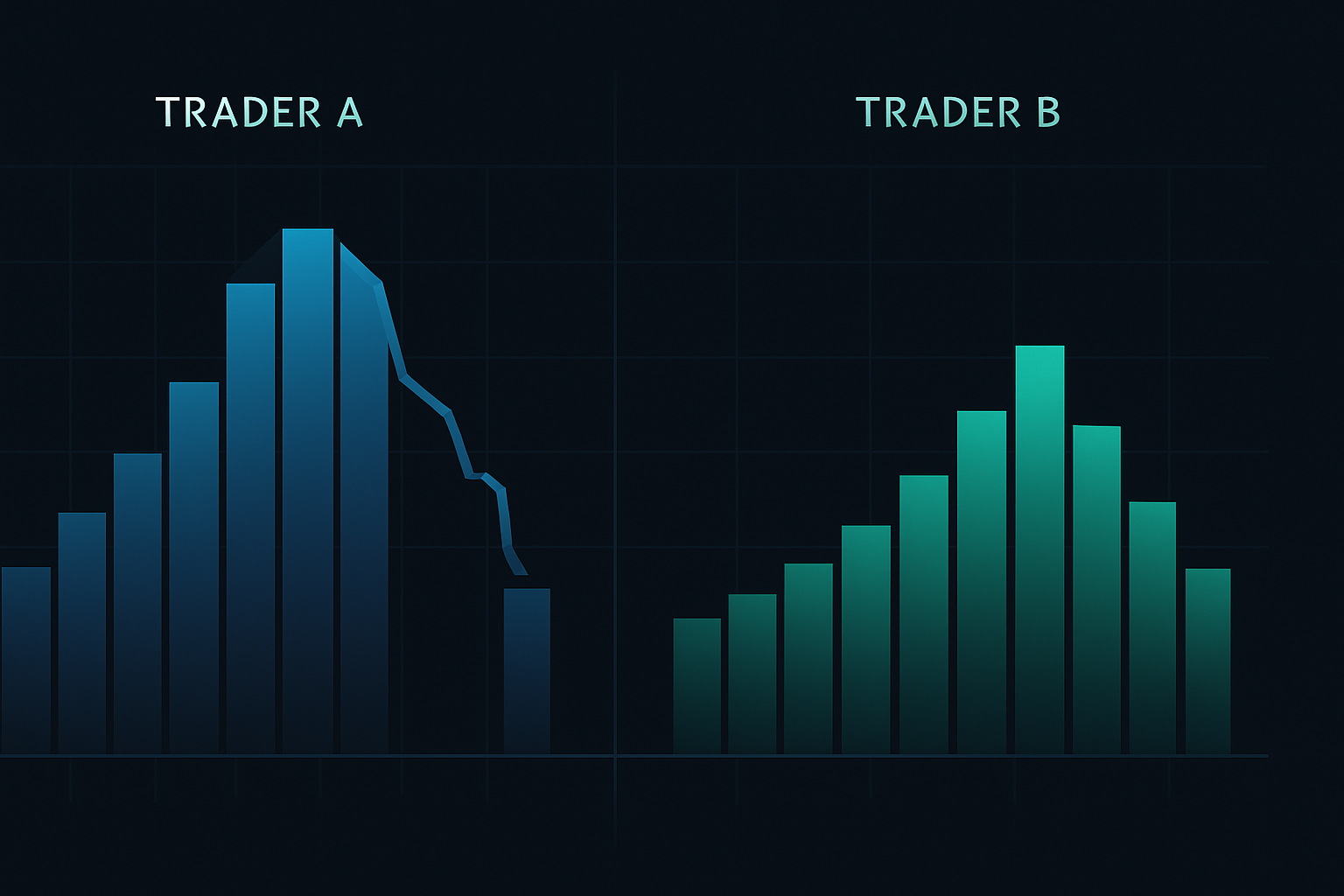
Here's what nobody tells you about bear market rallies: They're designed to break your psychology before your account. Each failed rally plants doubt. Each missed opportunity breeds FOMO. Eventually, exhausted traders capitulate at the worst possible moment.
I've seen brilliant traders destroyed not by lack of skill, but by bear market fatigue. They nail five rallies, miss the sixth, then revenge trade the seventh into oblivion.
The antidote? Systematic tracking of your emotional state. When you find yourself "hoping" instead of analyzing, step back.
Current Market Application
As I write this in March 2026, crypto fear sits at extreme levels. Bitcoin hovers near $70,000 after failing at resistance. Classic bear rally setup? Perhaps. But rather than predict, let's prepare.
Watch for:
- A violent 10-15% bounce on oversold conditions
- Short covering if we break $72,000
- Resistance at $75,000-$78,000 (previous support)
- Volume patterns — rallies need increasing participation
If we get a rally, apply the framework. If not, patience costs nothing.
The Hard Truth About Bear Market Success
Most traders won't follow this advice. The siren song of catching THE bottom is too powerful. They'll leverage up on every bounce, convinced THIS time is different. The market will teach them otherwise.
But for those who embrace the framework — who trade small, respect resistance, and accept that missing rallies beats catching knives — bear markets become survivable. Even profitable.
After 14 years and hundreds of rallies, I've learned this: The money isn't in predicting bear market rallies. It's in surviving them.
Stay disciplined. Size appropriately. And remember — the best opportunities come not from catching falling knives, but from staying liquid when others are bleeding out.
The next bear rally will test these principles. Will you be ready?